
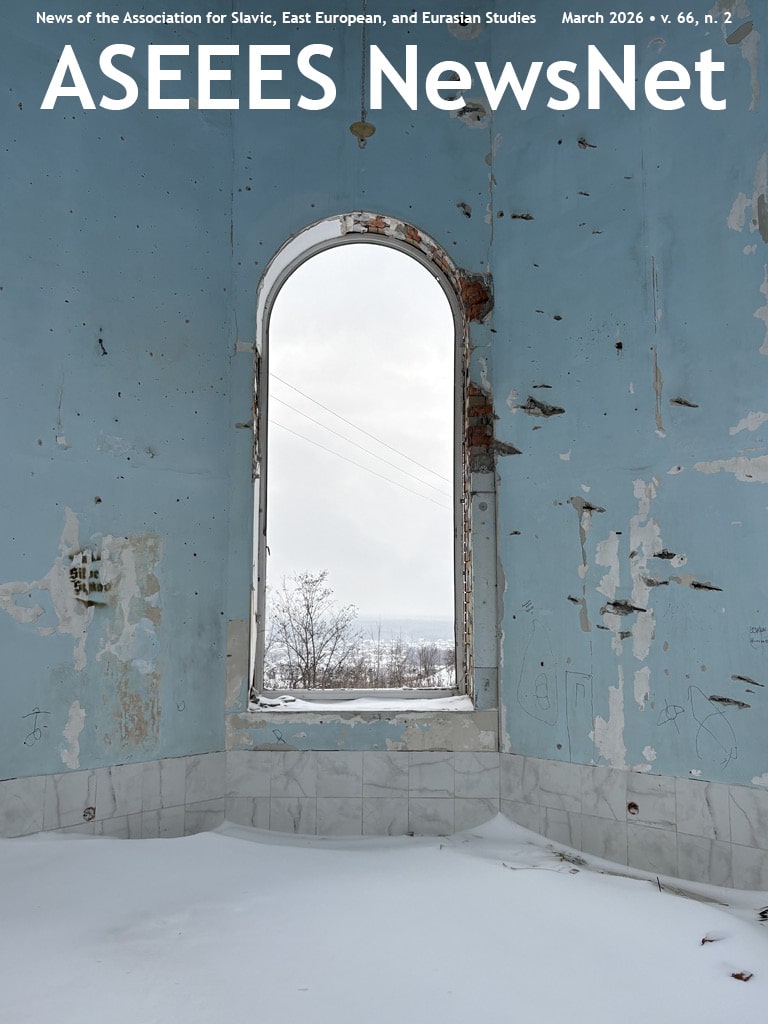
NewsNet
Issues
NewsNet is produced as a bimonthly newsletter online and in PDF format, with member and ASEEES news announcements posted online regularly.
March 2026 Issue
In the March issue, anthropologist Neringa Klumbytė brings firsthand testimonies from Ukrainians who lived under Russian occupation. Zsuzsánna Magdó offers an overview of Title VI, ruminating on present threats and future possibilities. Anna Mazurkiewicz, Iwona Flis, Eleonora Narvselius, and Magdalena Nowak discuss personal archives, family memory, and the women who quietly preserved the histories of Eastern and Central Europe. ASEEES interviews 2025 Wayne S. Vucinich Book Prize winner Benjamin Nathans about his landmark study of the Soviet dissident movement.
In addition to the 2026 Annual Convention, ASEEES announces the 2026 Book Prize Call for Nominations, the 2026 Grants & Fellowships Call for Applications, the Spring 2026 First Book Subvention recipients, the Call for Self-Nominations for the 2027 Board of Directors, the Spring 2026 Research Meetup Series—and more!
Articles in This Issue
-

March 12, 2026
Testimonies from the Occupied Territories of Ukraine
Total occupation is never possible. Resistance takes many forms.
-

March 12, 2026
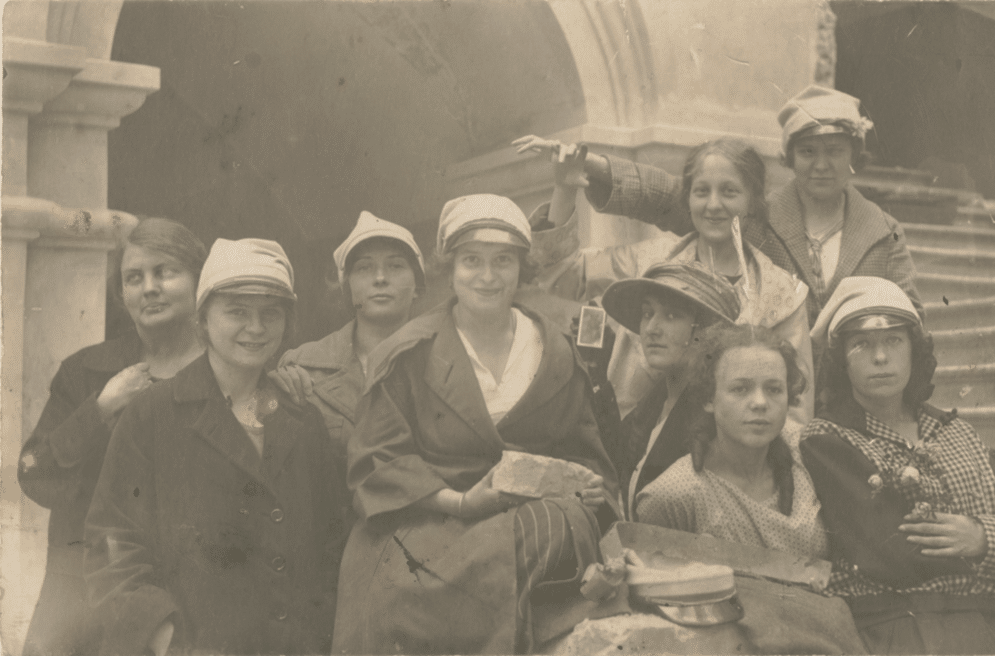
Echoes from the Attic: Personal Narratives in Eastern and Central European History
At the 2025 ASEEES Convention, three female historians discussed stories from their own family archives and artifacts. All three stories involved women who served as custodians of memory for their families: a grandmother, a mother, an aunt.
-

March 12, 2026
Title VI Today and the Future(s) of SEEES
In 2025, universities with decades-long investment in international and area studies learned that Title VI funding and the nearly 70-year-old partnership with the federal government were unreliable. This development also raised critical questions about the mission, infrastructure, and future sustainability of area studies.
-

March 12, 2026
An Interview with 2025 Wayne S. Vucinich Book Prize Winner Benjamin Nathans
I didn’t want to simply reproduce the dissident narrative; what I had in mind was a monograph that probed the shifting structural possibilities of dissent in the post-Stalin era and the paths by which the movement found its way to the non-self-evident doctrine of universal human rights.



Additional Highlights from This Issue
- 2026 Annual ASEEES Convention
- CfS: 2026 ASEEES Prizes
- CfA: 2026 ASEEES Grants and Fellowships
- CfN: 2026 ASEEES Distinguished Contributions Award
- Call for Self-Nominations: ASEEES Board of Directors
- Spring 2026 ASEEES First Book Subvention Recipients
- Spring 2026 Research Meetup Series: Sharing Practical Tips for Archival Research and Fieldwork
- ASEEES Exploring Career Diversity
- ASEEES Mentoring Program
- Member News

INTERESTED IN SUBMITTING AN ARTICLE TO NEWSNET?
We heartily encourage members — including graduate students — who are interested in proposing a NewsNet cover article to contact us. Click for full details on submitting an article.
submit an ad TO NEWSNET
For more information and pricing for ads within NewsNet, both online and in our PDF, please click below.