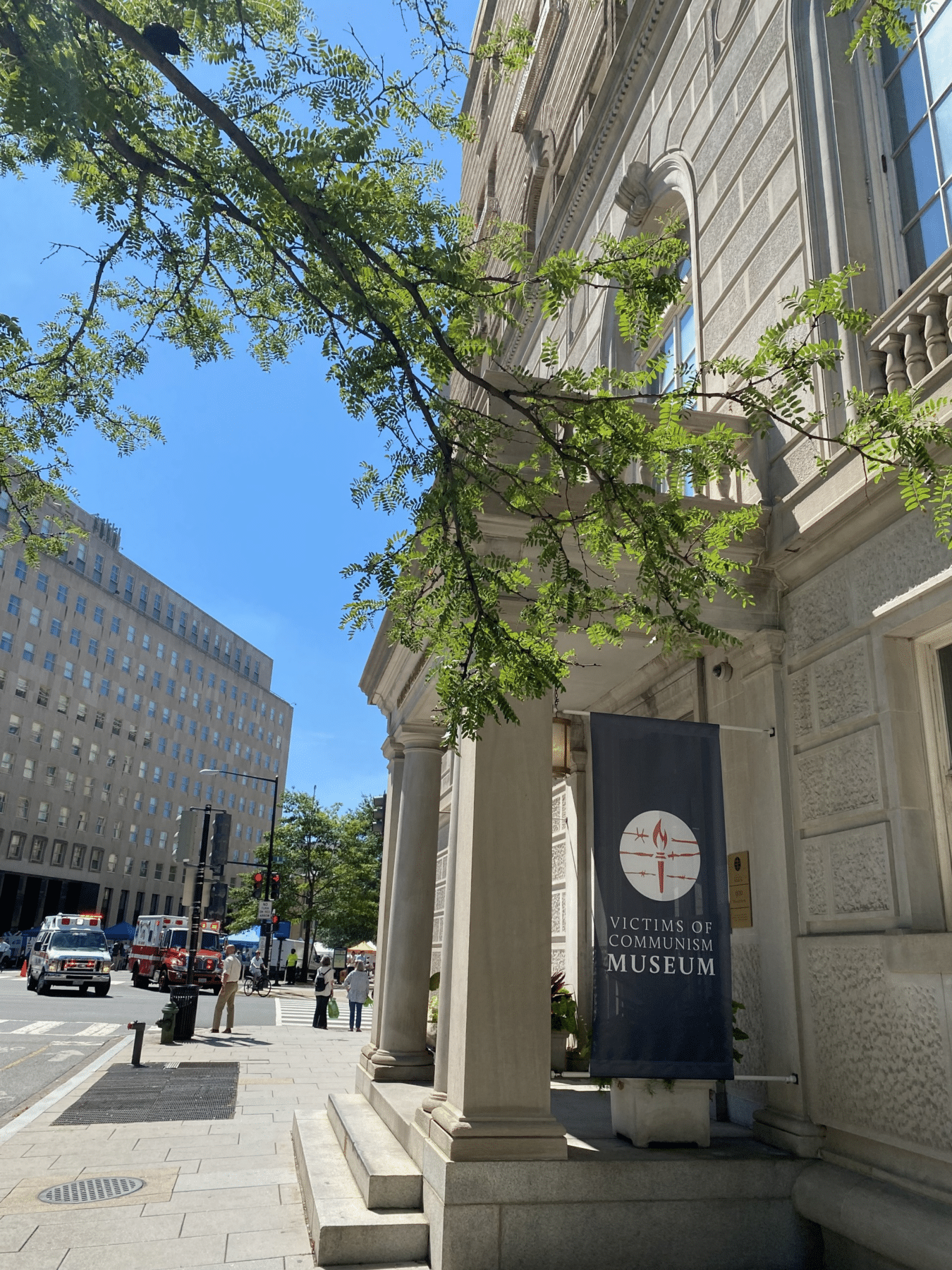
Thanks to the generous support of the ASEEES Internship Grant Program, I was able to undertake an internship at the Victims of Communism Memorial Foundation in Washington D.C. in the summer of 2023. This Foundation’s creation was authorized in 1993 by an act of the U.S. Congress, and since then the Foundation established its presence in the U.S. capital by erecting the Victims of Communism (VOC) Memorial, establishing a VOC Memorial Day on November 7, and opening the VOC Museum just steps from the White House. In 2022, I happened to visit this museum dedicated to the history of global communist regimes. As a PhD student at the University of California, Santa Barbara, studying the intertwined histories of the Soviet Union and China, I became interested in learning more about the Foundation’s museum and research programs. The VOC Memorial Foundation offers year-round short-term unpaid internships to undergraduate and graduate students, and the ASEEES Internship Grant helped me pursue this opportunity by covering the expenses for transportation and lodging. For any historian, I believe, it is important to occasionally get out of the classroom or archive and to see how the history we study lives beyond academia and how it is remembered and perceived by a wider audience.
The internship was a fascinating learning experience for me. I had the chance to participate in research and museum activities of the VOC Foundation, to observe their educational training, and to prepare a major public event. With several other student interns, I contributed to the current research project that aims to reevaluate the number of the victims of communist regimes that is featured in the VOC publications and in the display of the VOC museum exhibition. We created guidelines that include the project’s objectives, a definition of “victim of communism” that is used in this project, a list of locations and timelines that pertain to the past and current communist or socialist regimes across the world, and compiled a list of recent sources that contain new and reliable data on the death toll and other casualties under communist regimes globally.
It is important to get out of the classroom or archive and see how [what] we study lives beyond academia, how it is remembered and perceived within a wider audience.
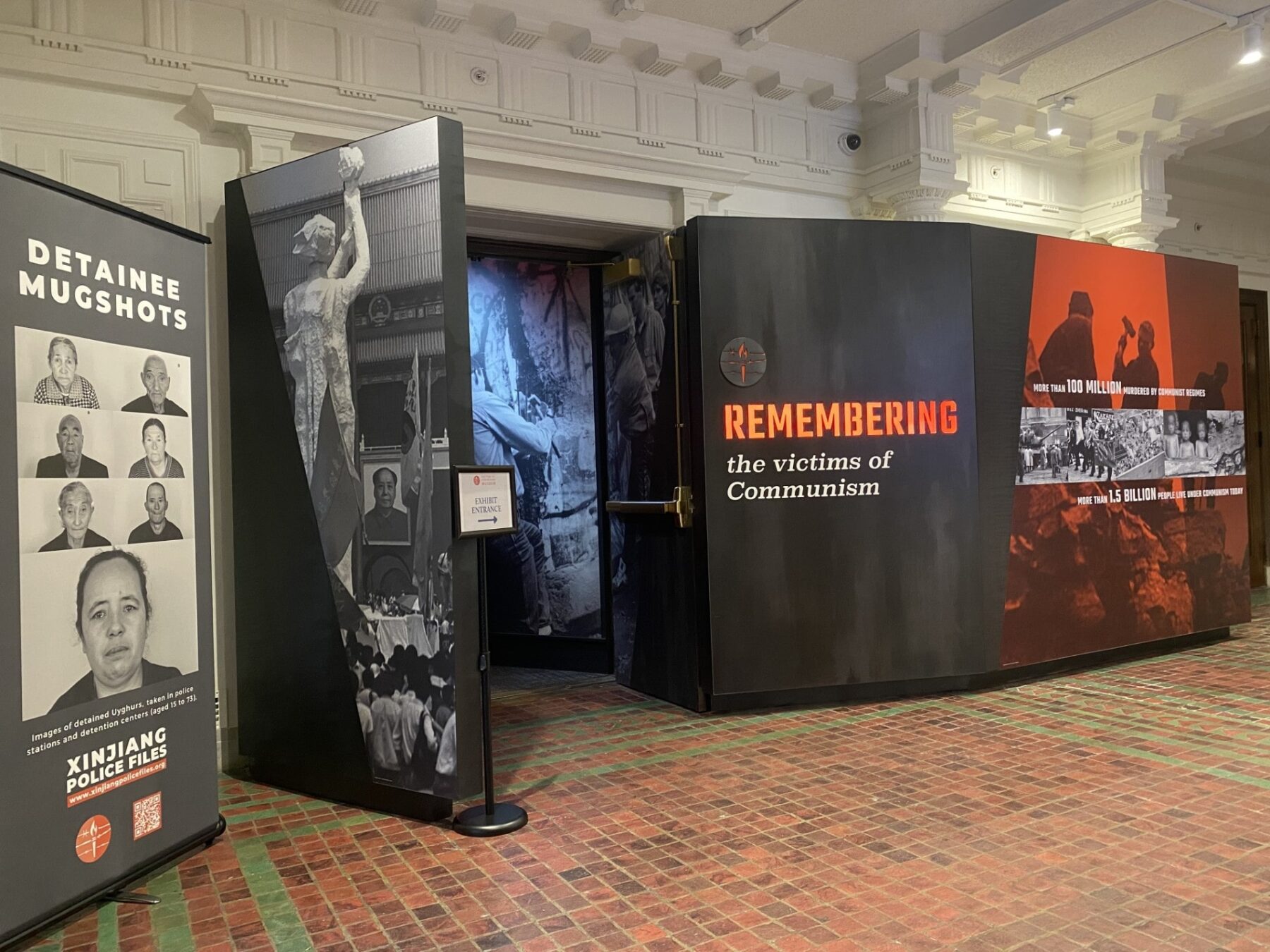
I also assisted in holding two major summer events at the VOC – the 8th Annual National Seminar for Middle and High School Educators and the Captive Nations Summit. Assisting at the Seminar for school educators gave me an opportunity to learn about the curriculum on the history of communism that VOC has been developing for U.S. middle and high school teachers and students. It was informative for me to see the educators’ interest in this topic, as well as their responses to the exhibition of the VOC museum. I was also able to interact with other visitors of the VOC museum during my internship, asking them about their interest in this topic, their family stories, and their impressions of the museum exhibition. During the Captive Nations Summit, scholars, policymakers, and human rights advocates debated the historical past and present-day legacies of the countries that had been or are currently governed by communist parties. I had the honor to witness the (in absentia) conferral of the Dissident Human Rights Award to Vladimir Kara-Murza, who was then serving his 25-year prison term, for his advocacy for democracy and human rights in Russia. A revelation for me was to see how, in the American political context, perceptions of the past inform the current political sensibilities and are still driven by the Cold War ideological antagonisms. The Foundation insists that current abuses of human rights are a direct legacy of leftist totalitarian regimes. Its research, museum, and educational programs focus solely on the tragic pages of the histories of global communism, and its public outreach program, through the VOC Congressional Caucus, lobbies against any initiatives that lay to the left side on the U.S. political spectrum as a threat to democracy. As a historian, I believe that much more historical and activist work remains to be done to tell nuanced stories of people who lived on the other side of the Iron Curtain and to honor those who now risk their lives to oppose state injustices that can occur in regimes on the either side of the political spectrum.
Alexandra Noi (History, University of California, Santa Barbara)
2023 ASEEES Internship Grant Program Grantee