Over the last decade, there has been a tectonic shift in how the ordinary public views the Caucasus and Central Asia. These regions, which are most often understood to include the eight former Soviet republics but sometimes also the surrounding regions of Eurasian land empires, have exploded into public view in the Western world. Tragic and monstrous events, such as the Russian invasion of Ukraine in 2022 as well as the fall of the Islamic Republic of Afghanistan in 2021, have required leadership in the region to assert itself as caretakers of the region and trade partners, while these states’ own poor behavior, such as the 2022 Kyrgyz-Tajik Border War and the Second Karabakh War of 2020, have drawn, sometimes unwanted, political attention and scrutiny. With Russia’s absence at the most recent Olympics, Central Asia, and Uzbekistan, in particular, entered ordinary Western denizens’ public consciousness with Uzbekistan’s eight gold medals, five in boxing.
Central Asia and the Caucasus have exploded into public view in the Western world.
We, as scholars, too have refocused our efforts on Central Asia, among other places, given the events mentioned above. Even in the Slavic humanities, which I intend to discuss with this piece, the Caucasus and Central Asia have increasingly taken center stage in the effort to decolonize the field. Students are now more likely to go to these regions rather than Russia to study Russian; historians are shifting their focus to archives that are open to Westerners in the Caucasus and Central Asia; and now scholars of literature and culture are looking to the regions’ Russophone and other written work in order to have their students think through Russia as an empire.
As a literary scholar and a translator, I want to use this space to give the ASEEES community an overview of the myriad translations of Caucasian and Central Asian literature that have emerged largely in the last five years and some of the important forthcoming pieces. I will also highlight some of the resources for teachers who want to start teaching the region as part of the various Russian empires and interimperial Eurasia.
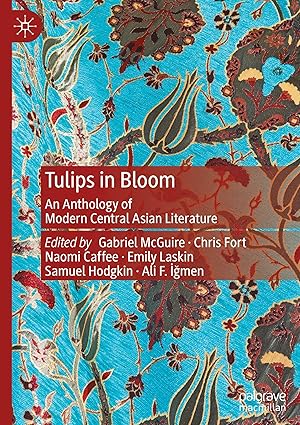
I want to start with one of the most prolific genres in English translation of late, the childhood (pseudo)memoir. Gorky’s childhood memoirs were some of the earliest pieces of Russian literature to be translated into Uzbek during the push to create Socialist Realism in the early 1930s. Few Uzbek authors cited the canonical texts of Socialist Realism, such as Gorky’s Mother or Ostrovky’s How the Steel Was Tempered as inspirational at this time, though these too had been translated; instead, they looked to Gorky’s My Childhood and My Universities. For Islamic reformers and the first generation of socialist writers in the 1930s, the childhood memoir uniquely allowed them to pursue their goals of reputation building and promoting a vision of Soviet society compatible with their background in Islamic reform (either as reformers themselves or students). Sadriddin Ayni, part of whose Tajik and Uzbek-language memoirs and memoiristic short stories were translated by John R. Perry and Rachel Lehr in the 2012 collection The Sands of Oxus: Boyhood Reminiscences of Sadriddin Aini, uses this genre to not only justify his program of childhood education by explaining his torture at the hands of his various pre-Soviet teachers, but also to raise and maintain his Soviet credentials. Even in his 1934 short autobiographical story Old School directed at young readers, Ayni likens his graphic depiction of the physical punishment in early modern Islamic schools to his torture at the hands of the Bukharan Emir, which he frequently held up in the 1930s as a sign of his sincere Bolshevism. In his 1936 childhood picaresque, The Mischievous Child, Uzbek writer G‘afur G‘ulom combines folk humor, the grotesque, and the childhood memoir form to realize a critique justifying the Soviet Union by suggesting the Soviet state as a father adopting a Central Asian homeland of misguided orphans. Chapter II of this novella appears in my translation in the 2024 translation anthology, Tulips in Bloom: An Anthology of Modern Central Asian Literature, a volume which I’ll discuss in more detail later.
That first Soviet generation in the Caucasus and Central Asia and their descendants advanced the childhood memoir further after Stalin’s death. Again, Central Asian authors used the genre to build their reputation, such as Abdulla Qahhor, who cemented his legacy as Uzbekistan’s most prominent “liberal” voice with his publication of his 1966 episodic autobiographical novella Tales from the Past. This novel, the translation of which I’ve finished and hope to publish later this year alongside an article about Qahhor, paints the author as perspicacious truth teller, uniquely capable of seeing the evils of past and present. But post-Stalin authors also transformed this genre to fit a new set of imperatives after WWII. Most readers of Soviet literature are familiar with Chingiz Aitmatov’s The White Ship, but in the near future they can also look forward to the magical realism of Narine Abgaryan’s 2010 Manyunya, a translation of which by Sîan Valvis is now in the works. In another direction, Akram Aylisli’s People and Trees, translated by Katherine Young in 2024, and Sabrina Jaszi’s translated excerpt from Uzbek O‘tkir Hoshimov’s childhood memoirs “The Golden Earring” (2024) give surprising insight into women’s lives in patriarchal Azerbaijan and Uzbekistan. The former, a trilogy of novellas, follows the pseudo-autobiographical narrator Sadyk as he is raised, sometimes as a girl, by the newly homosocial female world of rural Azerbaijan during and immediately after WWII. Unlike so many Central Asian Socialist Realist (and otherwise) novels that see utopian monogamy as the goal of women’s existence, Aylisli shows how women assert themselves and struggle to control their own lives as men return.
Translations from the Caucasus and Central Asia are increasingly turning away from their traditional male focus and towards women authors and gender as a construct
On that note, translations from the Caucasus and Central Asia are increasingly turning away from their traditional male focus and towards women authors and gender as a construct. I will only briefly mention my translations of Uzbek author Abdulhamid Cho‘lpon, who, in both his 1936 novel Night and Day (published with Academic Studies Press in 2019) and his 1928 lost play A Modern Woman (Tulips in Bloom in 2024), alternately supports and critiques European and Soviet gender modernity. Like most Islamic reformers, Cho‘lpon seeks to install European-style heterosociality in his homeland because he sees it as a path to modernity, but at the same time, he fears the disruption of the gender regime that heterosociality might imply, that women might hold power in a heterosocial space. Caucasian and Central Asian Soviet canons, and the modern ones for that matter, include very few women authors, but new translations are increasing their representation. Of interest here are Claire Roosien and Donohon Abdug‘afurova’s translations in Tulips in Bloom of Uzbekistan’s Soviet canonical women authors Oydin and Zulfiya, two poetesses (their own description) who negotiated their position as women in a male-dominated world in incredibly different ways. Both sought to play up their liberation as Soviet women and their contribution to the Soviet state in their literary work, but as both Roosien and Abdug‘afurova’s scholarship and translation work reveal, they also had to critically place themselves vis-à-vis a women’s public, men, and the nation. Oydin, as an orphan who never married, publicly figured herself as a representative of women, but also took on a masculine role in the male-dominated Writers’ Union, and stories abound of how she outdrank her counterparts. Zulfiya, on the other hand, identified herself as the forever faithful widow of her husband, the talented poet Hamidjon Olimjon, who died young in a car accident, and then in the 1990s as a voice of the nation who must also repent for Soviet crimes.
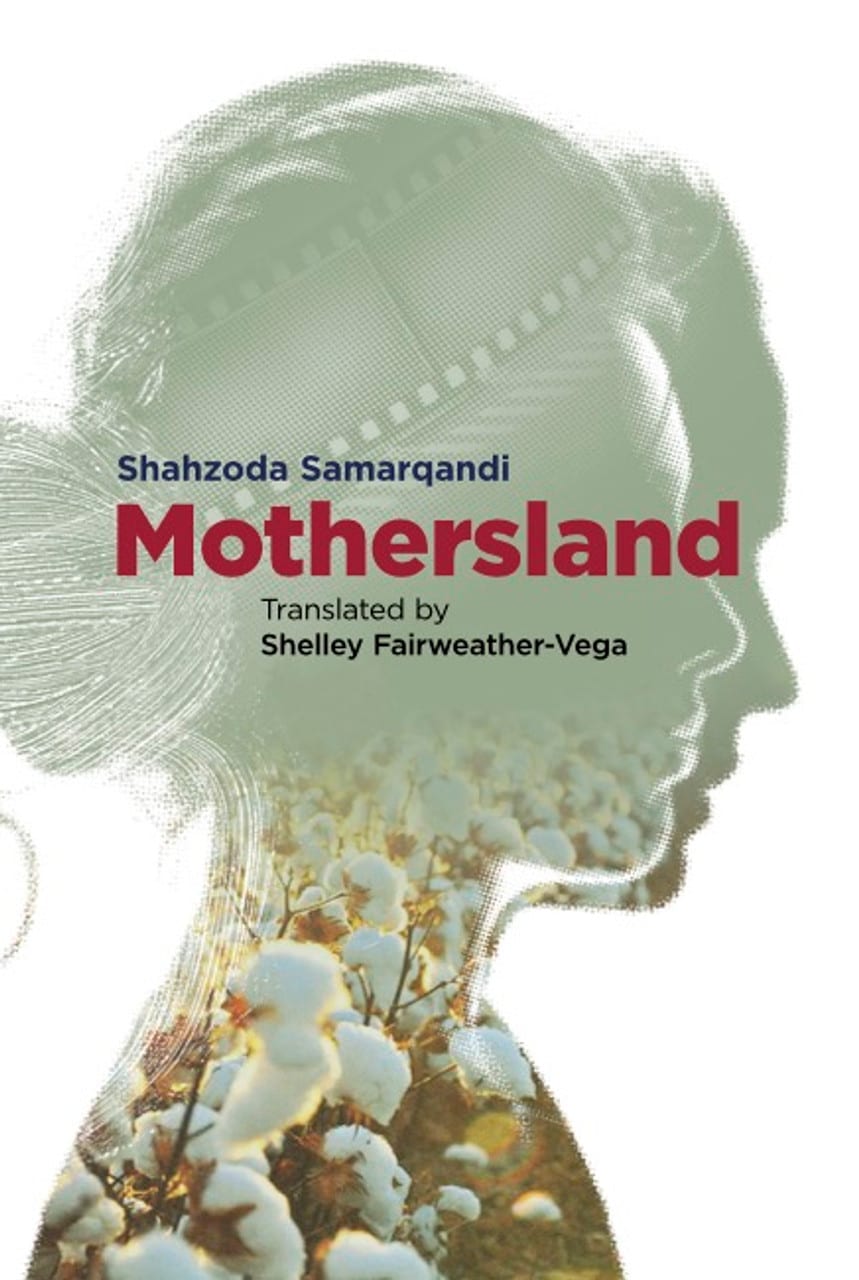
No longer bound by the patriarchal Writers’ Union, the post-Soviet period has given women authors other outlets in which to publish. Zaure Batayeva and Shelley Fairweather-Vega have been pioneers here. The two have translated a wonderful 2022 collection of Kazakhstani women authors in Amanat, which literature enthusiasts at large have found invaluable. I would like to also give special praise to the work of Tajik author Shahnoza Samarqandi, whose Mothersland was translated and published by again Shelley Fairweather-Vega in 2024. Mothersland is a pathbreaking, in Samuel Hodgkin’s words, “gothic postcolonial” novella that follows the heroine Mahtab’s travails as she attempts to recover her memory and individual identity from a patriarchal Central Asia that has reduced her to an abstraction, a sort-of mythical, transhistorical woman who only serves men’s stories.
Mothersland is so fascinating because it builds on but also challenges one of the most addressed themes of Caucasian and Central Asian literature today. Despite the many continuities in formal structures and in the state relationship with writers between the Soviet Union and the modern states of the region, a dramatic change has been the increased interest in individual and folk spirituality. As Paolo Sartori notes in his Soviet Sultanate, the Muslim institutional establishment in the region since WWII to the present has enforced a version of Islam (locals call it Wahhabism) dictated by texts and hostile towards Sufi (Islamic mysticism) and folk practices. But modern Central Asian authors across the board—official, indifferent, and dissident—are fascinated by folk and Sufi spirituality and use it often to write didactic parables. Some of these have appeared in translation, such as my translations of Isajon Sulton (The Eternal Wanderer 2019) and Sabrina Jaszi’s translation of Salomat Vafo (her short story “Telefon” in The Dial in 2024). And, of course, in the work of the most prolific and famous Sufi-interested author of Central Asia, Hamid Ismailov. His latest work, the novel We Computers, scheduled to appear in Shelley Fairweather-Vega’s translation in 2025, features his typical effort at contemplating Sufi ego-annihilation through the death of the author. We, of course, see this in some of his earliest work, such as The Railway, translated by Robert Chandler in 2008, but We Computers represents a new step forward in Ismailov’s oeuvre because here he not only meditates on the recent craze of AI by suggesting it again as ego death, but also because he does this through a brilliant mix of wordplay and cross-linguistic and canon literary insights. Unfortunately, few will be able to read his Uzbek language translation of Edgar Allan Poe’s “The Raven,” which amazingly realizes all the intensity and rhythm of the original. But in translation, this novel will certainly be a work to push forward Ismailov’s candidacy for the Nobel Prize in Literature, a campaign that has picked up steam in the past few years.
To return now to Samarqandi’s novella, it too represents a breakthrough because it points out and intentionally undermines the utter maleness of Sufi discourse as understood and practiced in Central Asian literature. Sufi love poetry contemplates the divine through a male’s meditation of the beauty of a younger boy; Hafez, the central figure of Ismailov’s We Computers, and other such poets did not meditate on God through a female lover because in their patriarchal society, women were not adequate to such intellectual matters. Likewise, Ismailov’s The Railway pursues ego annihilation through its central metaphor of the penis as a pen. Just as the pen spills ink onto the page that can then be read and interpreted apart from the author’s intent, i.e., the death of the author, so the penis spills seed that somehow (no mention of the egg in this metaphor) grows and has its own will, own ego, apart from the father. Samarqandi’s novella, to the contrary, sees women’s ego annihilation as a product of the male gaze and invites women to discover themselves through female solidarity.
Translation promises to help students see Central Asia as not a periphery of Russia but part of a broader interimperial intellectual field.
As promised, I want to turn now to some more general resources for teachers. I have already mentioned the anthology Tulips in Bloom, for which I was an editor, but I would like to comment on its content outside the themes I discussed above. The anthology includes literature from Central Asia broadly understood and thus includes pieces from not only the five republics of today, but also from Daghestan, Azerbaijan, and East Turkestan (Xinjiang). It is mostly chronologically organized. It begins with a section on oral literature, followed by written literature in four sections: pre-revolutionary written literature, the Stalin era, Khrushchev and Brezhnev, and the independence era. The anthology also includes a variety of genres, including poetry, prose, and drama. Each subsection, organized by either author or theme, is preceded by a short introduction of the author/s and piece/s that puts both in their historical and literary contexts. Those introductions can be somewhat repetitive if one reads the text from cover to cover, but we designed them thinking that an instructor would not use the anthology as a textbook for a class on Central Asian literature but rather integrate a text from the anthology into a thematic course.
For instance, in a lesson on the Kazakh famine, I had students read an excerpt from Sarah Cameron’s The Hungry Steppe alongside Beiimbet Mailin’s “The Black Bucket,” translated by Gabriel McGuire, to compare the reality of collectivization and famine with contemporaneous elite understandings and representations of them. In this vein, I also want to draw attention to another 2024 anthology, Literary Modernity in the Persophone Realm: A Reader (LMPR). Through its translation of Persophone literary theory of the 19th and 20th centuries from Iran to Tajikistan, it promises to help students see Central Asia as not a periphery of Russia but part of a broader interimperial intellectual field, much as Samuel Hodgkin has done in his 2023 monograph Persianate Verse and the Poetics of Eastern Internationalism. And finally, I want to note a new venture that those interested in the literature of the region in translation can turn to for new translations. Sabrina Jaszi, in addition to her prolific work as a prose translator of Russian and Uzbek, has cofounded with Ena Selimović the literary translation journal Turkoslavia, dedicated to literatures that cross linguistic and cultural boundaries between the Slavic and Turkic worlds. It’s latest issue features works not only of classics of the canon such as Mandel’shtam and Aitmatov, but also new authors who have seen minimal translation, such as Uzbek author Saida Zunnunova’s Diary, translated by Abdug‘afurova, about her and her husband’s persecution during the anti-cosmopolitan campaign, Suhbat Aflatuni’s (penname of Russian-language Uzbekistani author Evgeny Abdullaev) “Mistle Thrush,” translated by the journal’s collective. Aflatuni is a prolific poet and prose writer and a founder of the former Tashkent school of poetics, whose work, according to Naomi Caffee in Tulips in Bloom, “espouses a kind of radical embeddedness, in which the mobile poetic subject is triangulated with elements of the Central Asian landscape and its cultures in a way that elicits complex layers of meaning in the poetic text.”
As a translator mainly of Uzbek, my account above of the field naturally has an Uzbek bias, but I hope this brief overview serves as an entry point for SEEES scholars looking for ways to bring Caucasian and Central Asian literature into their teaching and perhaps even their scholarship.

Kristen Fort received her PhD from University of Michigan’s Department of Slavic Languages and Literatures in 2019. Her dissertation, Inhabiting Socialist Realism, studies Uzbek literature as it adapted the demands of Socialist Realism throughout the 20th century. She has authored several articles on Russian, Uzbek, and Kazakh literature for journal publications and collected volumes. Her latest interest takes her to Thaw period-literature in Uzbekistan, and she studies how literature and literary politics reflected on the Thaw as it was experienced both locally and in Moscow. Her literary translations from Uzbek include Abdulhamid Cho’lpon’s Night and Day and Isajon Sulton’s The Eternal Wanderer, as well as the 2024 edited volume Tulips in Bloom: An Anthology of Modern Central Asian Literature. She is now searching for a publisher for her recently completed translation of Abdulla Qahhor’s Tales from the Past. She is interested in postcolonial thought and literature, gender and queer studies, socialism and post-socialism, and nationalities studies.