ASEEES thanks Robert Nemes (Colgate University) for chairing the prize committee and formulating the interview questions.
What are the origins of this book project? How did you come to work on legal pluralism in Chechnya?
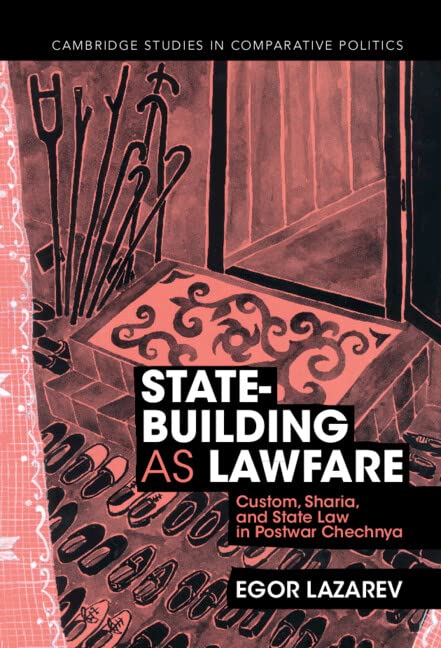
Initially, I went into the field to explore a different topic. I wanted to study the politics of Sufism, a mystical and hierarchical branch of Islam that plays a significant role in the political life of Chechnya and the neighboring regions of Ingushetia and Dagestan. I conducted interviews with Sufi religious authorities, their followers, and their opponents. Through these conversations, I discovered that Sufis wield considerable political power, such as mobilizing followers for elections and rallies. However, due to the secretive nature of Sufi orders, insiders were unwilling to discuss these issues with me.
During my interviews with religious authorities, I observed another fascinating phenomenon: the adjudication of disputes.
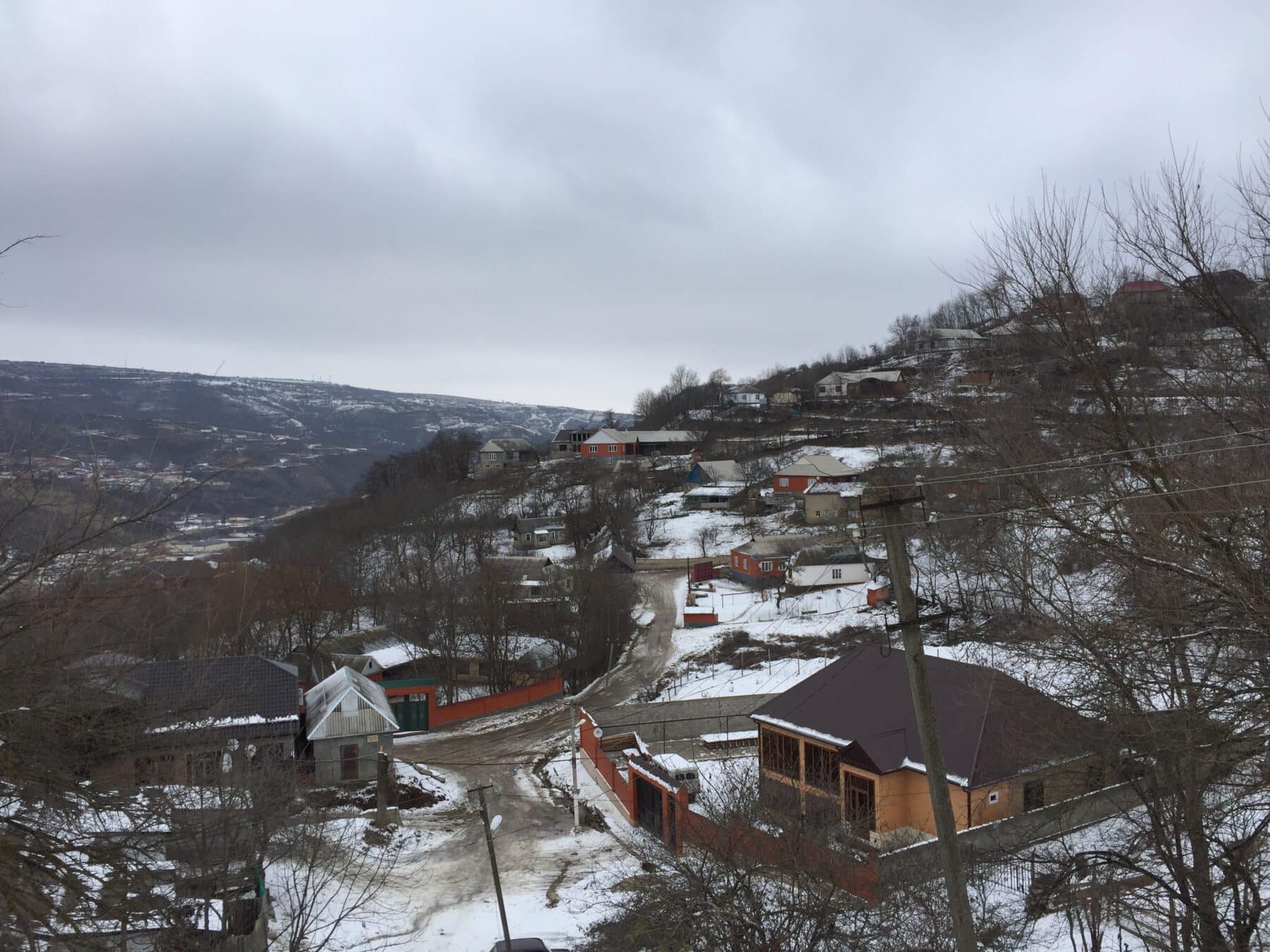
For instance, while interviewing an imam at a mosque in Derbent, Dagestan, I witnessed an interaction that sparked my interest in legal pluralism. As we drank tea and discussed his journey to religious authority, three men arrived, seeking the imam’s help. The men, all in their thirties and from a mountain village, asked the imam to conduct a Sharia trial for a man from another village who had failed to repay a loan on time. The imam promised to mediate with the borrower and, if necessary, proceed with a Sharia trial. These observations of how quotidian disputes were resolved within nonstate legal systems grounded in religion and tradition shifted my focus to the broader issue of legal pluralism.
Your book analyzes state-building through the prism of lawfare. What does this approach allow us to see about state formation that we might otherwise overlook?
The canonical theoretical approach associated with Charles Tilly links state-building to external warfare. My book offers an alternative perspective, arguing that the state emerges from lawfare. I conceptualize lawfare broadly as the use of state and non-state legal systems by politicians and ordinary people for instrumental purposes. This broad understanding of lawfare is intended to mirror the concept of warfare. Through the lens of lawfare, I explore the regulatory dimension of state-building—specifically, the use of state law in contrast to alternative forms of social control.
My study demonstrates that political leaders place significant importance on seemingly mundane cases, such as divorces, car accidents, or small debts, because the resolution of these cases impacts their legitimacy and the coalitions that support them. Even petty disputes can influence high-level politics. This perspective also provides a way to examine state-building from below, focusing on how individuals navigate choices between state institutions and their alternatives. Since archives rarely document these everyday decisions, my ethnographic approach is particularly valuable for uncovering these dynamics.
I conceptualize lawfare broadly as the use of state and non-state legal systems by politicians and ordinary people for instrumental purposes.
Finally, the lawfare framework underscores the pivotal role of gender in state-building. While scholarship has traditionally emphasized class divisions and elite power struggles, gender conflicts also play a central role in shaping state–society relations. Issues such as control over sexuality, honor, and shame become critical arenas for boundary-making between the state and society.

What insights does State Building as Lawfare offer into post-conflict societies?

Conflict emerged as one of the major themes in my study. This is of course not surprising given the history of Chechnya. Conflict and political violence accompanied state-building throughout Chechen history: from the Caucasian War in the 19th century, to Stalin’s forced deportation of the entire Chechen nation to Central Asia in 1944, to the experiences of brutal violence during the Chechen Wars in post-Soviet period. The main insight for post-conflict societies is that experiences of violence can create demand for law. This is because violence ruins traditional social hierarchies, including in gender relations, and thus spurs the penetration of state law into family and community life.
What surprised you most as you conducted the research for this book?
One of the most striking social facts I encountered during my research was the presence of strong networks of civil society organizations advocating for women’s rights in Chechnya, despite the highly repressive political regime.
What advice would you give to scholars hoping to conduct research in Chechnya or regions like it?
Unfortunately, for scholars affiliated with American institutions, conducting field research in the North Caucasus is currently extremely difficult, if not impossible. Therefore, I would advise against pursuing it at this time. More generally, for research in regions like Chechnya, it is crucial to come to the field well-prepared, establish connections with local scholars, and find ways to show respect toward local interlocutors.
It is crucial to come to the field well-prepared, establish connections with local scholars, and find ways to show respect toward local interlocutors.
What is your next major research project?
I am currently working on a book-length study about the struggles for legal reforms in the aftermath of political changes in post-Soviet countries, with a primary focus on Armenia and Georgia. So, I continue working on the issues of law and state-building and on the Caucasus, but from a different analytical perspective. In State-Building as Lawfare, I focused on how politicians and ordinary people engaged with state and non-state legal systems and how state-building is shaped by these engagements from above and from below. In my current study, I explore how state-building is shaped from within by legal professionals: attorneys, judges, prosecutors, human rights lawyers, legal experts, and advisors from international organizations. Specifically, my research investigates how ideas of legal reform emerge and are contested within the context of political transformations, with a particular emphasis on the role of legal professionals. Drawing on semi-structured interviews, I reconstruct the power struggles within the legal field. The primary goal of this study is to uncover the sources of the legal field’s resilience to political change.
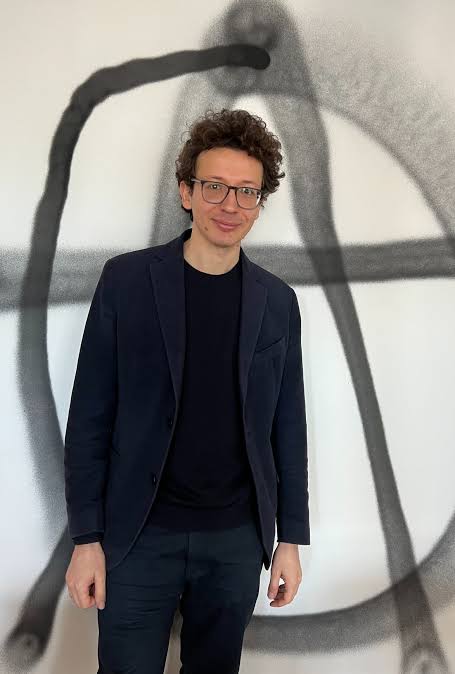
Egor Lazarev is an assistant professor at the Department of Political Science at Yale. His research focuses on law and state-building in the former Soviet Union. His first book State-Building as Lawfare: Custom, Sharia, and State Law in Postwar Chechnya was published by Cambridge University Press in 2023. Egor’s other research has been published in World Politics, Perspectives on Politics, World Development, and Political Science Research & Methods. Currently, he conducts field research on legal reforms in the post-communist world.