Few Slavicists would say they chose this path because they foresaw a lucrative career. The decision to go to graduate school in the humanities is rather more akin to entering a religious order. There’s a vow of poverty and grueling mental labor. Defending a dissertation signifies your ascent to mastership. Research promises a personal relationship with the divine primary sources of your particular sect, confirming your authority to preach historical truths to the laity. There’s even an ordination ceremony where we get to wear robes.
Maybe not everyone takes it that seriously. Still, the feeling of being “part of the academic community” pervaded my training and strongly colored my professional identity. I started this path with the unequivocal goal of a history professorship where I could share the fruits of my tutelage and maybe even continue the great circle of scholarly life by training my own graduate students.
It didn’t work that way for me, though. By the time my post-doctoral fellowship ended in mid-2020, there was little prospect of gainful employment in academia. Five demoralizing churns through the gears of the job market had raised the serious prospect of having to leave higher ed. And so, I made a fateful decision: I would accept the seeming defeat of teaching at a high school.
I began undergraduate study on track to become a secondary history teacher. The gleam of knowledge and professional bookishness led me to abandon this track, however, and I switched to a BA in history in my junior year to pursue my passion for history. Required readings like Turgenev’s Fathers and Sons and lectures on things like the Slavophile Controversy became the highlight of my week. Even through untold levels of anxiety from the heightened essay-writing load, I felt a powerful satisfaction from working so closely with topics I loved. When contemplating careers, I couldn’t help but imagine myself in a cardigan sweater at the front of a lecture hall, regaling students about palace coups and socialist realism.
The stress and pressure increased dramatically in graduate school, but so did my sense of purpose and burgeoning self-identification as a “professional” historian. As a PhD student, everything positioned me as a professor-in-training. I received little formal instruction in pedagogy, but my teaching assistant duties provided plentiful experience leading a classroom. Months spent in archives in Petersburg and Moscow brought me journeyman credentials and introduced me to a cohort of American historians of Russia. We were all cutting our teeth on projects that would become dissertations, and then, we all hoped, monographs that would secure tenure. By the time I earned my doctorate, imagining myself professionally as anything other than a professor felt tantamount to failing. The path to professordom seemed difficult, but surely I’d be one of the ones who made it.
After a few tentative runs at the market, I applied to jobs in Fall 2017 with a newly minted PhD and an article pending publication in a top journal in my field. I sat for three video interviews for temporary positions (the most I’d ever get) and chose a post-doctoral fellowship at my home institution, the University of Virginia, that focused on teaching and academic advising. Here, I got to design and teach my own courses, and students even called me Professor Hoffman. The two-year position also afforded the financial stability I’d needed to start a family, offering much-needed perspective on my life and career. It felt like I was almost there. The uncertain future weighed heavily, though, as the academic clock barreled toward the end of my contract.
My history PhD program straightforwardly prepared students for jobs in the professorate, as most do. I worked on my job materials constantly–often to the detriment of my research. My advisor read a dozen versions of my cover letter and wrote at least twice that many recommendations. I didn’t want to accept that the odds were poor that I’d succeed. Sure, there were only around ten jobs I was truly qualified for each year, and I didn’t have the most impressive list of publications or achievements. And yes, I knew the backlog of fellow un-tenure-tracked PhDs was swelling the number of applicants for even the smallest colleges. Something was going to stick for me, though.
Nonetheless, I knew I’d have to seriously consider backup plans. Jobs in public history, museums, and publishing existed; however, those trajectories remained inchoate to me and likely required additional training. In the late 2010s, I made some headway pursuing the digital humanities, but a lack of coding skills, together with my fellowship’s teaching and advisorial responsibilities, made me feel similarly stymied. As most NewsNet readers will know, mentioning you study Russia often prompts people to suggest you get “a job with the government.” I considered the various things this might mean, but my scholarly instincts (and the USAJobs portal) told me this was not an immediately viable option either. Adjuncting of course existed too, but prospects were far-flung and not conducive to supporting a family. Through all of this, I did not consider high school teaching.
The academic job market fell more or less precipitously throughout the 2010s. Every year seemed the bottom, from which the upward trend would finally begin. 2020 showed these were all false floors, and the true abyss lay far below. After a final demoralizing and fruitless run at the market, my postdoc was bookended by the COVID-19 lockdown. Unease turned to panic. Hiring and funding freezes spelled a dead end to my chances of staying at my home institution. I needed full-time employment for the 2020-2021 school year, but academia didn’t seem forthcoming.
Several of my graduate school colleagues had made the transition to secondary teaching. In March 2020, we had actually visited two close friends in Atlanta who both taught at private high schools. One of them graciously offered to let me tour their school, sit in on a class, and meet with their division director. It had been decades since I’d been in a secondary classroom, but the topic (the Haitian Revolution) was familiar to me, and the depth with which the class covered the material was greater than I might have expected. This is not to say I thought it would be facile or surface-level, but a decade in the university world had strongly colored my assumptions of what high school courses and students were like. Meeting with the division director offered similar insights. My expertise and knowledge in history would be valued in this setting, but I would need to learn how to teach high school. I should not expect a secondary school to simply see my degree and university teaching experience and jump at the chance to have me. Barely 24 hours after this foray outside of my professional domain, my university announced class cancellations and virtual teaching for the foreseeable future.
Applying for secondary school jobs was both easier and more difficult than the academic rat race. Applications made familiar requests (CV/resume, cover letter, transcripts), but necessitated reframing my credentials. In higher ed, even postings for teaching-centric jobs at liberal arts colleges demanded assertive research agendas and timelines. After five years on the job market, I had a stale professional statement that was heavy on research and light on teaching. I learned early on, however, that research would likely never be a top priority for a secondary school employer. It was certainly value-added, but in the game of high school education, it was tertiary. All the same, moving publications and conference presentations to the end of my credentials meant ignoring powerful instincts. Reframing my qualifications did, however, offer a chance to reflect on my career to that point. Between serving as a grader or teaching assistant and running my own courses, I had spent a large part of the past decade teaching. My adventures and accomplishments in research were important, but when I really thought about it, I viewed myself fundamentally as an educator. This was not exactly a revelation. I’d always found teaching enjoyable and rewarding, and when I envisioned myself as a professor, it was almost always in front of a classroom.
From the outset, my understanding of private schools was doubly opaque. I’d had a public school education and so lacked any firsthand experience. My single-minded focus on staying in the ivory tower had also prevented me from learning much about them while job-hunting. (For example, I kept calling them “private,” only to learn they were more professionally referred to as “independent” schools.) They seemed to offer some advantages to me regarding a possible transition out of academia, though. For one, many do not require a teaching license. I had a master’s and a doctorate in history, but I lacked any degree in education. In my state, this meant I’d need to take a training program and an exam. My experiences visiting independent schools and conversations with friends and family showed that they aligned with my teaching experience and style. Classes are usually smaller and more intimate. Teachers have greater flexibility over their curricula. Many straightforwardly label themselves “college preparatory” academies. I began to think maybe this wouldn’t be as violent a course change as I’d feared.
I interviewed for secondary teaching jobs later that Spring and accepted a position at a mid-sized independent school for Fall 2020. I would be teaching European and Asian history and helping out with a new student-advising program. A major selling point had been the chance to teach the seniors Advanced Placement European History. This was essentially a version of the Western Civilization course I’d taught many times. It was also a personal favorite from my own high school years. Over many, many Zoom calls (it was still the pandemic), I got to meet the faculty and get a feel for the school.
The week of meetings before the beginning of classes drove home the very real differences between college and secondary teaching. Many are glaringly obvious or mundane, but critical to navigating the transition. Foremost, you see the students far more frequently than in college courses. This means not only a dramatic increase in lesson planning, but also much more, and more consistent, grading and gradebook wrangling. As much as I longed to, I could not give two tests and a paper per semester and be done. For one thing, the students need more direct engagement and scaffolding, which means daily assignments to check their progress and establish a baseline grade. And then there are the aspects of high school teaching almost wholly absent from college. You are in more contact with fellow educators about individual students at grade-level and faculty meetings, to say nothing of parent-teacher conferences twice a year. The students are also younger, and discipline is not merely a passing concern in the classroom. In other words, teaching is your full-time job. Again, obvious, but a major change from what I was used to.
My first year at an independent school was difficult. Previous teachers had left guideposts and course maps, but it was up to me to figure out how to make it all hang together. While I could more or less directly adapt Western Civ and Russian History materials to AP European History, courses for underclassmen required a lot more work. Daily planning was demanding and relentless. It didn’t help that I stubbornly insisted on changing my teaching style as little as possible. It seems silly and pompous now, but at the time, it felt really important to be a college professor who was teaching high school. This was mentally very challenging.
Leaving the college teaching track had caused a crisis in my professional identity. The majority of my adult life has been dedicated to advanced degrees and postdocs chasing my vision of professordom. I’d spent years obsessively checking job postings and refreshing my email in hopes of news that would secure my place there. Now I couldn’t shake the feeling that I’d failed out. It wasn’t easy to let go of something that felt like a personal as well as a professional identity.
As it turned out, I didn’t actually have to let it go. It just took some time to get over myself. After five years, my personal and professional identity are much more harmonious than I might have imagined. I still miss some of the monastic trappings of scholarly life, but teaching at a high school provides ample academic fulfillment. My colleagues offer an intellectually stimulating environment where I’m equally comfortable asking advice on a lesson or making a bad joke about Stalin or Brezhnev. Despite my misplaced fears about “stepping down” from college teaching, colleagues and students value my excessive content knowledge. I get to indulge my curiosity regularly while lesson planning. Recently, this meant reading about Buddhism in Central Asia and perusing propaganda posters from Eurasian communist regimes. The pace and regularity of the work were an adjustment, but ultimately proved more conducive to work-life balance. I still occasionally attend conferences and do some writing over the summers. Being able to send my kids to my school, as well as call on colleagues or substitute teachers, has made dealing with the exigencies intrinsic to raising them easier to deal with as well.
The biggest surprise, however, was the students themselves. Their enthusiasm and genuine desire to learn are energizing. While they are, of course, teenagers and subject to any number of social and emotional foibles, I can’t count how many times they’ve led class down interesting tangents I wouldn’t have otherwise considered. They love a good story as much as I do and are (almost) always up for anecdotes about Peter the Great’s height or antics during his Grand Embassy. They’re surprised to find out that they call me “Doctor” Hoffman because I have a doctorate in history. As expected, I have to coach most of them more closely on writing and argumentation than I did in college courses. All the same, every year I get some ninth-graders who can write as well as or better than college freshmen.
When I took a job teaching at a secondary school, I felt the need to email advisors and faculty members I’d worked with over the years to explain myself and my decision. I had relied on them heavily to get to my PhD, and they all responded with sorely-needed support and reassurance. One of them said something I still think about years later. Teaching at a high school is fulfilling a critical role in preparing students to succeed in college. I wasn’t leaving academia so much as teaching the same students at a different stage.
My journey didn’t go the way I envisioned, but I’m still engaging with and sharing my love of history every day. Even if I’m not “Professor Hoffman,” I get to do almost everything I wanted to do in academia.
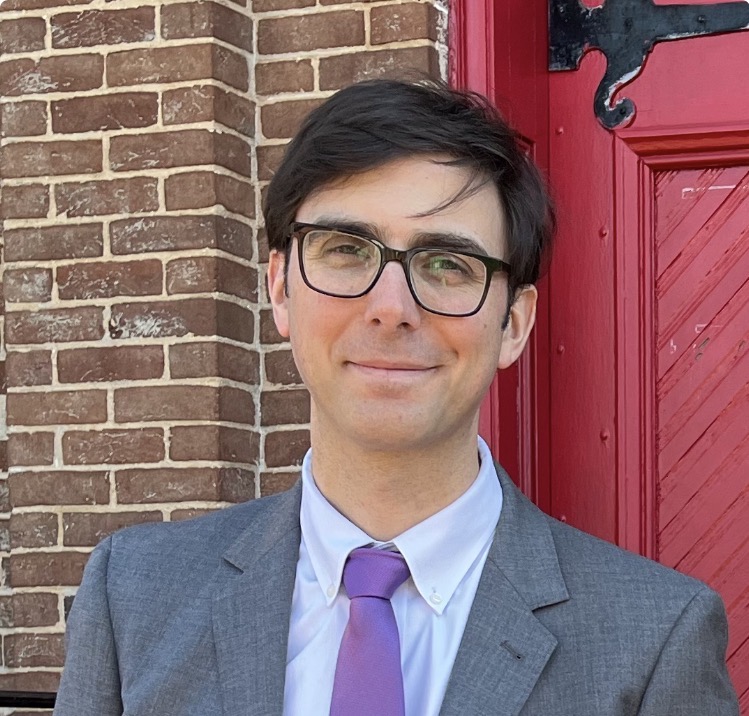
Zachary Hoffman is a history teacher in the upper division of Highland School in Warrenton, Virginia. He holds a PhD in Modern European History from the University of Virginia. His research has focused on the popular press in Imperial Russia and national identities during the Boxer Uprising and Russo-Japanese War.