In July 2025, Zachary Mazur organized a weeklong summer school for early career scholars working on Poland’s Jewish history at POLIN. In this interview, ASEEES NewsNet explores his perspective on non-traditional professional pathways for historians, the value of bringing together early-career scholars in an environment such as POLIN, and new directions in Polish Jewish studies.
Zachary Mazur is a Senior Historian at the POLIN Museum of the History of Polish Jews in Warsaw and a lecturer at the Polish Academy of Sciences. He earned his PhD at Yale University. His research interests include modern Eastern and Central Europe, national identity, law, and economics. You can find his list of publications here.
Tell us about your professional background. How did you come to work as a Senior Historian at POLIN?
It’s always a good question – how does one become a historian in the first place? For me, it was a mix of a couple of coincidences and a very wide-ranging curiosity that I initially had trouble harnessing. My path has always been rather “non-traditional.” I went from being a high school misfit who ended up in college without much direction, and then ended up in a study abroad program in Poland where I fell in love with the language. While I was away, the 2008 crash happened and I couldn’t afford the tuition, so I got a job at Whole Foods, but eventually returned to college. So – it definitely was not a straight path.
Some people know exactly what they want to pursue and spend their life doing, but I didn’t have the slightest clue what I’d be doing after graduation, though I was interested in variety of subjects. Thankfully, I had some amazing mentors at City College, especially Emily Greble and Cliff Rosenberg, who showed me that history is a way to go, if your mind wonders at politics, economics, philosophy…and storytelling. It turned out that I was good at that, so they encouraged me to apply for PhD programs. “You already love doing the research, and teaching is a blast,” they said. And they were right. With their help and guidance, I managed to get into a lot of top programs in history. I chose Yale because of the resources and the professors I wanted to work with. And although graduate school was tough for me – I felt like I wasn’t nearly as well prepared as my colleagues, and I certainly didn’t come from the same educational background as most who had undergraduate degrees from Ivy League schools – this is where I discovered how much I loved teaching, archival research and intense debate. I was still a bit all over the place: I came into grad school planning to write about radical nationalism, then got interested in criminology and finally ended up writing about taxation and state building in interwar Poland.
After three years in New Haven, I left for a Fulbright year in Poland. One year turned to three –and now it’s been ten years. After graduating, I had a lot of trouble securing a stable job in academia. I guess that after graduating we all harbor this naïve illusion that being a driven teacher and writer is enough, but everybody knows how difficult the job market is now. But of course, back then I saw this as a personal failure to the point that, in 2020, I had given up and accepted a position at Ernst & Young to do tax consulting. Thankfully, I suppose, it was March 2020 and when lockdown started they rescinded the offer and I was jobless again. I managed to find freelance work until August 2020 when I started my first academic job with the College of Europe in Warsaw as a research fellow. A couple years later, the opportunity came up in the Museum, which is an amazing institution, and I jumped at the chance to work here.
How do you use your academic training in your current role? How does your work differ from that of a historian employed at a university or college?
My position at the museum generally revolves around a cycle of grants, planning events and publications. On top of that, I also do a lot of outreach and educational work with adults. My academic training is really important for writing grants, assessing the work of my colleagues, and teaching.
My job is pretty different than the university or college track in the sense that it’s much more collaborative. On the one hand, I have plenty of independence to do things I want or feel would be good for the museum. But, on the other, I am also constantly in touch with colleagues from other departments. For example, I ran a ten-year review of our core exhibition and my job was to put together seminars with experts to assess our weak spots. This was something I did in close collaboration with our curators and scenographers because it’s not enough to just say, “Oh, there should be more women’s history in the exhibition.” We also have to figure out how we are going to implement it with the current infrastructure and that involves many departments and stakeholders. And it goes without saying that there’s a lot of bureaucratic work that’s part of my everyday, though that might be something that I have in common with people working at universities.
The recent summer school at POLIN brought together 16 doctoral students and post-doctoral fellows working on Jewish history in Poland. How did this summer school come about? What were its goals?
The summer school is a perfect example of the kind of project I get to run at POLIN. In our department, we had the idea to do something like this, to offer young scholars the opportunity to share their work with experts and get feedback, while also exploring lots of Jewish history institutions in Poland. I applied for some outside funding and managed to find supporters so that everyone would have their travel and accommodations covered. With that in our advertisement, we received over 80 applicants, but we could only invite 16 to participate.
My intention was really to open up people’s minds to what kinds of opportunities are out there.
The goals were to build a cohort of rising scholars who could, potentially, work together across borders and disciplines, to provide career advancement workshops, and to share what Poland has to offer the Jewish studies scholar.
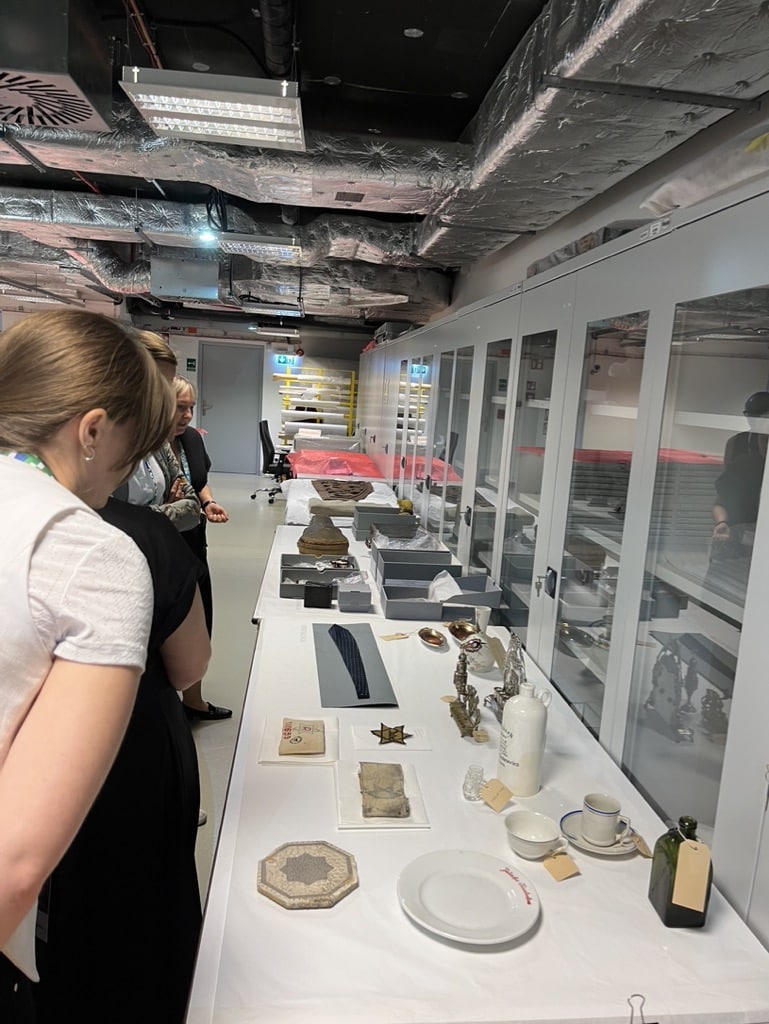
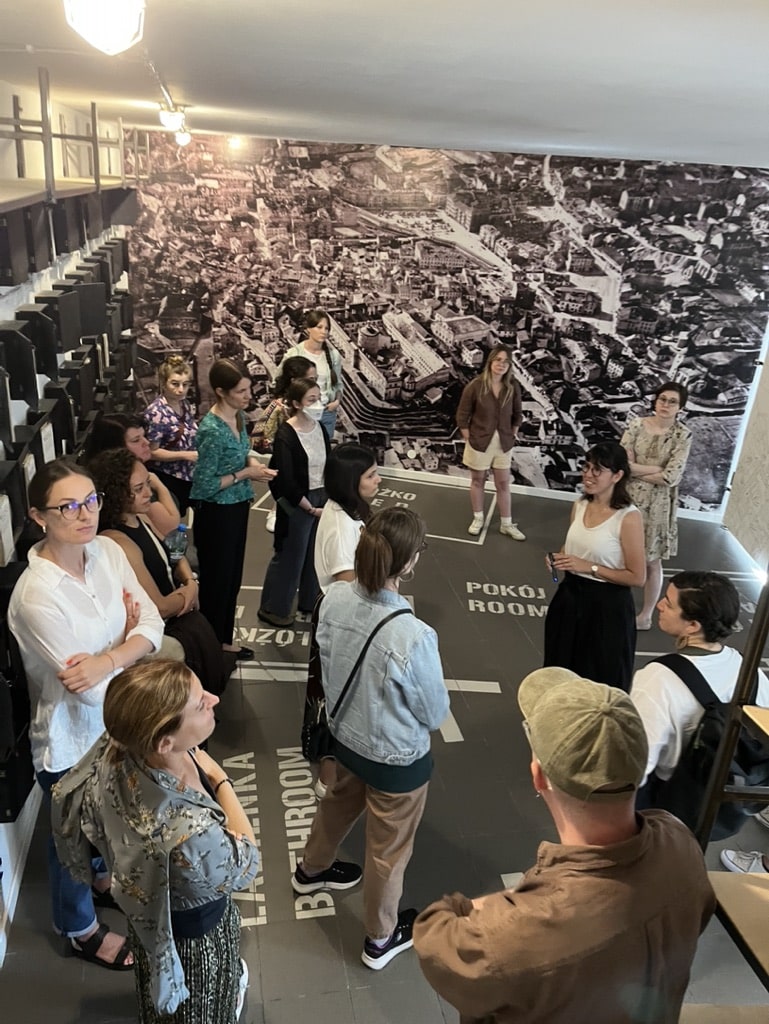
As part of the summer school, participants visited archives and other collections in Warsaw, visited the city of Lublin, and workshopped writing projects. Why are these opportunities valuable for early career scholars?
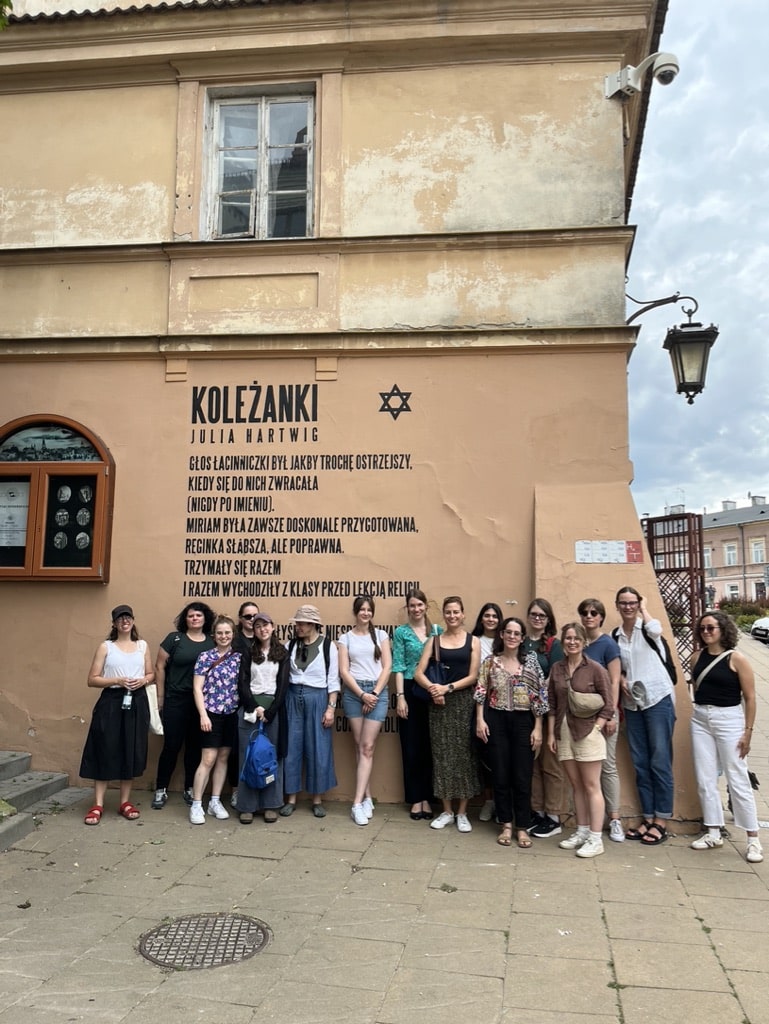
Since the museum was hosting, we took advantage of all the resources we have on site. The group got to see our special collections department where archival objects are preserved and renovated. We did the same at the Jewish Historical Institute too. In Lublin, we met with the Grodzka Gate team, toured their exhibition and had a frank conversation about the educational work they’re doing. And obviously, workshopping articles or chapters is always helpful to help them improve their writing and their thinking.
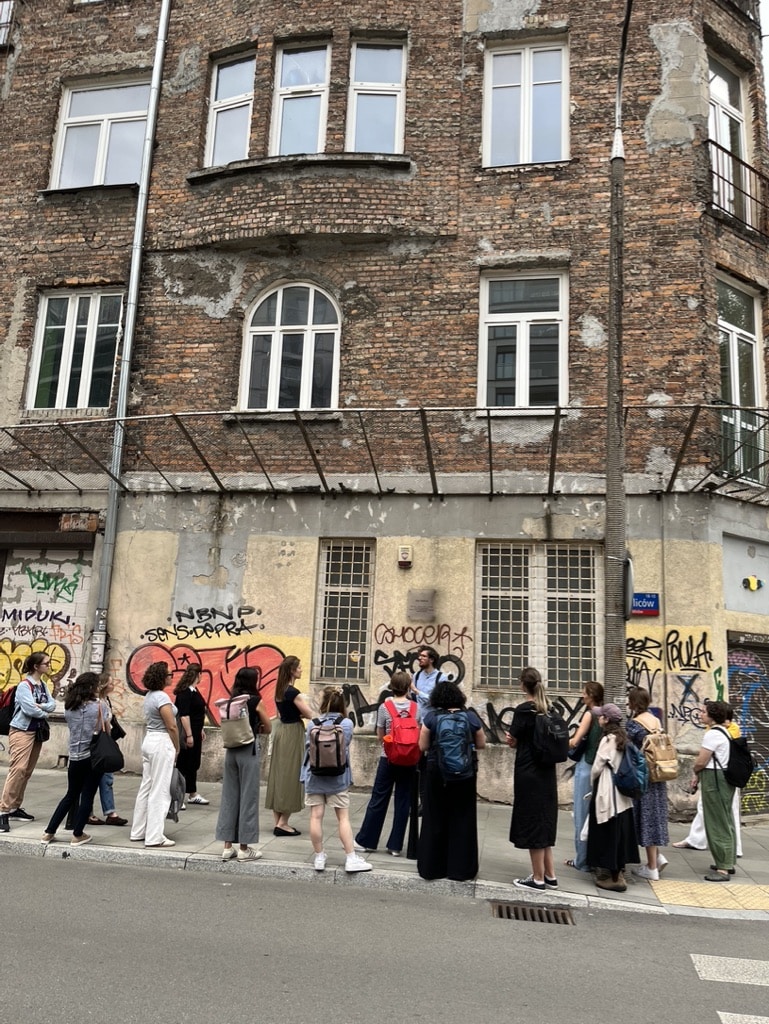
Warsaw was historically a center for Jewish life and that legacy is undeniable. Despite the tiny size of the Jewish population today, Warsaw is a heavyweight when it comes to Jewish culture and heritage. We have a Jewish Community Center, several active synagogues, a Jewish studies department at the university, and initiatives like the Taube Center dedicated to the renewal of Jewish life in Poland. POLIN is one of the most important cultural institutions in Warsaw, not just among the Jewish ones.
What do you see as the major changes in Polish Jewish studies in recent years? What new interests, foci, or challenges have emerged?
Among young scholars, I see a lot of interest in charitable organizations and a return to Yiddish sources. Certain topics, like migration, transnational networks and the like are rather evergreen. But there are exciting pathways opening up that bridge European and non-European focused work.
The big issue I see for Polish Jewish studies, but also Jewish studies more globally, is the tendency to connect anything to do with Jewish history with the actions of the state of Israel. It’s clearly antisemitic to hold all Jews everywhere responsible for what Israel does, but I am seeing it constantly now. And there is already less interest in Jewish studies among Polish students, probably among all students. Holocaust scholars especially need to figure out how best to respond to this new reality. Simply throwing up one’s hands and saying “it’s nothing to do with us” is insufficient. There are plenty of scholars of genocide and the Holocaust that have taken a principled position. But there are extremely few institutions that have done the same, and that will affect the credibility of those institutions going forward.