The Society of Historians of East European, Eurasian, and Russian Art and Architecture (SHERA) has been celebrating its 30-year anniversary in 2025. Since its founding in 1995, the Society has brought together scholars specializing in the art and architecture of Eastern Europe and the former Soviet Union, from ancient times to the present day. Through sponsored conference sessions, grants, prizes, and outreach, SHERA aims to create a sense of community for scholars around the world, serving as a vibrant source of information, exchange, and support.
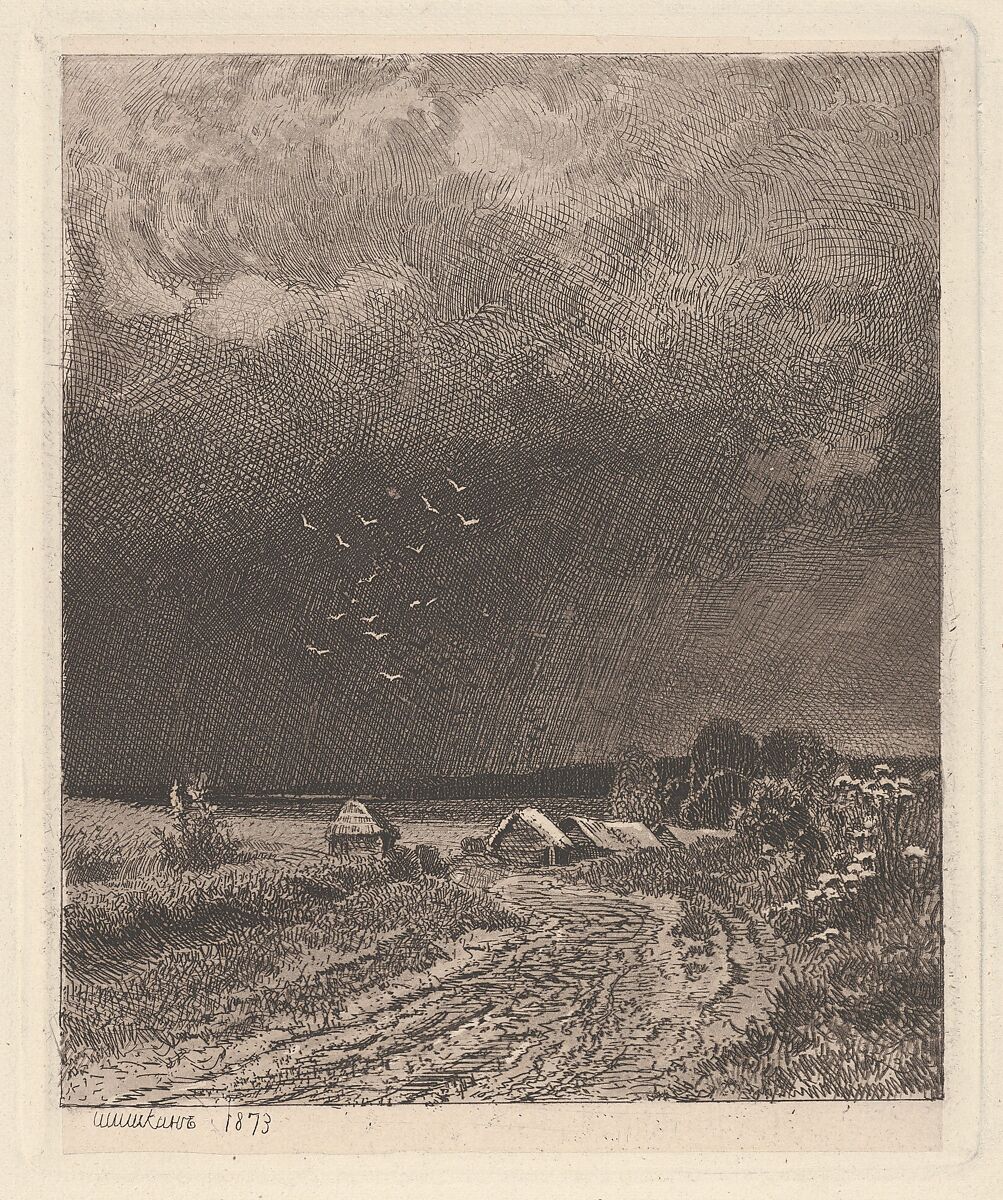
To celebrate SHERA’s anniversary, the Board of Directors has organized a year-long virtual speaker series, highlighting topics that reflect the diversity of the region covered by the organization, broader methodological approaches, and current trends in art history, material studies, and architectural history. For the first half of 2025, the anniversary events ranged from scholarly lectures by Olenka Z. Pevny, Maja and Reuben Fowkes, Christina E. Crawford, and Katarzyna Murawska-Muthesius, to roundtable discussions on topics including the “History of SHERA” and “Decolonization.” Longstanding and more recent members of SHERA have shared their research and perspectives as part of these events, demonstrating the sustained interest in research in the region, fresh intellectual insights, and the value of bringing students, scholars, and colleagues together.
Additional lectures have continued during Fall 2025, including presentations by Molly Brunson, Łukasz Stanek, and Myroslava Mudrak, as well as a roundtable on connecting and networking, intended to address the challenge of building a scholarly network among art historians of the region. The Board selected speakers for the anniversary events via a survey to membership, aiming to showcase the broad range of research topics and perspectives of colleagues active in the field at various career stages and working in diverse international contexts. Information about SHERA’s Anniversary Events and other SHERA initiatives is available on our recently updated website.
SHERA’s founding moment occurred in January 1995, when Karen Kettering and Pamela Kachurin decided at the annual conference of the College Art Association (CAA) to organize a group of scholars working on the region. Jennifer Cahn and other early career scholars soon joined, helping to define what the organization’s scope and mission would be. They contributed untold hours to developing SHERA’s membership and editing SHERA’s triannual Bulletin, which published information about conferences and symposia of interest, members’ lectures, news from the Russian and Eastern European art worlds, state-of-the-field essays, lists of dissertations in progress, and new publications. SHERA’s Bulletin was a tremendous undertaking that helped to shape understanding of our field in the anglophone world.
Around the time of SHERA’s founding, the Washington DC area was becoming a hub of activity whose energy would contribute to SHERA’s early years. There, at the Hillwood Estate, Museum & Gardens, Anne Odom’s work on decorative arts of the Russian Empire attracted scholars working on an expanded range of materials and periods beyond the twentieth-century avant-garde, which then dominated Western scholarship. Wendy Salmond worked on Hillwood’s icons as guest curator in 1994-95, Abbot “Tom” Gleason at the Woodrow Wilson Center brought a historian’s perspective to studying Hillwood’s collections, and Alison Hilton headed a lively Russian art program at nearby Georgetown University. By the end of the decade, when Kettering had joined the museum as curator and Kristen Regina was its art librarian, Hillwood had become SHERA’s de facto headquarters, with several staff members on the society’s board.
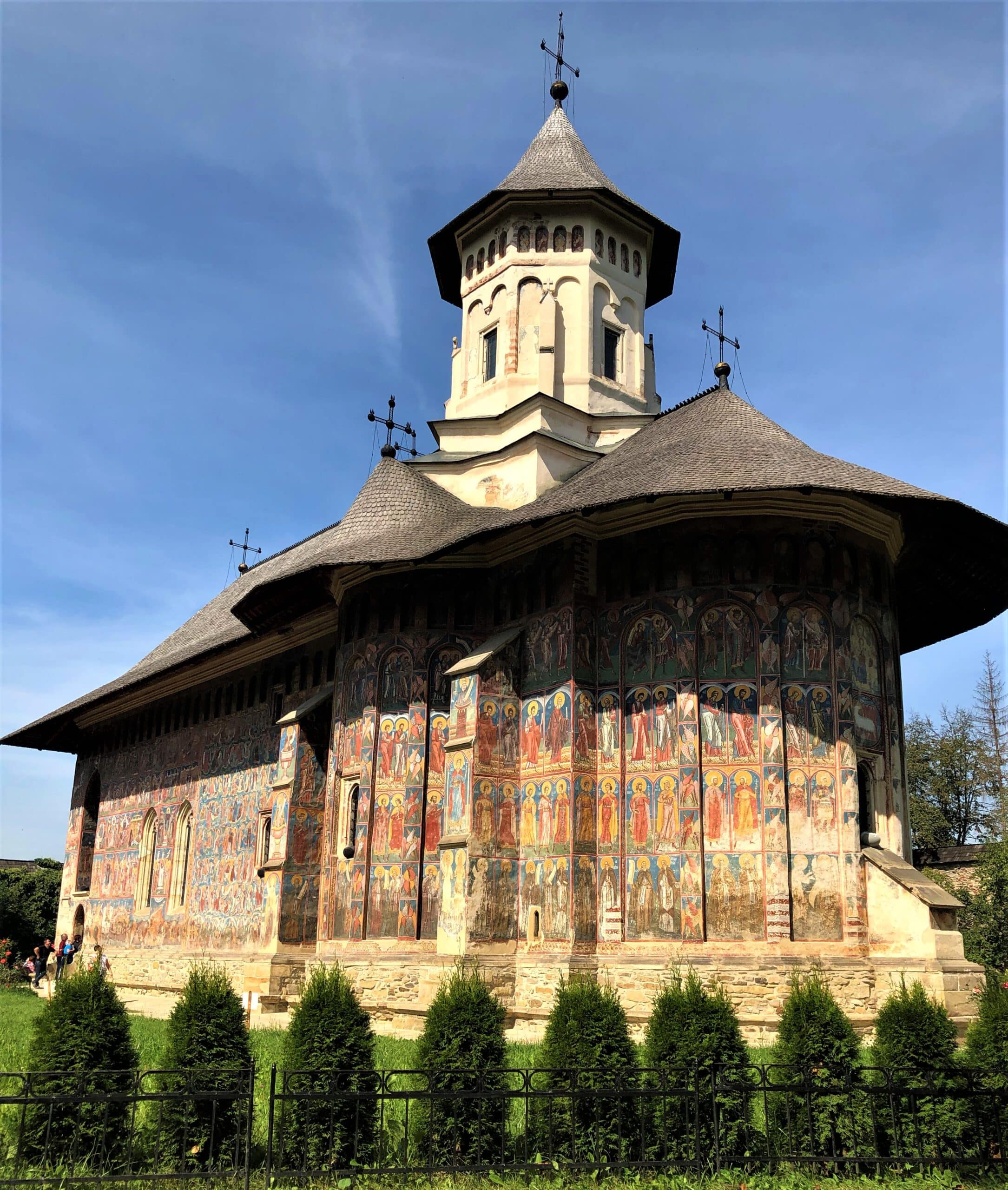
The mid-1990s were an exciting moment for the field. The fall of the Berlin Wall, collapse of the Soviet Union, and opening up of archives meant increased opportunities for research, travel, and scholarly exchange. At the time, anglophone scholars working on art of the region were scattered throughout the US and the UK, meeting only at occasional conferences. Since 1979, John Bowlt had led the Institute of Modern Russian Culture at the University of Texas, Austin, whose participants (many of them Bowlt’s students) worked on the diverse literary and artistic cultures of the early twentieth century, then collectively called the “Russian avant-garde.” SHERA’s goal was to bring together anglophone scholars working on a wide range of periods and materials, to facilitate research, and meet at AAASS (now ASEEES) and CAA. It provided a forum for advice and support for research and travel, helping members establish contacts with colleagues in Eastern Europe and the former Soviet Union.
By the mid-2000s, SHERA’s founding energy began to wane, and the society went into a period of dormancy. Conference sessions and business meetings ceased. SHERA’s listserv, maintained by Tamara Jhashi, was the only thread keeping the society alive as a resource for scholars to post and share information. People continued to join the listserv, but membership as such had ended.
After the revitalization, SHERA’s leadership sought to shift the Society’s priorities from those of anglophone scholars conducting research on Eastern Europe and the former Soviet Union to one that made benefits of membership available to colleagues living and working in the regions that we all study. Support from an anonymous donor enabled SHERA to extend membership to scholars from the region at low or no cost. Following the example of ASEEES, we added “Eurasian” to the society’s official name. While we respect that some of our colleagues reject the idea of “Eastern Europe” as an outdated, colonialist construct of the Cold War era (as articulated by Nazar Kozak at our roundtable on decolonization), we continue to find it useful in establishing our collective identity focused on a region of the world that has for long been marginalized or altogether neglected in global histories of art and architecture. In addition to geographical definitions, many of our members are working to bring the visual culture of the region from ancient times to the present day, as well as new perspectives on the available sources, in dialogue with more established narratives of art history.
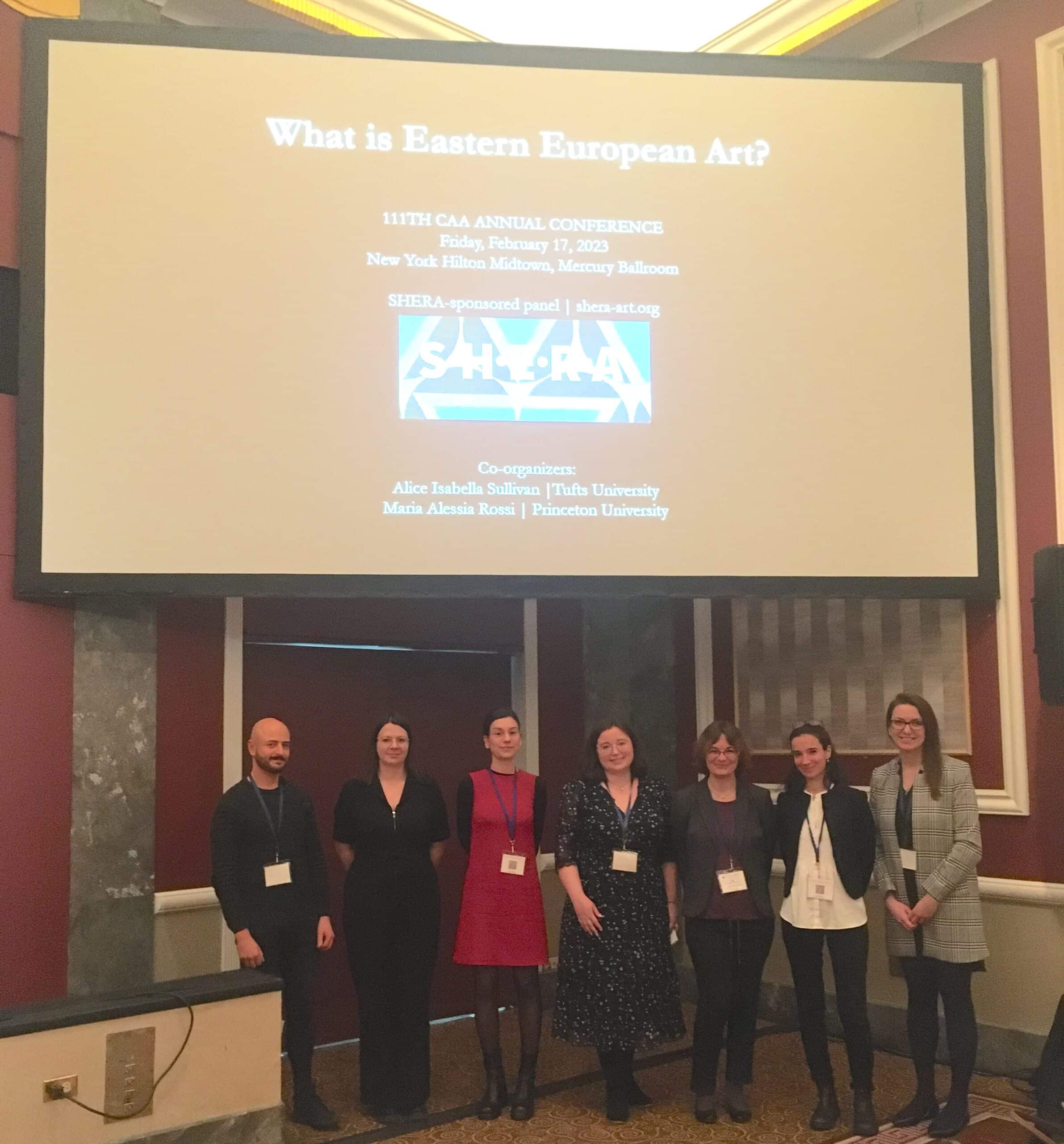
In 2011, Jhashi contacted Margaret Samu to work on reviving SHERA. With financial support from longstanding SHERA members and intensive work from Samu, Yelena Kalinsky, and Natalia Kurchanova, the society resumed operations by 2013. The group developed a website and actively sought a diverse membership—scholars working on architecture and the built environment; on Early Modern and post-Byzantine periods; librarians, collectors, and museum staff in addition to university affiliates. The society’s new bylaws established a rotating leadership structure, with annual elections that would continually recruit new officers, preventing burnout and the consequent leadership vacuum that had happened earlier. SHERA maintains a network on H-Net (H-SHERA), and an active presence on Facebook, Instagram, and Bluesky.
The ASEEES Annual Convention has become SHERA’s largest gathering, where our international members present new work on panels devoted to our field and participate in interdisciplinary sessions. Our business meetings at ASEEES are often standing room only events, a warm reunion for members and a space to welcome newcomers into our collegial circles.
Looking ahead, SHERA remains committed to serving its members, supporting their research and initiatives, and showcasing their work. In addition to its longstanding affiliations with ASEEES and CAA, SHERA is now affiliated with the Renaissance Society of America, which will enable the organization to sponsor sessions at the RSA annual conference. SHERA is pleased with its expanding membership, including institutional membership, which allows it to continue connecting colleagues across the world and sponsor an array of prizes and grants supporting research, publication, and conference travel. With the anniversary events underway this year, it is invigorating to imagine what SHERA’s next 30 years will bring!

Margaret Samu works on art and design of the Russian Empire in a global context. She teaches at The New School’s Parsons School of Design and lectures at the Metropolitan Museum of Art. Her recently completed book manuscript is tentatively titled Russian Venus: The Female Nude in Art and Culture of the Imperial Era. Margaret’s work has been published in The Art Bulletin, Iskusstvoznanie, Nineteenth-Century Studies, Vivliofika, Experiment, and a volume she co-edited, From Realism to the Silver Age (NIU Press, 2014). She served as president of SHERA from 2013 until 2015, and she currently co-organizes the art history section of the 19v Working Group on 19th-Century Russian Culture.

Alice Isabella Sullivan is Assistant Professor and Director of Graduate Studies in the Department of the History of Art and Architecture at Tufts University. She specializes in the artistic production of Eastern Europe and the Byzantine-Slavic cultural spheres (14th–16th centuries). Sullivan is the author of the award-winning book The Eclectic Visual Culture of Medieval Moldavia (Brill, 2023), Europe’s Eastern Christian Frontier (ARC, 2024), and co-editor of several volumes. In addition, she is co-founder of North of Byzantium and Mapping Eastern Europe—two initiatives that explore the history, art, and culture of the northern frontiers of the Byzantine Empire in Eastern Europe during the medieval and early modern periods.