In the summer of 2024, I wrote a chapter entitled “Queer Russians in the American College Classroom” for the collegial volume Diversity and Decolonization in Teaching Russian Studies, edited by Thomas Jesús Garza and Rachel Stauffer. It covered the course “Queer Russians” that I piloted in 2023 and 2024 at the University of Wisconsin-Madison. When the volume came out in July 2025, I had a chance to discuss it with a friend who was planning to teach a similar course in his small liberal arts college, and during our exchange, I came to realize that, although I had been originally motivated by a desire to make known queer Russian stories amidst the new wave of state-sponsored homophobia and transphobia in the Russian Federation, in 2025 I was addressing a broader array of questions in the classroom.
Several things happened in 2025, both in Russia and the U.S., that required this rethinking.
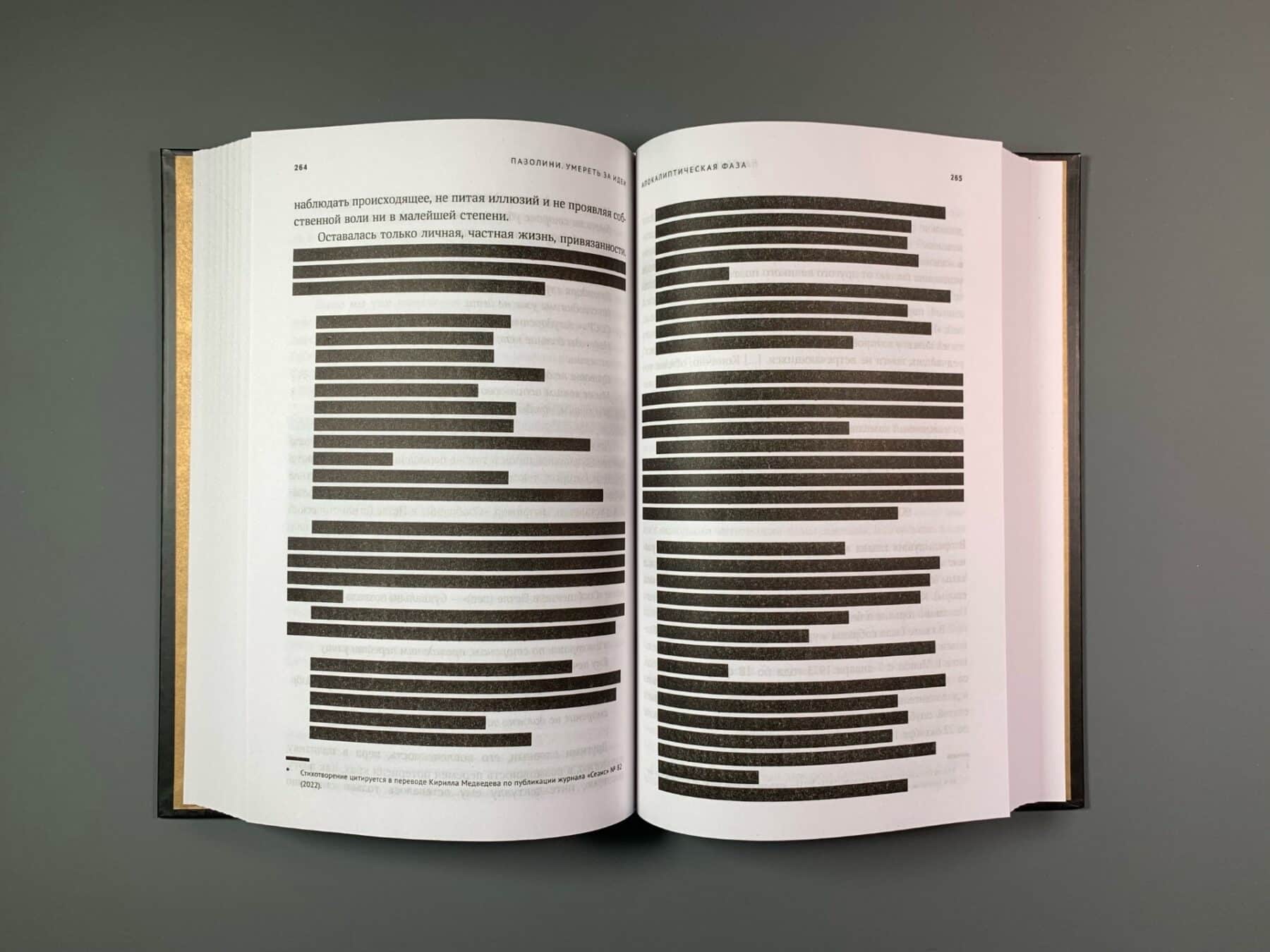
In Russia, in the spring and summer of 2025, the fourth year of the Russia’s full-scale invasion of Ukraine, the so-called “anti-gay propaganda” laws of 2013 and 2022 and the 2023 designation of the so-called “international LGBT movement” as an “extremist” organization by Russia’s Supreme Court paved the way for sweeping bans of LGBT+-related information in films, music, and books. This entailed an increase in censorship measures across the board as well as criminal persecution of those who did not fall in line. The most notable example of the latter was the “publishers’ case” in May when at least 10 individuals were arrested in Moscow on the charges of being involved in the production of books deemed “extremist” for including LGBT+ themes. In July, one of the most popular bookstores in Moscow, Falanster, was raided, and its founder Boris Kupriyanov fined, for selling such books. That same month, the St. Petersburg bookstore Podpisnye izdania was raided and fined a second time for the same offence of having “extremist” LGBT+ literature available on its shelves. All of this was happening against the now familiar background of blackout lines in new Russian-language print publications describing anything suggestive of sex, scenes cut from Russified versions of Western films and TV shows, and LGBT+ activists, sex educators and researchers designated “foreign agents,” stripped of their rights, and pushed out of the country.
As I watched these events unfold during and after the spring semester of 2025, I felt that my role as an American academic teaching about Russian queer experiences was shifting.
I saw a sudden increase of the symbolic power that I had as an American Russianist. Since its inception in the 1930s, Russian studies in the U.S. has been involved in creating, curating, and preserving alternative (at the time, anti-Soviet) canons of Russian literature by selecting authors and works for study and criticism. During the Cold War, Western academia in general had come close to acting as a kind of surrogate for the native Russian public sphere in forging reputations and prestige for Russian-language authors and texts. After the fall of the Soviet regime, independent Russian literature, including queer literature, no longer relied as heavily on Western academic institutions, but in 2025, the sweeping bans on representations of LGBT+ people in Russia threatened to once again return Russian-language authors, readers, and academics to that former dynamic.
There are, of course, important differences between the past and the present. Since the war censorship laws of 2022 in Russia, there has been an explosive growth of web-based and electronic Russian-language publishers and journals, such as Vidim Books, shell(f), ROAR, and Slova vne sebya, which allow Russian-language literary producers to remain in touch with their public in Russia. In 2025, activist organizations based outside of Russia, such as Quarteera, Cheers Queers, and GenQ coordinated Russian-language events that merged online streaming and live meetups and included art exhibits, lectures, and readings. Georgii Urushadze’s independent publishing house Freedom Letters established a special category for LGBT+-themed works in Russian within its Books of Freedom literary award, an unprecedented event in Russian literary history. By migrating to the digital realms, the Russian-language public sphere adapts both economically and legally. Yet the Russian government continues its efforts to isolate and exclude the public within its jurisdiction by cracking down on VPN services, blocking popular social media and subscription platforms, and passing legislation that would make it a finable offense to search for any “extremist” materials online, including LGBT+-related materials.
The question that once seemed a thing of the past returns: how will queer Russian authors find their audience if they are not recognized, translated, or taught by Western academics? For my generation of Russianists, who received their graduate training in the US after the collapse of the Soviet Union and before Putin’s regime actively started to control and isolate Russia’s public sphere again, this seems unprecedented. It is worth acknowledging in teaching and collegial interactions alike.
How will queer Russian authors find their audience if they are not recognized, translated, or taught by Western academics?
At the same time, in the United States, 2025 marked a third year of the coordinated anti-trans campaign at the legislative level in 49 states, with trans women in sports and gender-affirming youth care being at the focus of attention. In January and February of 2025, in the first two weeks of his tenure, the newly inaugurated head of the executive branch issued four executive orders targeting specifically the 1.3% of the adult population of the US who identify as trans (January 20, 2025; January 27, 2025; January 28, 2025; February 5, 2025). On February 3, 2025, the State Department’s travel safety website altered “LGBTQIA+ travelers” to “LGB travelers” and on February 14, the Park Service removed the words “transgender” and “queer” from the Stonewall memorial in New York City. In March, President Trump asked the legislators to “pass a bill permanently banning and criminalizing sex changes for children” in the address to a joint session of Congress. In June, after several months of deliberations, the US Supreme Court ruled in Skrmetti v. U.S. that Tennessee’s ban on gender-affirming care for minors, known as SB1, does not illegally discriminate against individuals on the basis of sex or transgender status, which, in the words of the ACLU’s Gilian Branstetter, allowed “Tennessee, and any other states that may choose to follow its discriminatory lead, to ban medically-necessary health care for minors.”
While recognizing that there was a crucial difference between the slow political theater of erasure in the U.S. and the total ban on gender-affirming care in Russia since 2023, there was also now similarity, which was hard to ignore in the classroom, even as I took pains to adhere to the institutional rules for academic discussion.
In other words, these events complicated what symbolic power I thought I had as a teacher speaking about geographically distant and culturally specific forms of persecution of difference. It was now perceptibly harder to default to a sort of Cold War 2.0 attitude of relying on American freedom to speak of Russian unfreedom, now that the American context seemed to be moving in an illiberal direction, too.
My own research led me to relational ethics, intercultural communication, and solidarity. While it still appeared that queer Russianness intersected into a doubly vulnerable identity from an American perspective, I found myself asking: how do we talk about marginalized and actively persecuted people generally? What can we say about them? Do we bear witness? If so, how? Students who signed up for the course felt the pressure of these questions fairly early in the semester. In most cases, they encountered a vulnerability that they had not encountered before, and they looked to the instructor to help them navigate the conversation.
Events [in 2025] complicated what symbolic power I thought I had as a teacher speaking about geographically distant and culturally specific forms of persecution of difference.
Long before I came out as trans at my workplace in 2020, I had known that the treatment of identities and embodiments as somewhat detached intellectual positions was an endemic issue in academic settings. In fact, I had known that, as an academic, I would have to negotiate this with my own identity. Yet, in 2025, I paid closer attention to this tension. The familiar treatment of identities and embodiments as thought experiments, prompted as it was by the genre of classroom discussion, felt amplified by other powerful factors. In 2025, in addressing the dilemma of queer baiting in connection to the Russian pop duo t.A.T.u. from the early 2000s, who were making an unlikely comeback without the queer component in 2025, I relied on the 2022 book by the sociologists Eva Illouz and Dana Kaplan, What is Sexual Capital?, which argues that current scopic genres of capitalism turn embodiments and embodied knowledge and experience into a capital that affects individuals’ social worth and employability, especially for women. Although Illouz and Kaplan do not speak directly about academia or the literary market, it seems that sexual capital plays a role in most competitive fields of cultural production and I could not help but apply it to myself.
The best thinking, writing, and teaching I have seen, however, not only show an awareness of the limits of the intellectualization of someone’s lived experience into generalized identities, but also resists the commodification of embodiments. Even when some of my students pointed out that there might be no escape from the systems that turn embodied experience into capital, especially when it comes to the public sphere, I felt it was incumbent on me to disorient such systems, if only in the imagination. In the context of teaching, the instructor could return to the lived experience, as I had the privileged ability to do by mentioning that I was from Russia and queer myself, and adding that the course served a personal purpose as much as an economic one. Or the instructor could practice intellectual humility and teach Russian queerness as, at least in some sense, unknowable “otherness.” Last year, in a conversation with another American Russianist colleague and one of her students who was queer, I tried to express this dilemma by quoting Audre Lorde’s “The Master’s Tools Will Never Dismantle the Master’s House” (1979): “Survival is not an academic skill.” To this I wanted to add: “Nor is survival a commodity.” Acknowledging this was not a copout but rather a reorientation. I always have queer students in my class, and I know that many of them are there because they want to witness my survival – they listen to me talk about intellectual concepts and Russian contexts only insofar as that helps them understand my survival. I tell myself that I care about that more than I care about intellectualization of identities or the relevance of my course in the competitive field of Russian studies. It helps me feel grounded.
Like anyone in my profession, I cannot pretend that I do not feel the pressure of maintaining and increasing enrollments, especially now, with the shifting political and budgetary climate. I do not have the security of tenure and citizenship, and I am not sure how protected my classroom is from an incursion of ICE agents. Yet, even though my situation is privileged in the sense that I get to teach about my identity rather than someone else’s, and I find ethical ground in acknowledging the personal purpose of my presence in the classroom, my role compels me to attend to all the perspectives I see represented there. In 2025, for the first time since I started teaching the course, I had first year students in my class who were religious. Seeing their commitment to the course as a pedagogical and intellectual invitation, I broadened and reframed some of the material on the history of queer theology and religious theories of well-being.
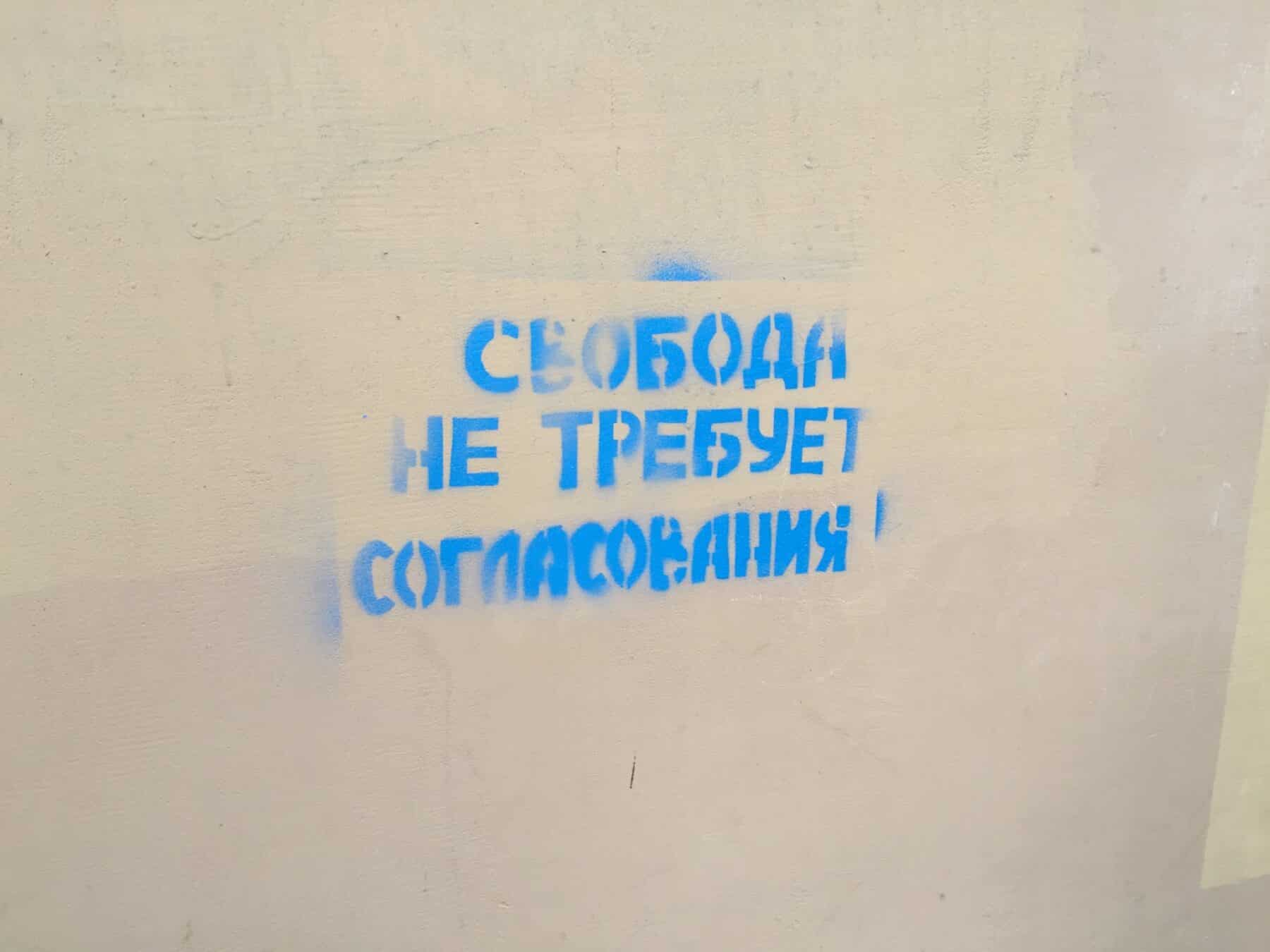
This was also the reason why I could not, on principle, object to the inclusion of non-queer perspectives in my course. At least in design, the idea was that everyone could benefit from observing the permeable or, on the contrary, insurmountable boundaries between “self” and “other,” or between the subject, the object, and the audience of cultural production. In contrast to Emmanuel Levinas’s otherness as an ethical command, the French poet and philosopher Edouard Glissant proposed to think of otherness as opacity, or relation without assimilation or explanation. In Glissant’s Poetics of Relation (1997), productive otherness and opacity are reciprocal, ever-present, a psychic condition of globalized late modernity, and individuals, communities, and systems of thought can choose to respond and learn this form of relation. It was my goal to let everyone ask themselves in discussion: Who is speaking? Who is spoken about? Who hears? How are the benefits of speaking distributed?
Finally, as with any pedagogy of queerness, my course unavoidably ran into the question of theory. That this is one of the more pressing issues of the field is evidenced by the two opening articles in the first issue of the newly launched journal Slavic Queer Studies in July 2025: Julie A. Cassiday’s “Queer Shame, Queer Love” and Aleksandra Gajowy’s “In Bed with the West? Central Eastern European Queerness and Western Theory.” The main theoretical question that came up in my own teaching in 2025 was how the instructor oriented herself between “queer optimism” and “queer pessimism,” broadly speaking. Thus far, in my undergrad courses, I almost always opt for “queer optimism” (for instance, José Esteban Muñoz) and somewhat performatively reject “queer pessimism” (for example, Lee Edelman). For pessimism to work as a heuristic, I found, there had to be some kind of pre-established baseline of well-being, at least in terms of social stature. The more persecution and vulnerability there is around queer identities, the less attractive pessimism sounds. The title and premise of Lee Edelman’s No Future serves as an interesting intellectual provocation when the reader feels safe, but it can be jarring when the reader is trying to survive, when they are young, lonely, or feeling rejected. Even though queer people may have a different conception of reproductivity, and therefore of human timelines and milestones – and their futures may seem “foreshortened” relative to heterosexual timelines – does the foreshortening have to be a prescribed mark of queer lives? Ecological, geopolitical, biopolitical, and technological disasters happen, but do we have to accept them as the norm, in that laissez-faire attitude of “the way we live now,” in 2025? Theory is prefigurative, even when one disagrees with it. It can come across as forbidding and elitist, but it is just an academic word for philosophy, which is another academic (and white) word for thinking. We can do it, and do it well, adaptively. We can also express appreciation when other people do it well for the purposes of our tasks, our shared joys and obligations.
Most of my energy in teaching, it seems, goes into the effort of taking my students as seriously as the people I teach about, myself among them, while facilitating a contact that is messy, fraught, funny, exciting, and complicated on many levels. It is not easy for anyone now and, I imagine, will get even less so in the foreseeable future. In the spring 2025 semester, I kept asking the students in my Queer Russians class and myself: why are you here? why this topic? why now? how do we think about difference? how do we collectively talk about the different futures we want? The students did not have to have definitive answers by the end of the semester or even beyond, but I had to ask.
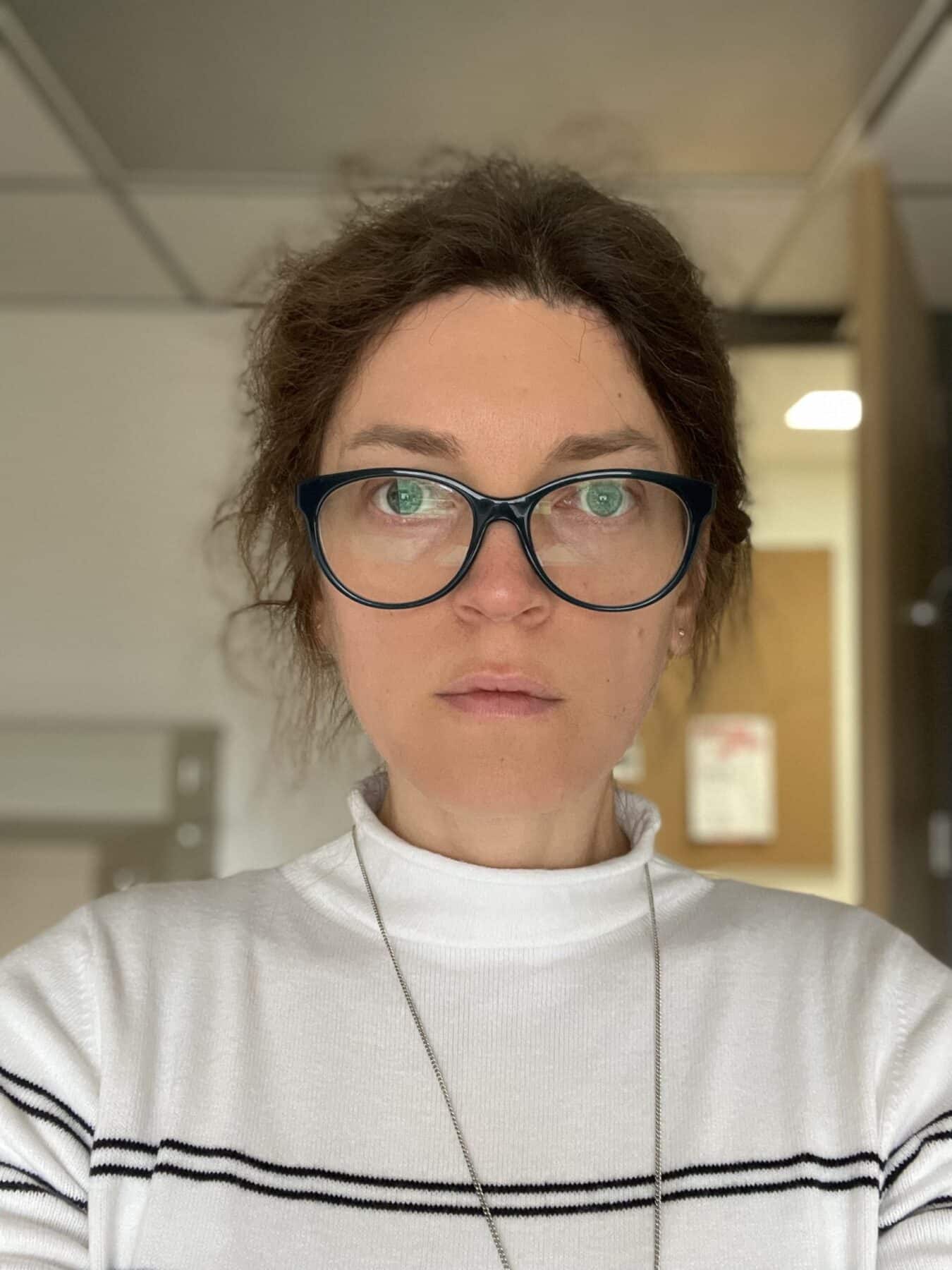
Sara Karpukhin is a Lecturer in Russian at the University of Wisconsin-Madison. Her interests include queer and feminist theory, genres of historical subjectivity especially transcultural self-narratives, anthropology and philosophy of difference, diasporic identity-making, uses of the classical tradition, and Vladimir Nabokov. She is a co-editor of the volume Reimagining Nabokov: Pedagogies for the 21st Century (Amherst College Press, 2022). Born and raised in Russia, she came to the US as a graduate student at the age of 23. In 2006,she was long-listed for the Russian literary award “Debut” for a collection of critical essays in Russian. She writes in English and Russian and lives in Madison, WI.