When I started graduate school in 1986, the Soviet Union was supposed to be forever. By the time I defended my dissertation, it was no more. The dissolution of the Soviet Union not only reshaped my dissertation and my own intellectual trajectory, but the whole enterprise of Central Asian studies. As we approach the end of the first quarter of the twenty-first century, we can look back with considerable satisfaction at how things have turned out. The opening up of the region to archival and field research transformed the conditions of scholarly work. Travel in and out of the region became much easier and it became possible to collaborate with our colleagues in the region in ways that were previously scarcely imaginable. If Central Asia is a field of study today, its emergence can only be dated to this period.
But is Central Asian studies really a field today? I express some caution here. The Central Eurasian Studies Society was launched in 2000 to bring together scholars working on regions in central Eurasia, an area deliberately left vaguely defined but which encompasses lands situated between the imperial heartlands of neighboring empires. This was partly to think beyond and across imperial boundaries and imperial traditions and partly to overcome the marginality of Central Asia in other area-studies organizations, whether AAASS (as ASEEES was called then), the Middle East Studies Association, or the Association for Asian Studies. CESS holds annual conferences and awards prizes. There are two significant journals — Central Asian Survey, dating back to 1982, but significantly revamped in 2006, when it became affiliated with CESS, and Central Asian Affairs, launched in 2014 — devoted to the region. All the prerequisites for the constitution of a field of study seem to be present. Except the most significant one: faculty positions.
Fields are constituted not by scholarship alone, but by teaching lines, budgetary allocations, and funding structures. These never really developed for Central Asia in North America, where faculty positions devoted to Central Asia itself can be counted on the fingers of one hand. Everybody else who works on Central Asia holds a position defined more broadly and teaches well beyond Central Asia itself. This makes thinking about the autonomy of Central Asian studies difficult. And writing in the autumn of 2025, with the current administration’s war on the academe well underway, the future does not look bright.
The Location of Central Asia
Let’s turn to less depressing topics. In the 1980s, Central Asia was seen in Western scholarship largely as the backyard of the Soviet Union. There was a substantial literature on the region’s archeology and on the early Islamic, Mongol, and Timurid periods — topics that were of lesser political sensitivity to the Soviets or could be studied without extensive travel to the Soviet Union. For the period since the Russian conquest, however, the situation was different. There were indeed a number of very fine monographs in English and French, though not in conversation with one another, but most of what was available was written in the ambit of Sovietology, in which the questions were defined by current political concerns and the access to the region was almost solely through Russian. There were, of course, exceptions but for those encountering Central Asia in the 1980s, the path to understanding the region lay only through Russophone and Russocentric paradigms.
In the 1980s, Central Asia was seen in Western scholarship largely as the backyard of the Soviet Union… the path to understanding the region lay only through Russophone and Russocentric paradigms.
That has changed. In the years during and immediately after the dissolution of the Soviet Union, there was some talk in the Middle East studies community of reimagining the Middle East in a way that would integrate Central Asia and the Caucasus. Not much came of it. Middle East Studies remains firmly anchored in the Arab and Ottoman worlds and has little interest in Central Asia. The Russian/Soviet field has done better. In North America, all centers of Soviet studies broadened their remit and changed their names to include “Eurasia” in them to signal an interest in incorporating the non-Russian parts of the Russian Empire/Soviet Union in their purview. ASEEES took its current name in 2010 as part of this process. (“Eurasia,” of course, often functions as a synonym for “the former Soviet Union,” but it is better than other alternatives.)
That the study of modern Central Asia would be housed in “Eurasia” is not surprising. One’s scholarly identity is built on the kinds of archives one works in and the kinds of bureaucratic battles one has to fight to get access to them, and that is an important part in defining one’s sense of academic community. In my years of going to MESA, I was always aware of the experiential gap between those who had worked in (post-) Soviet archives and those who hadn’t.
Over the last two decades, the best dissertations on Central Asia have appeared in Russian/ Soviet/Eurasian studies programs and very little has been done on the region in their Middle East studies counterparts. Yet, the question of where Central Asia fits in the broader ecosystem of Russian/Soviet studies remains open.
If the study of modern Central Asia is located in the Russian/Soviet/Eurasian field, is Central Asia merely a subfield of Russian/Soviet studies? In my classes on the Russian Empire or the Soviet Union, I take pains to remind students that the many different societies that the Russian Empire conquered over the centuries each had their own histories, and none was waiting around to be conquered by Russia for their history to be complete. Central Asia’s past and present have many reference points beyond Russia, and our research questions should take that fact into account.
Empire cannot be wished away, nor can we write histories as if the colonial past never happened.
Yet, having said that, the periods of imperial and Soviet rule in Central Asia were transformative. Empire cannot be wished away, nor can we write histories as if the colonial past never happened. The question is how we relate to that past. There is a difference between writing imperial history (or writing history defined by empire) and writing a history of the effects of empire on the ground. In our case, the difference is between writing the history of Russian or Soviet policies and of how those policies affected societies and people in the areas subject to those policies, between the policies of empire and the effects of empire.
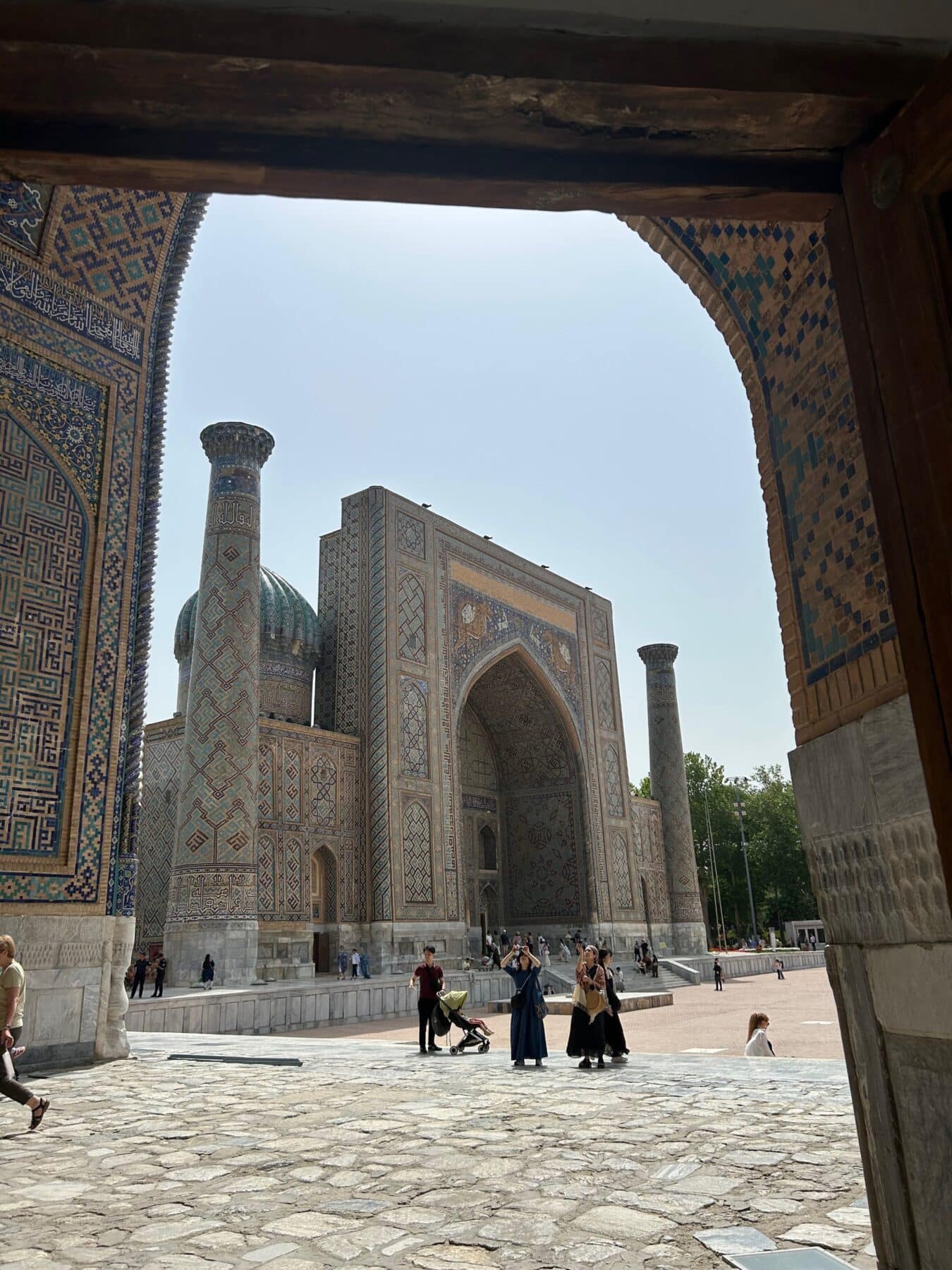
In 1999, I began working on a book that was eventually published as Making Uzbekistan in 2015. In 1999, the new literature of Soviet nationalities policies was all the rage and I thought that my book would contribute to it. The foundational texts that reshaped our understanding of Soviet nationalities policies and practices— by Ron Suny, Yuri Slezkine, Terry Martin, and Francine Hirsch —were all works about how Bolshevik leaders conceptualized nationality and how they put their ideas into practice. While writing my book, I realized that my task was quite different. My book was an exploration of how, at the beginning of the 20th century, Muslim intellectuals in Turkestan began reimagining their society and its place in the world. The movement was driven by the need find answers to the colonial situation in which the society found itself. Empire was the problem. Its existence provoked the questions, but it did not always provide answers. Before 1917, Muslim intellectuals in Turkestan looked to a range of models, many of them outside the Russian empire. They read newspapers from the Ottoman empire, Iran, Afghanistan, India. An empire-centric approach to this history would have been entirely inadequate for my purposes. Then, the revolution of 1917 changed many things. The new revolutionary state sought to create a new order but its control of the situation in its colonial peripheries was minimal and local revolutionary actors — chiefly, Russian and Ukrainian settlers — had their own ideas about what revolution meant. I found that the excellent new work on Soviet nationalities policies was not of very much use to me. The effect of empire and of central policies was very different on the ground. My book is an account of developments on the ground — it is a history of Uzbekistan, not of the Soviet nationalities policies.
Decentering Russian History
The recent interest in decolonizing Russian and Soviet history and in decentering Russia is promising in this regard. Those of us working on Central Asia had always been aware that the Russian Empire and the Soviet Union were vastly heterogenous spaces with massive differentials of power between the center and our region. It is nice to see that the broader field of Russian and Soviet history has finally woken up to these questions. The global reckoning with racism in the wake of the murder of George Floyd in 2020 was one trigger, for it made the Russian/Soviet field think seriously about race for the first time. The full-scale Russian invasion of Ukraine in 2022 was another, for it seems to have pushed even the most cautious members of the field to contend with questions of empire that the field had largely avoided so far. From the vantage point of Central Asian history, this is an interesting situation. There has been plenty of work on Central Asia that downplays the violence of empire, but today most authors directly address empire in a non-exculpatory fashion. The most basic way of decolonizing Russian history is to put empire (and conquest and violence) front and center. In that sense, writing Central Asian history is by definition a decolonizing act.
Those of us working on Central Asia had always been aware that the Russian Empire and the Soviet Union were vastly heterogenous spaces with massive differentials of power between the center and our region.
There is now a generation’s worth of literature on nationalities policies and practices in both the Tsarist Empire and the Soviet Union, as well as literature focused on the effect of those policies on the ground in various locations. How much of an impact this literature has had on syllabi in mainstream Russian or Soviet history courses remains to be investigated. What is the level of “coverage” of non-Russian parts of the empire in courses taught by people who do not work on the nationalities question or on non-Russian nationalities or regions? Sadly, there are still colleagues who think that the proper way to spell Tajikistan is as Tadzhikistan or that Turkmenistan may still be called Turkmenia.
The closure of access to archives in Russia since 2022 has led many historians of Russia to broaden their gaze and look for archives outside the Russian Federation. The archives in Kazakhstan and Kyrgyzstan are generally accessible; those in Uzbekistan and Tajikistan are a lot trickier to access, but all of them are full of Russian-language documents. Such a turn of events could be a welcome development and get more Russian historians to work on lands and peoples beyond the empire’s center. But it could also produce more histories of the empire than of its effect on the ground in non-Russian spaces.
The Promise and Perils of Decolonization
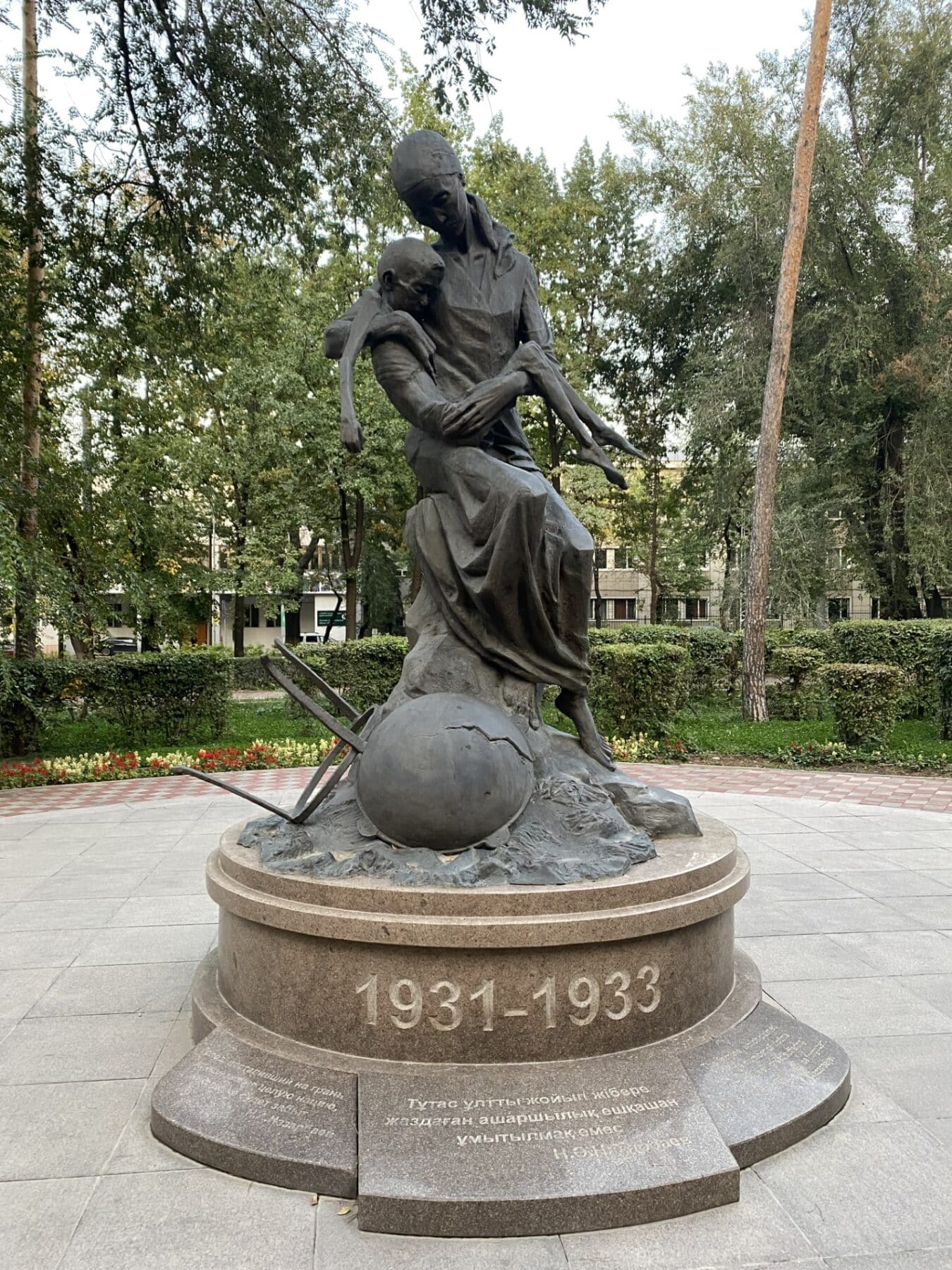
Interest in decolonization has been the greatest in Kazakhstan, especially among younger scholars. Kazakhstan is the country that suffered the greatest traumas under Soviet rule: Asharshylyq, the hideous famine that carried off forty percent of the Kazakh population of the republic in 1932–33; nuclear testing that laid waste to the environment; waves of deportations and settlement that changed the demographic balance, and made the titular nationality a minority (the only one of the fifteen union republics where this happened). This last led to severe language loss, so that the space for the use of Kazakh shrunk drastically and most urban Kazakhs became Russophone. There is nothing surprising in that its scholars have produced the most radical critique of the Soviet past. Scholars in Uzbekistan and Tajikistan seem far less interested in a decolonial critique of their history.
However, decolonization is a term with many meanings. It originally meant simply the process of the retreat of European empires in the post-Second World War era, and the granting of formal political independence to their colonies. The recognition that formal independence made rather little difference led to the development of multiple theories of underdevelopment and Third Worldism. In the last generation, however, the term “decolonization” has expanded to encompass notions of the decolonization of the metropolitan university and of the curriculum, and even to “the decolonization of the mind.” These are altogether more expansive understandings of the term that should give us pause.
The debate over decolonization introduces a mix of very different theoretical approaches, from postcolonialism to decolonial critique. They are not identical. The former was developed by scholars from South Asia and the Middle East, often working in the Global North, and answers questions that emerge from those regions’ experience of colonialism. Decolonial critique emanates from South America and based on that continent’s historical experience, offers a rather different kind of critique. Postcolonial scholars have tended to emphasize hybridity but also sought to recover the voices of the subalterns from the colonial archives. Decolonial critique is more radical: it sees epistemic decolonization as necessary to undo the damage wrought by modernity and colonization. “Epistemic decolonization” is a rejection of modern ways of knowing.
Decolonial critique assumes that we can strip away the burdens of history and find a pure, authentic self, untouched by colonialism. If much of postcolonial thought revolves around notions of hybridity and how the present is shaped by encounters with colonialism and modernity, then decolonizing the mind is a search for an authentic status quo ante. Aspirations of “decolonizing the mind” can easily slide into assertions of a national or civilizational authenticity, as something that has to be reconstituted. This is all deeply problematic, for claims to reclaim or resurrect authenticity can be and have been appropriated by intellectual currents on the far right that have anything but a liberatory, inclusive agenda.
Comparison and Ever Broader Contexts
Another path for Central Asian studies is to put the region in as broad a comparative perspective as possible. After the dissolution of the Soviet Union, new questions — and new ways of posing questions — redefined the historiography of our region. Comparisons with other parts of the world and new theoretical approaches, everything from the study of nationhood, through Islamic reform, to postcolonialism entered our horizons. This might be the most promising path for the future of Central Asian studies — to pull Central Asia out of the Russian/Soviet orbit and to insert it into world history on its own terms. Central Asia is not only (post) Soviet. To focus only on the areas that were conquered by the Russian empire is the worst form of teleology. In the eighteenth and nineteenth centuries, the region was divided up by two neighboring sedentary empires, those of the Qing and the Romanovs. The rest of Central Asia (which in the past was called Chinese Central Asia or Eastern Turkestan) needs to be contended with, while connections with South Asia are an important topic to cover.
After the dissolution of the Soviet Union, new questions — and new ways of posing questions — redefined the historiography of our region.
All of this requires a broad point of view, serious linguistic skills, and the wherewithal for conducting research. The current political situation in the United States makes each of these a difficult proposition in the near future, unfortunately. Like much of higher education, the future of Central Asian studies is murky at the moment. For these reasons, this essay has to end on a note of weariness and foreboding.
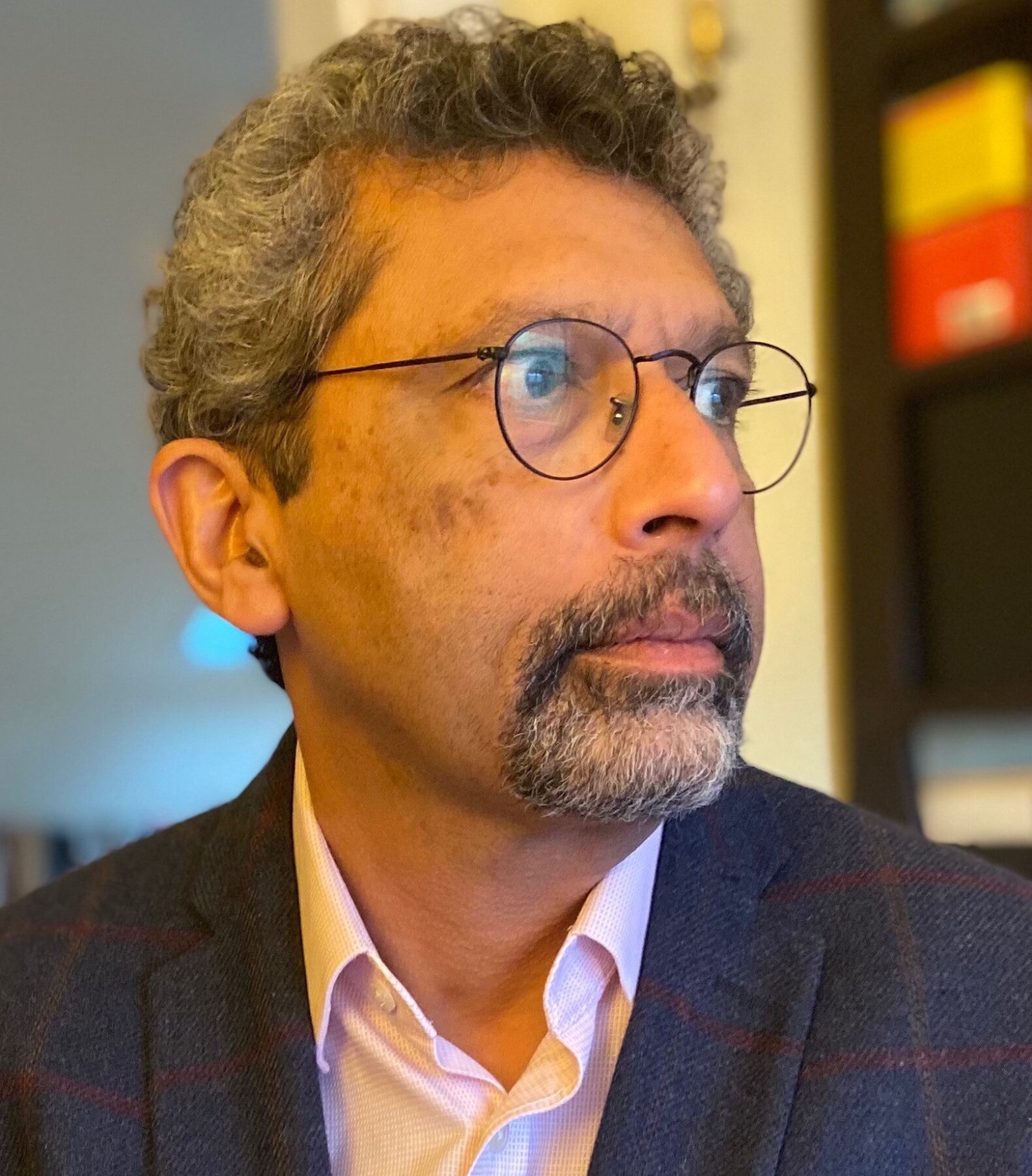
Adeeb Khalid is Jane and Raphael Bernstein Professor of Asian Studies and History at Carleton College. His most recent book is Central Asia: A New History from the Imperial Conquest to the Present (Princeton University Press, 2021)