Albanian studies have been part of American academia since the 1960s. Stavro Skendi’s The Albanian National Awakening, 1878-1912, published in 1967 offered English readers one of the first scholarly overviews of Albanian nation formation. Skendi’s peers, the scholars Nicholas Pano, Arshi Pipa, and Peter Prifti soon expanded the bibliography of the field with monographs of their own, focusing especially on the history, politics, and literature of modern-day Albania.
Then in 1973, these scholars established the Society for Albanian Studies, an entity under the umbrella of the then Association for the Advancement of Slavic Studies, where it largely functions today. Outside academia, however, Albania and Albanians remained obscure until the fall of communism in 1991. This was typically attributed to communist Albania severing ties with the West during the Cold War.
American pop culture reveals some of these tropes. A good example might be found in “The Crepes of Wrath,” an episode from the beloved sitcom The Simpsons which first aired on April 15, 1990. After Bart gets into trouble, his school suggests that he try out an exchange program. That suggestion sees him off to a chateau in France, while the Simpsons get a visitor from Albania: the small-statured and deceptively good-natured “little” Adil Hoxha, a fictional character symbolically named by combining the first name of the last socialist prime minister, Adil Çarçani, with the last name of the Albanian dictator, Enver Hoxha. On the surface, it seems that Adil is visiting the Simpsons to learn about American culture. When introducing him to Bart and Lisa’s classmates, Principal Skinner points out that Adil has a “strange” accent, that the students may find him “peculiar”, perhaps even “offensive”. Nevertheless, they should try to show him the same acceptance as they do to their other “backward” visitors from all around the world.

Principal Skinner is on to something; Adil has, indeed, come with sinister plans. As an unsuspecting Homer Simpson gives him a tour of the nuclear power plant where he works, Adil giddily takes pictures, which he then sends back to the Albanian secret police via satellite. As it humorously turns out, Adil is a spy! When agents show up at the Simpsons’ house, they mistakenly think that Homer is the informant named “Sparrow” whom they have been investigating, and that he is from a country beginning with the letter “A”.
Could there be a more striking Cold War image of Albania? Or a funnier one, for that matter? Perhaps not, unless we are referring to the fictional war between the United States and Albania in Peter Bogdanovich’s 1972 screwball comedy “What’s up Doc?” starring Barbara Streisand and Ryan O’Neal. But that you will just have to watch for yourselves. Lest we digress further, this piece highlights the current dimensions of Albanian studies and presents some of the advantages and challenges of doing field research in Albania and the Albanian-speaking world.
Thanks in part to research grants and academic exchange programs like IREX, the Peace Corps, the Fulbright program, American scholars have been able to travel to and conduct field research in Albania in increasing numbers since the fall of communism in 1991. That all makes the Simpsons episode a particularly meaningful backdrop.
As socialist era archival records become more readily available, scholars have begun to challenge long standing perceptions of Albania’s isolation.
Increased opportunities to travel have led to greater access in using archives and libraries in Albania. This has impacted the inflow of foreign scholars, to be sure. But it has also served the work of native Albanians who study and work in the West.
As socialist era archival records become more readily available, scholars have begun to challenge long standing perceptions of Albania’s isolation. And one may argue that the possibilities for engaging in in-depth comparative studies are consequentially greater today than at any point previously.
One example is the work-in-progress of a recent recipient of the Society for Albanian Studies’ Arshi Pipa Graduate Student Paper Award. Andi Laska’s M.A. thesis, titled, “Turned East but facing West: A comparison of Hotel Tirana and the SAS Royal Hotel,” utilized Albanian state archival records and architectural analysis to draw connections between two iconic structures in Tirana and Copenhagen, showing how Danish modernist architecture may have influenced its Albanian counterpart. In his paper, Laska argues that the way in which these ideas transferred from one place to the other was through tourism.
Scandinavian travelers who longed for the warmer climes of the Mediterranean were also drawn to socialist Albania’s less accessible Adriatic and Ionian shores, communicating in the process ideas and sources reflecting developments in Danish modernism to Albanian contacts. While scholars have already drawn meaningful comparisons between Albania and the communist East, comparisons to the West are new.
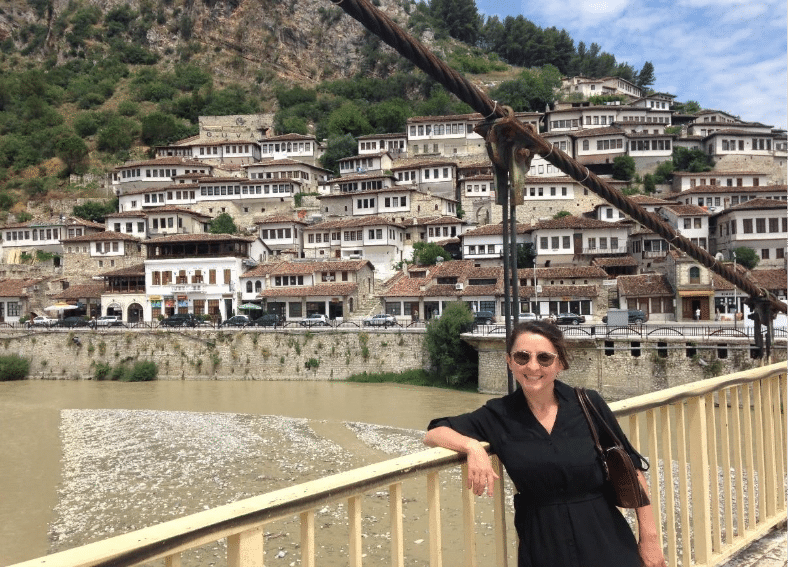
Lots more has changed since “The Crepes of Wrath”. Among the myriad consequences of the Yugoslav wars, Kosovo is today an independent country. North Macedonia institutes Albanian language friendly policies. Past barriers to institutional and subject access, as a result, no longer exist. And Albania today is both an E.U. candidate country and a tourist destination. Albanian officials recorded some 11.7 million foreigners entering the country in 2024. The majority were European tourists— central and East European in large part but also western European ones, as well. Apart from the Covid pandemic, these figures have been growing steadily since the early 2010s. Between 2018 and 2024 they have increased by an estimated 6 million!
This growth in tourism is facilitated by better infrastructure, E.U. integration reforms, and the ever-present tourist for new, inexpensive, yet friendly destinations worldwide— all reasons for scholars of the post-Cold War, post socialist Europe to pay attention to Albania’s future development.
So far, tourism has been welcomed in this small country with its dramatically varying landscapes. If this continues, scholars will want to study the environmental, economic, and social impact that it will have on local communities. Can sustainable models of tourism prevail there? Can Albanians learn lessons from neighboring Croatia or Greece?
Improved infrastructure is also true for research institutions, as well. Today, they are often administered by multilingual personnel who have often studied, worked, and lived outside the country. They are typically welcoming to foreign scholars and can often converse in English and often enough a second language like Italian. A letter of introduction from the home institution is often sufficient for entry. The process can be started remotely; however, that is only available in Albanian.
The two leading research institutions, Albania’s National Library and the Central State Archives provide digital access and modern facilities. Their websites provide open access catalogs and they both have digitized sizeable portions of their collections. While the National Library provides free access and downloads to digitized materials, the Central State Archives provide a for-fee service to download files. Both types of remote access can be useful to scholars who read Albanian. English interface is not available, yet.
Examples of digitized collection materials include periodicals, rare books, manuscripts, maps, as well archival records from the early modern Ottoman era to the socialist period. Other state agencies like the Institute of Statistics and the Bank of Albania publish relevant data online, often in open access downloadable pdf format. The Covid pandemic played a large role in the improvement and expansion of digital access to government agencies and services. While Kosovan institutions are headed in a similar direction, this process seems to be taking a bit longer. In general, in-country libraries and archives will have the largest holdings of materials going back to the Ottoman era and antiquity.
Outside the region, European institutions equipped to handle research on Albanian topics include the British Library and the Bavarian State Library. They both have good holdings of Albanian material. Stateside, Harvard University, the Library of Congress, New York Public Library, as well as most research university libraries with decent Slavic holdings will also have Albanian holdings as well.
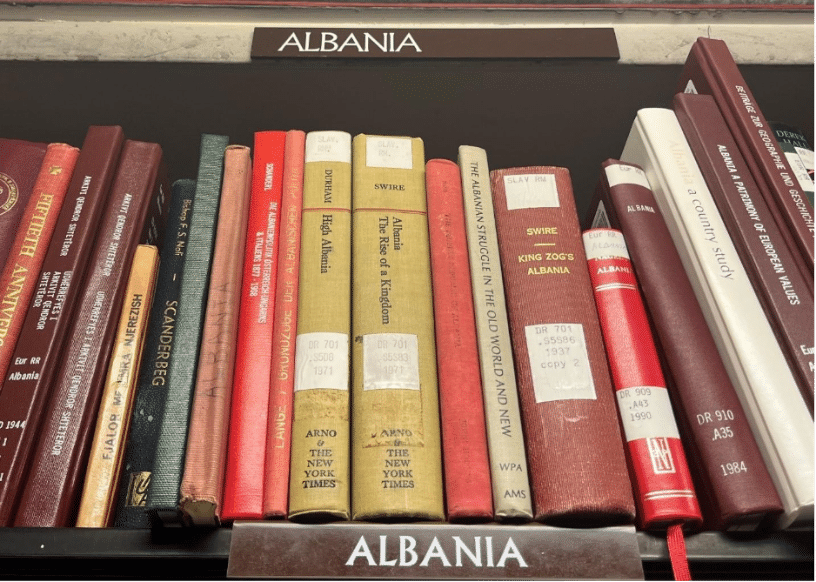
The Library of Congress, which collects materials in 470 languages, boasts Albanian holdings in Albanian, Asian, and European languages dating from the early modern period to today. Its holdings of Albanian from the nineteenth and twentieth century are particularly strong. Every topic, excepting clinical medicine and technical agriculture, is represented in the more than some 20,000 items of all types of formats held by the Library of Congress.
In addition to these repositories, scholars who are thinking of promoting new or work-in-progress are encouraged to contact Albanian studies programs and the Society of Albanian Studies. In the United States and in the United Kingdom, there are two such: the Hidai Eddie Bregu program at De Paul University (est. in 2019) led by Gazmend Kapllani, and the Alexander Nash program at University College, London’s School of Slavonic and East European Studies (est. in 1997) currently led by Lediona Shahollari.
Current and emerging questions in Albanian studies include social, political, and historical ones. They relate to European integration, religion, and the ongoing examination of the communist past. Another more complex (if hidden) topic is the fact the communist era files maintained by Sigurimi, the secret police, remained notoriously resistant to public inquiry until just a few years ago. The succeeding paragraphs address significant developments with regards to each of these themes.
Perhaps the most anticipated political development is European integration. After decades of communist isolation, followed by the haphazard implementation of drastic cuts to the public employment sector and nationalized industries in the early 1990s, Albanians left the country in both dramatic numbers and often also in dramatic fashion. Neighboring Italy and Greece saw the largest intake of Albanian immigrants, with Germany, the United Kingdom, and to a lesser extent France also experiencing the same. The United States, too, saw an increase in its intake of Albanian immigrants, though in much smaller numbers.
Since the 1990s, prospective integration within the European Union has held enduring popularity for a vast majority of Albanians. The two leading political parties, the left-leaning Partia Socialiste (PS) and the right-leaning Partia Demokratike (PD) have taken turns promising and to varying degrees also implementing reforms to pave the way for integration into the European Union. Albania officially became an EU candidate country in 2014.
The most recent Albanian parliamentary elections held on May 11 revealed how strong public support remains for EU integration. Edi Rama, the sitting socialist prime minister, won a decisive victory against his opponent Sali Berisha. Rama’s historic fourth term carried the promise of E.U. integration by 2031. Whether this turns out be true, and how it happens, are questions which researchers will certainly be interested in.
The diaspora could be the determining factor in determining that future. Rama’s win was secured with overwhelming support from Albanians living in Italy and Greece, having just gained the right to vote in parliamentary elections this past spring. The diaspora is 1.5 times larger than the domestic population of the country. While much of the diaspora vote this time came from Albanians in Europe, it will be interesting to see how American and Canadian Albanians utilize this new right in future elections.
A second, though perhaps more news-flash type of question is the viability of the so-called Bektashi state. Last fall, the head of the Bektashi community in Tirana, Hajji Dede Edmond Brahimaj stunned local and world opinion when he announced his plans for the creation of a Vatican City-like Muslim city-state within the capital city, Tirana. For a few months local and international news media outlets provided ample commentary on the novelty of the project, expressing skepticism about its viability.
The Bektashi Sufi Muslim order founded in the thirteenth century made Albania its home in 1923, when it was expelled from Turkey on orders of the nationalist Turkish republican leader, Mustafa Kemal Ataturk. For all these reasons, this idea and the news surrounding it provided opportunity for interesting commentary. Will Albania enclose the first Muslim city-state in Europe within its borders? If so, how will that work out in practice? Will it adversely impact the country’s famed religious tolerance?
Lots of moving pieces make this matter interesting. The leading one is that religion has recently taken a more assertive role in Albanian public life. Bounded by language, Albanian communities have traditionally belonged to three confessional communities: Eastern Orthodoxy (today represented by the Albanian Autocephalous Orthodox Church), Islam (Sunni Muslim as well as Sufi orders), and Roman Catholicism.
While religion was an important identity marker historically, in the twentieth century it became deemphasized in favor of the larger national one during the nation-building efforts of the interwar period. The succeeding communist regime gradually took this further, eventually banning religious practices altogether in 1967, when Albania broke relations with the USSR and became closer to Maoist China. Between 1967 and the late 1980s, Albania was an officially atheist state. This extreme prohibition of spiritual life was relaxed and then formally rescinded in 1991, but it led to profound social and cultural changes in Albania. Yugoslav Albanians never had their religious rights stripped in this fashion.
Albanians living in Albania today are largely secular, though some are embracing a variety of established and sometimes historically younger faiths (ex. Protestant Christianity) being both newly introduced and reintroduced to Albanians by missionaries. These include both Muslim and Christian groups. By and large, however, religious leaders stayed out of politics, given Albania’s complex stance towards religion in the twentieth century. At this point, however, one is curious as to whether this is about to change? Scholars will surely be keen to explore this question further, even as Albania is no exception.
Can researchers of Cold War Eastern Europe offer meaningful suggestions, so that the country’s dark past is not forgotten?
The last but not the least important of current and emerging developments within Albanian studies is the ongoing examination of the communist past. Certainly, this is linked both to the staggering out migration and to the reintroduction of faith, and to other less flashy topics. In the legal realm, however, one entirely new aspect of examining the past constitutes the declassification of the secret police files maintained by Sigurimi, the notorious security apparatus.
For decades since 1991, authorities and institutions resisted public pressure to access these files. Then bowing to demands for E.U. accession reforms, the government finally established an organization, locally known as the Autoriteti për Informimin mbi Dokumentetet e Ish Sigurimit të Shtetit in 2015 to investigate the Sigurimi files. In conjunction with the media and the academic community, Autoriteti (Authority) operates its own website where members of the public can read reports and petition for files to be released. This is promising, but it is a work in progress. And with so much of the country’s youth wanting to leave, one wonders whether any lessons can be carried forward? Can researchers of Cold War Eastern Europe offer meaningful suggestions for tackling this problem, so that the country’s dark past is not forgotten? For scholars who work on Eastern Europe and E.U. enlargement, this last question may prove to be the most challenging one to work out.
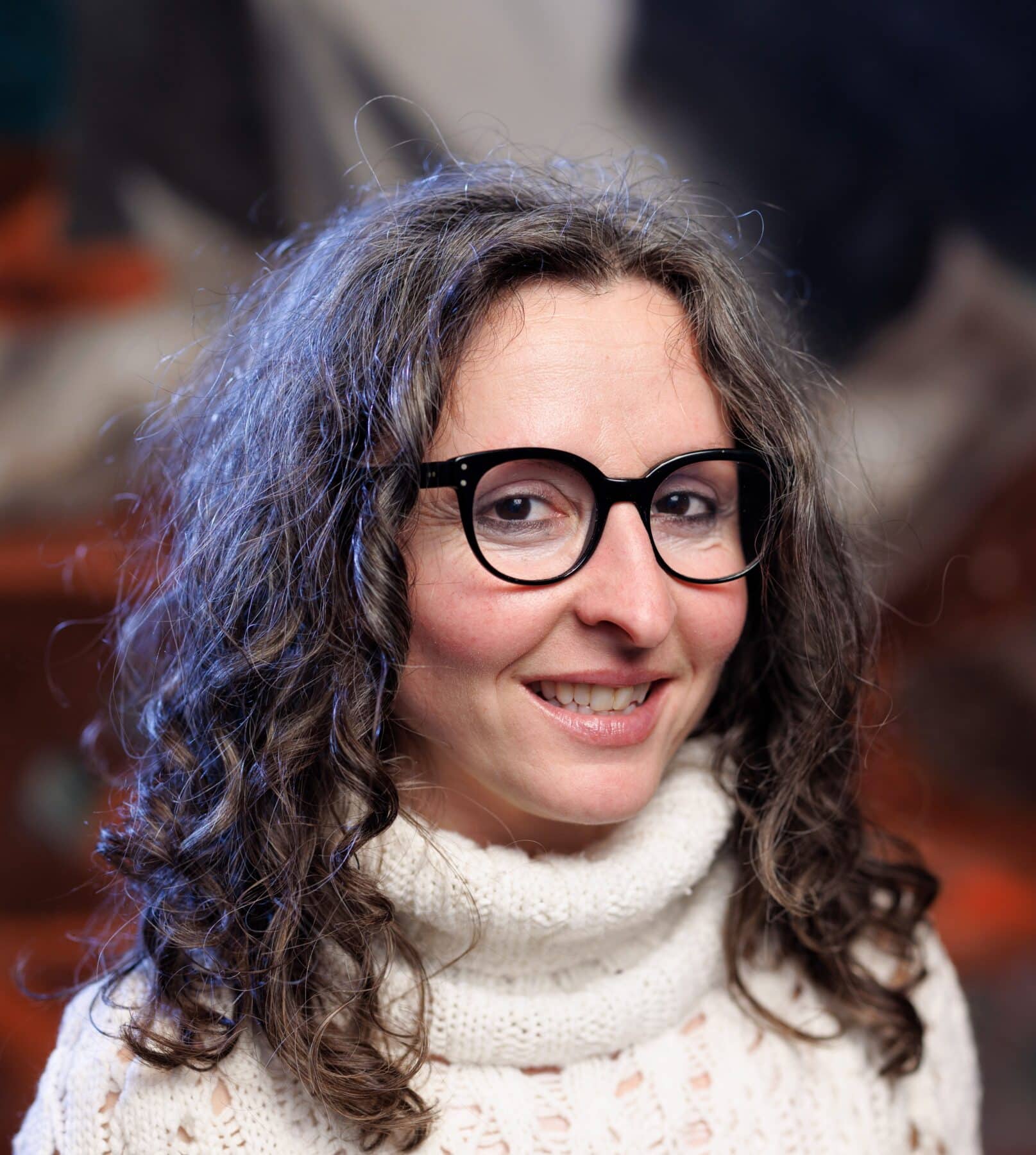
Nevila Pahumi is the reference specialist for Modern Greek and Albanian languages at the Library of Congress. Before coming to the Library of Congress, Nevila taught Advanced Placement European history in Charlottesville, Virginia and was a postdoctoral fellow at the School of Slavonic and East European Studies between 2016-2018. She graduated the University of Michigan’s doctoral program in history with a dissertation on the impact of American Protestantism on women’s education along the Greek-Albanian language frontier in 2016. In addition to her academic articles, Nevila frequently publishes resource guides and blogposts reflecting holdings of the Library of Congress’ Greek and Albanian holdings. She enjoys connecting researchers to the Library of Congress, and hopes to turn her dissertation into a book in the not too distant future.