In 2025, for Romania’s national day on 1 December (remembering the “Great Union” in 1918 when Transylvania followed Bessarabia and Bukovina in joining the Old Kingdom of Romania to create “Greater Romania”), Nicuşor Dan, the president of Romania, decided to decorate a 107-year-old veteran of the Second World War, Col. (ret.) Ion Vasile Banu, with the Order of Military Virtue with the rank of Knight in recognition of his role in fighting to “liberate” Bessarabia in 1941 as well as at the Don Bend outside of Stalingrad in 1942. The president praised the “courage, sacrifice, and worthiness” of the veteran–and by implication that of the Romanian Army–during the conflict. This action caused a minor furor in Romania because the atrocities that Romanian troops committed against Jews on the Eastern Front, including this individual’s regiment, were airbrushed out of the presidential message. It is no coincidence that much of the Republic of Moldova was carved out of Bessarabia by the USSR, so this message had clear unionist overtones. While some were outraged that the president would echo wartime “holy war” propaganda, others asked what the big deal was and argued that veterans should be given respect.
This example shows just how large the Second World War still looms in Romania. Indeed, that conflict plays a central role in national identities across Eastern Europe, and the war in Ukraine has seen its history used (and abused) by both sides to buttress their respective war efforts. More widely, military history remains prominent in the public imagination across Eastern Europe. The legacy of a once-militarized Europe, taken to new heights during the Cold War with large armies of conscripts and regular displays of military pomp (in fact, Romania’s national day is still celebrated with parades of troops, weapons, and equipment), still shapes current popular sentiments about past martial glory. The fact that the capitalist West and communist East never went to war means that for many countries in Eastern Europe, the Second World War was the last major conflict in which they took part. Additionally, the First World War resulted in the expansion, creation, and recreation of many countries in the region. Military history is crucial for understanding Eastern Europe and Eurasia, with regard to both key turning points in wartime but also shifts driven by military rivalry in peacetime. Therefore, both global conflagrations still attract much public fascination as well as state study. Romania emerged victorious from the First World War, having nearly doubled in size, but ended up on the losing side in the Second World War, ceding eastern territories and becoming Sovietized.
Military history is crucial for understanding Eastern Europe and Eurasia.
When I decided as an undergraduate to become a historian, I assumed – rather naïvely in retrospect – that my path would lead to academia. That seemed to be the only option if I wanted to make history a career. It was not until I had already started my master’s degree that I began to understand just how difficult finding a job in academia would be. I was fortunate that my decision to focus on military history led almost naturally to being exposed to other employment options at a time when that was still not yet the norm at many universities. Working on my doctoral degree at an institution with one of the top military history programs in the country meant that I soon was made aware of the large number of “alt-ac” jobs in the U.S. armed forces. Perhaps best known is the Professional Military Education system, which is a miniature academia offering advanced studies to future military leaders. Each uniformed service, however, also boasts an array of history centers, archives, presses, and museums. Former “Aggies” employed by the armed forces visited campus and explained these job opportunities and my fellow graduate students and I had opportunities for paid internships as historians across the Department of Defense.
In 2018, I obtained a temporary position at the U.S. AMEDD (Army Medical Department) Center of History and Heritage in San Antonio, Texas. This umbrella organization brough together a military medicine history office, the U.S. AMEDD Museum, an archive, and the U.S. AMEDD Regiment (a heritage office responsible for fostering esprit de corps among Army medical personnel). My duties included research projects, conducting oral history interviews with key individuals, compiling an annual report, responding to requests for information from the AMEDD, wider Army, other government agencies, and the public, and more. I also had the opportunity to cross-train in archival and museum practices. In 2022, I secured a permanent position at the U.S. Army Center of Military History in Washington, D.C., where I still work. This organization is the flagship history office for the service, which produces official histories, tracks the lineage and honors of units, oversees museums, and performs other historical duties. My division supports the Army Secretariat and Army Staff in the Pentagon by writing an annual historical summary, carrying out oral histories, producing short office histories, responding to requests for information, and providing other historical products.
For the last eight years, while my day job has been researching and writing U.S. Army history, I have continued to work on the Romanian Army in my free time. ASEEES became a critical connection for me to be able to keep pace with wider developments in military history in Eastern Europe. My first goal was to turn my dissertation into a book. In 2021, Cornell University Press published Romania’s Holy War: Soldiers, Motivation, and the Holocaust, which analyzed why Romanian soldiers fought, and committed atrocities, on the Eastern Front. Due to being limited to working in the evenings and on weekends and lacking a summer break to use for research trips, I could not immediately embark upon a major new book project – I still plan on writing a social-political history of the Romanian home front during the Second World War once I build up enough paid time off to be able to visit the archives. In the meantime, I decided to focus on smaller projects, and I was fortunate to have several drop into my lap. Editura Corint (Corinth Publishing) obtained the rights to translate my book into Romanian. While they did the translating, the proof editing proved to require more of my time than I expected, but the Romanian edition was published in 2024 to much success. Meanwhile, Osprey Publishing contacted me about writing one of their short, illustrated volumes about the fighting in Romania in 1944, which also came out in 2024. I also wrote journal articles, contributed to edited volumes, and wrote pieces for popular magazines. I now have pieces published in English (of course), French, Romanian, and Spanish. Additionally, for the last four years, I have been the co-convenor of the Holocaust and the Second World War Working Group of the Society for Romanian Studies that uses internet virtual conferencing to regularly bring together researchers from the United States, Europe, and Israel.
Finding the time outside of my nine-to-five job to work on my personal projects has become more difficult. The shift to teleworking during the COVID-19 pandemic was a boon because I did not have to spend hours commuting to and from work each day – but now I am back in the office full time. Public transit has allowed me to fit in some work on the go. My wife and I have two lovely children, one of whom has autism, and they keep us both busy. Whenever I agree to a new project, I set an expectation for myself to work an hour or two each evening during the work week. Currently, my children are old enough to sleep through the night but young enough to have a relatively early bedtime, so that helps to give me a period of alone time to work. In between projects, I prioritize setting aside time to read in my field, books in Romanian if possible – to help keep up my language skills. My membership in ASEEES has helped me enormously in keeping up to date with developments in Romanian studies. I am privileged to live in the Washington, DC, area which also provides me opportunities to take part in events organized by the Romanian or Moldovan embassies and connect with visiting scholars. I try to take full advantage of the increasing number of virtual events on military history and Holocaust studies organized by various organizations.
In addition to writing, I have prioritized social media and other public outreach. While social media can often feel like shouting into the void or an endless battle with trolls, it has also allowed me to develop new relationships with others doing Romanian history as well as other fields across Eastern Europe. My social media presence was also the way that I was contacted by content creators looking for guests for podcasts and live streams. Perhaps, in part, to make up for not having a classroom, I have found it gratifying to have an opportunity to share my research with the wider public. Currently, the public demand for history is great. Moreover, military history has always been popular. Therefore, I have had a lot of chances to speak about the Romanian Army as well as the Holocaust in Romania. The subject of my research also has made me feel an obligation to share it as widely as possible – especially as public debates about the Second World War in Romania still occur consistently.
Unexpectedly, I have had steady opportunities to use my expertise in the Romanian Army and the Eastern Front since I began working for the U.S. Army. Following the end of major combat operations in Iraq and Afghanistan, the military shifted its focus from counterinsurgency against guerillas or terrorists to large-scale combat operations against a near-peer rival. The Russian occupation of Crimea and Donbas in 2014 resulted in a strengthening of U.S. forces along NATO’s eastern border. There was a renewed demand for knowledge about the region. For example, I lectured about the Stalingrad campaign to officers attending a course at the U.S. Army’s school for medical personnel. Russia’s full-scale invasion of Ukraine in 2022 only increased the requests for information about the Nazi-Soviet war. I found myself regularly providing support for “staff rides” being organized by American units deploying for a rotation in the Baltic states, Poland, and Romania. These exercises are historical studies of a battle or campaign that focus on terrain, tactics, command decisions, and other issues. This approach highlights unchanging and timeless realities of making war that repeatedly shaped the history of Eastern Europe. The military is keen to learn the lessons of the past to apply in the future.
“War and Society,” an approach examining war through wider social, cultural, and economic perspectives, is only starting to become more common in Romania.
My experience as a U.S. Army historian has also given me some wider insights into institutional military culture that informs my understanding of the state of military history in Romania. Militaries tend to be very utilitarian in their approach to history, whether using it as a pedagogical tool, compiling “lessons learned” to revise doctrine, training, practices, etc., or preserving heritage to inspire soldiers. Also, as with any institution there is also a tendency toward group think and navel gazing when it comes to its own history. This seems even more pronounced in the case of the Romanian Army, which remains dominated by traditional military history – frontline combat, operations, strategy, and technology. “War and Society,” an approach examining war through wider social, cultural, and economic perspectives that has become part of mainstream military history in the United States (even in military circles), is only starting to become more common in Romania. There is immense value in this more multifaceted approach to delving into the crucible of war and its wider repercussions. Yet, Romanian military history remains dominated by historians in the Romanian armed forces. Only a few years ago during a public discussion Petru Otu, one of the most prolific and respected military historians in the country, felt it necessary to emphasize that one didn’t need to have “rank on the shoulder” to write military history – although he himself is a retired officer. An artificial division between military history and Holocaust history, still common the world over, only adds to the myopia of many Romanian military historians of the Second World War.
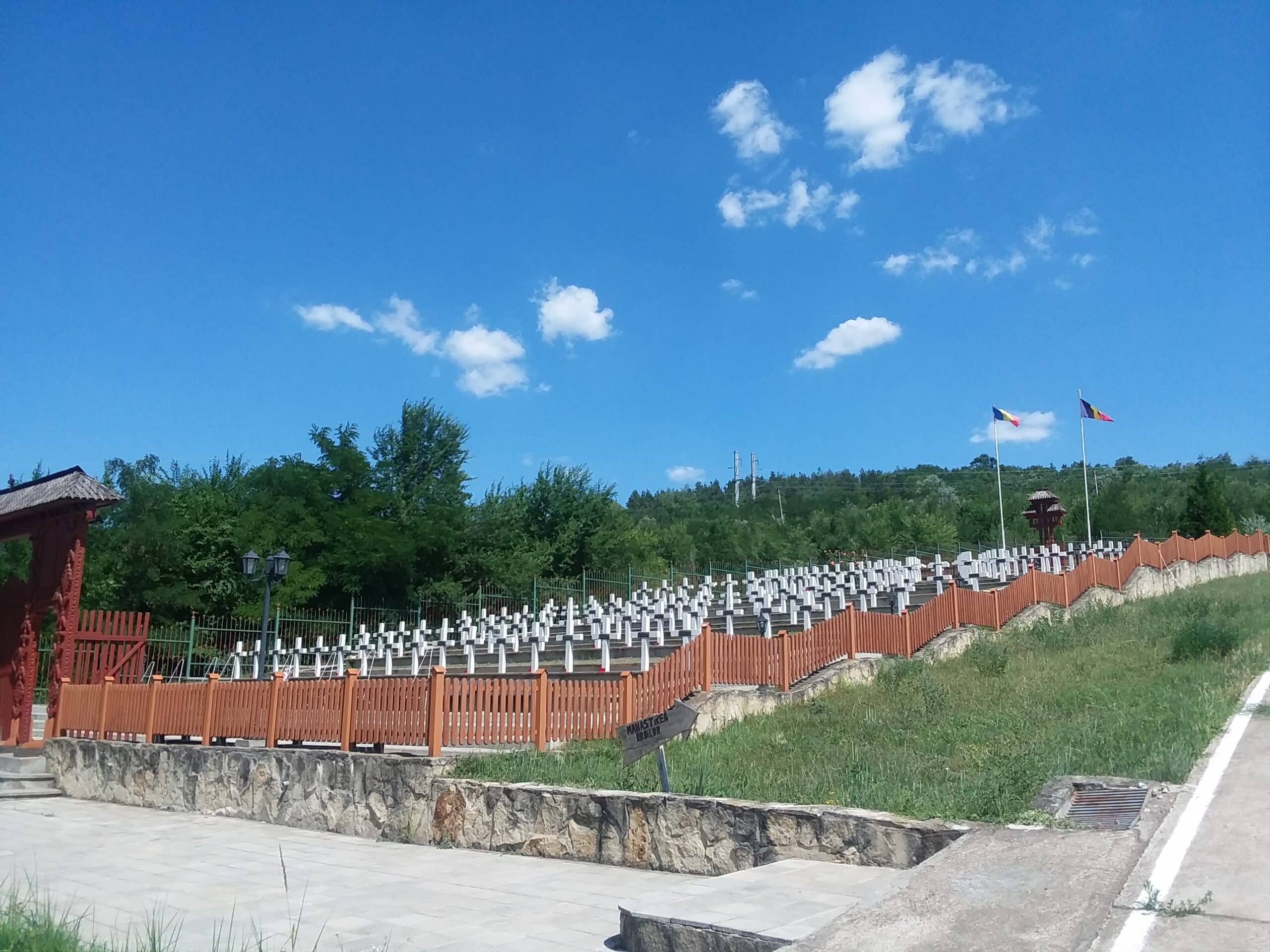
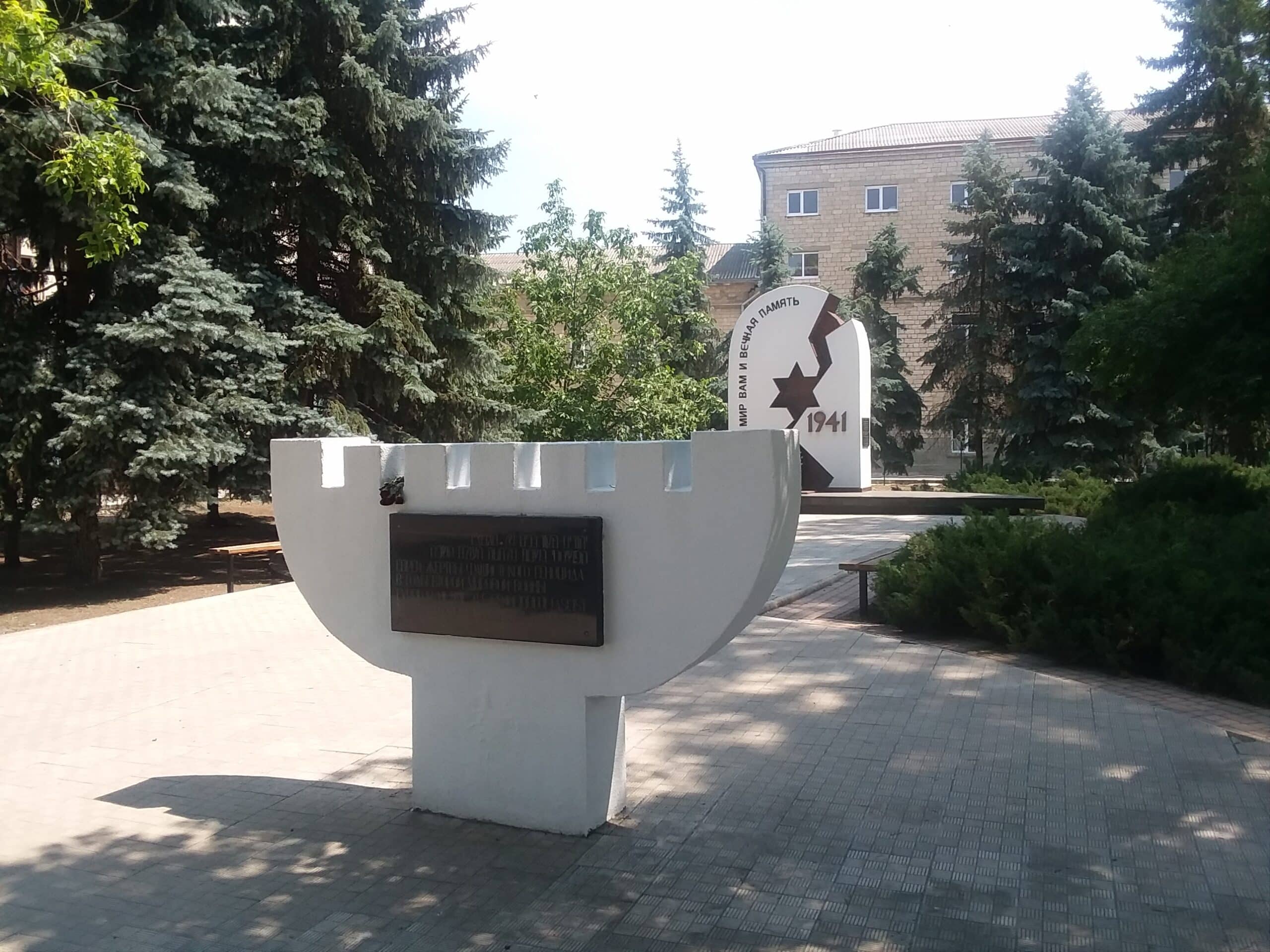
This state of affairs helps to explain how the current Romanian president, advised by the Romanian ministry of defense, could decide to recognize a veteran whose regiment was implicated in the Iaşi pogrom and other atrocities targeting Jews eighty-five years ago. Romanian military history focuses on the fighting on the front, emphasizing bravery and sacrifice, a focus that conveniently overlooks what was going on in the rear, including not just the Holocaust but also brutal antipartisan warfare. The ongoing war in Ukraine, along with the rise in anti-Russian sentiments, further encourages a whitewashed depiction of the war against Soviet Russia to rally support for Ukraine. In fact, similar rhetoric is being increasingly used in the Republic of Moldova. While Soviet military cemeteries become neglected, Romanian military cemeteries are refurbished, and crosses are raised to the Romanian fallen in cities with monuments to Jewish victims. I am sure that the situation in Romania is familiar to ASEEES members. The world wars of the twentieth century continue to loom over Eastern Europe. Hopefully, new research, new approaches can correct mistaken views of those conflicts and change how they are remembered today.
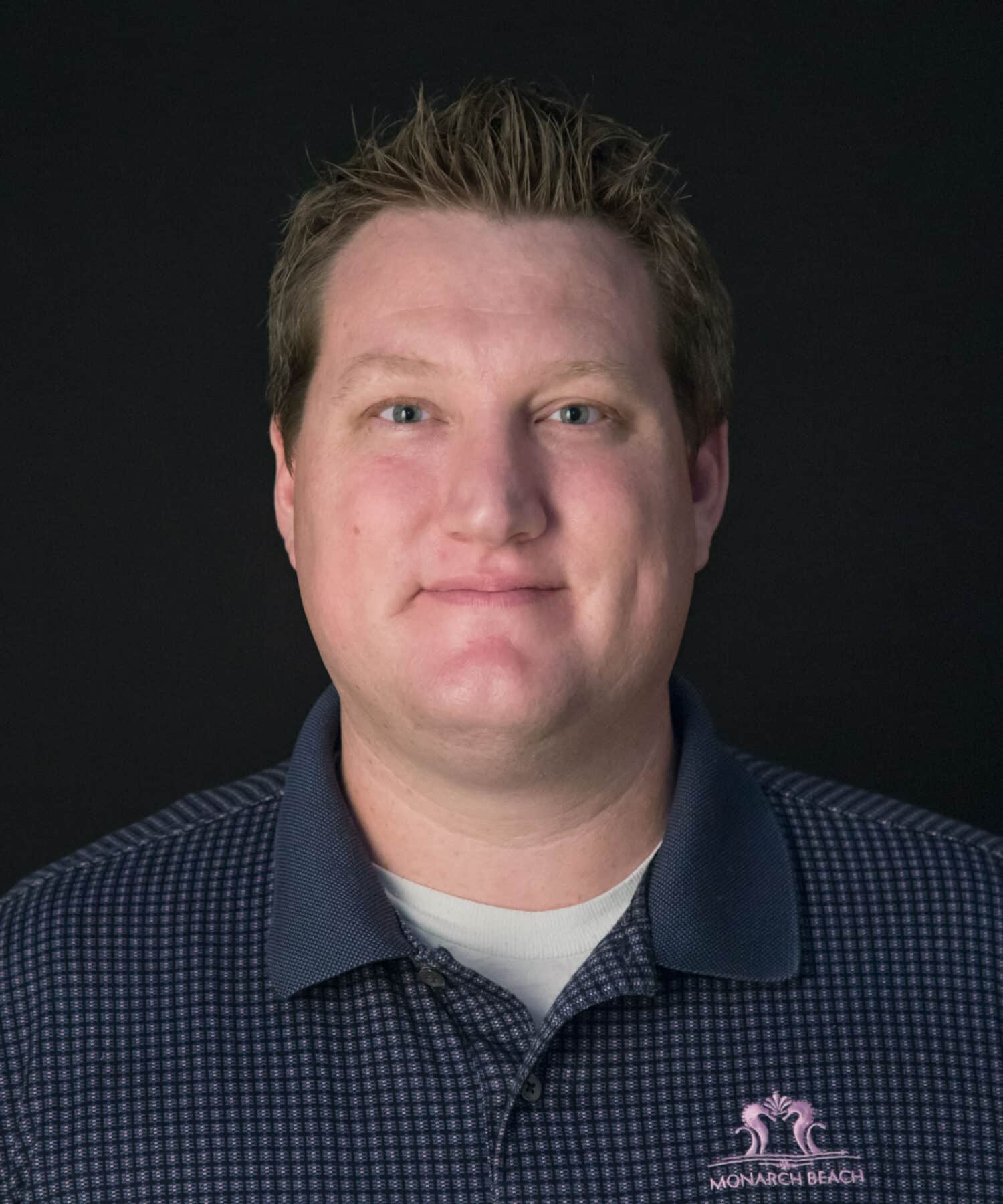
Grant T. Harward completed his BA in history at Brigham Young University in 2009, his MSc in the Second World War in Europe at the University of Edinburgh in 2010, and his PhD in history at Texas A&M University in 2018. He is a former Auschwitz Jewish Center fellow, a former Fulbright scholar to Romania, and a former Mandel Center fellow at the U.S. Holocaust Memorial Museum. He was a historian for the U.S. Army Medical Department Center of History and Heritage from 2018 to 2021. He now works as a historian for the U.S. Army Center of Military History. His research outside of work focuses on the Romanian Army in the Second World War using the lens of War and Society or social-military history. Cornell University Press published his book, Romania’s Holy War: Soldiers, Motivation, and the Holocaust in 2021, which won ASEEES’s Barbara Jelavich Book Prize in 2022. Editura Corint finished a Romanian translation of this work in 2024. Osprey published his volume Romania 1944: The Turning of Arms against Nazi Germany in its Campaign Series also in 2024. He is a co-convenor of the Society for Romanian Studies’ Holocaust and the Second World War Working Group.
Disclaimer: These are the views and opinions of the author and do not represent the official position of the U.S. Army, U.S. Department of Defense, or U.S. Government.