Russocentrism operates not only as a geopolitical orientation but also as a knowledge regime shaping how gender, race, violence, and modernity are understood across Eurasia—a term I use broadly to encompass East Europe, the Baltics, the Caucasus, Central Asia, Siberia, the Far East, and the North, as well as parts of East-Central Europe whose intellectual and political histories intersect with multiple empires. As a Belarusian feminist scholar working between the intellectual worlds of Women’s, Gender, and Sexuality Studies (WGSS) and Eurasian studies, I have long been unsettled by how Russocentrism is minimized or dismissed as an impolite accusation rather than recognized as a structural condition. This essay arises from that unease and from feminist, queer, and transnational epistemologies grounded in the lived realities of the Eurasian borderlands. It speaks to feminist theorists attentive to global power relations and to scholars of Eurasia who are grappling with the endurance of imperial histories. This is not to reify an artificial divide between “feminist” and “Eurasian” scholarship, but to highlight how feminist thinkers in the region have always been part of a transnational intellectual landscape.
Recent Russian military interventions—and the responses to them—have intensified a long-standing question: Why has the legacy of Russian and Soviet imperialism remained so consistently obscured in scholarship? Why have disciplinary routines—from area studies’ linguistic hierarchies to certain feminist frameworks shaped by Cold War imaginaries—so often defended rather than interrogated this imperial afterlife? When critiques of Russocentrism are dismissed as NATO sympathies, geopolitical posturing, or emotional “trauma,” they are stripped of their analytic force and dislocated from the intersectional concerns—gendered violence, racialized hierarchies, and militarism—that feminist scholarship has long foregrounded elsewhere. Yet the Eurasian borderlands often emerge as a “unique” exception to global capitalist and imperial dynamics.
When critiques of Russocentrism are dismissed as NATO sympathies, as geopolitical posturing, or as emotional “trauma,” they are stripped of their analytic force and dislocated from the intersectional concerns that feminist scholarship has long foregrounded.
The Origin of Academic Freedom in the United States
Before 2022, raising these questions often felt futile. Critiques of Soviet imperial formations were frequently dismissed as local grievances, while the claim that the Soviet Union was not an empire circulated as common sense. Feminist scholars will recognize the pattern: structural critique reduced to personal affect, “nuance” invoked to derail discussions of power, and appeals to shared suffering or complicity used to obscure hierarchy. Such reflexes—present in both transnational feminist and Eurasian studies—have long inhibited recognizing Russocentrism as an epistemic formation comparable to Eurocentrism: one that quietly organizes what counts as knowledge, whose histories are centered, and which differences are rendered insignificant.
At first glance, Russia’s full-scale invasion of Ukraine seemed to disrupt these avoidance strategies. Across the humanities and social sciences, scholars reexamined the epistemic foundations of the field: its linguistic defaults, assumptions about cultural legibility, methodological attachments to Russia as the gravitational center, that shaped even expectations about what people in the region were supposed to feel, think, or fight for. Feminist scholars, too, confronted uncomfortable questions about how Cold War epistemologies have shaped our understanding of former state socialist spaces—questions about whiteness, race, imperial legacies, and geographies of feminist solidarity that many U.S.-based frameworks have struggled to hold.
And yet, even as calls to “decolonize” proliferated, the infrastructures of knowledge remained largely intact. Funding priorities still privilege Russian language training; job ads continue to prioritize “Russia;” citation networks continue to center Russian scholarship; and narratives of the region are still measured against Russian developments. New forms of Westsplaining, leftsplaining, and whataboutism flourished—often appropriating anti-imperialist language to excuse or minimize Russian violence. Even radical or anarchist opposition to Russian imperialism in support for Ukraine was, at times, recast as alignment with Western military interests. Meanwhile, histories of Ukraine, Kazakhstan, Uzbekistan, Georgia, Tatarstan, Belarus, and others continued to be interpreted through Russian categories of meaning, often at odds with local political and feminist commitments and rarely situated within their broader global entanglements.
Even as calls to “decolonize” proliferated, the infrastructures of knowledge remained largely intact.
Maria Sonevytsky reminds us that decolonization requires confronting not only political domination but also epistemic imperialism, which casts Russian—and Western—perspectives as universal. For those of us in the borderlands of empire, this is not abstract. As a Belarusian feminist scholar in the U.S. academy, I am positioned within both WGSS and Eurasian studies and often encounter a split form of misrecognitions. In transnational feminist scholarship, Eurasia is frequently treated as a secondary case or illustration rather than a region that generates theoretical and global insights. At the same time, my WGSS affiliation in Eurasian studies makes me legible when speaking about “culture,” “gender,” or “identity,” but not about the imperial and racial structures that shape the region. These dynamics expose how disciplinary habits separate “theory” from “area,” “native informants” from “experts,” feminist critique from geopolitics, and transnational feminism from the post-socialist critique.
Unlearning Russocentrism, then, is not only an area studies project. It is a feminist one, requiring attention to how gendered, racialized, and imperial relations persist in the epistemic structures of academia and the Eurasian borderlands. It entails tracing how empire endures through categories of analysis, institutional infrastructures, and narrative conventions that render some perspectives universal and others supplementary. For feminist scholars outside Eurasian studies, it means seeing the region not as an outlier or “white postcolony,” but as a site where multiple imperialisms—Soviet, Russian, European, Ottoman, Cold War, and neoliberal—intersect, and where feminist, Indigenous, and anti-imperialist traditions have long grappled with these entanglements.
This essay examines the afterlife of empire—its endurance, not its collapse. Drawing on feminist theory, critical imperial studies, and post-socialist scholarship, I trace how Russocentrism persists as an epistemic formation shaping scholarly authority, linguistic hierarchies, and the valuation of feminist knowledge. I argue that confronting this afterlife requires more than redistributing attention or broadening the canon. It demands rethinking the infrastructures through which knowledge is produced, circulated, and legitimized: the languages that confer authority, the labor that sustain scholarship, and the relational practices that allow feminist and area studies to imagine otherwise.
This intervention is offered from the space I inhabit—between WGSS and Eurasian studies, between the U.S. academy and Belarus, between feminist commitments and regional political urgencies. It is written for scholars navigating the complexities of Russian and Soviet imperial legacies while building transnational feminist frameworks that refuse Cold War binaries, Russocentric defaults, and the epistemic inequities that continue to shape our understanding of Eurasia.
How Russocentrism Became the Field’s “Neutral” Center
Russocentrism is often described as an overemphasis on Russia, but its power lies in how it functions as a grammar of knowledge—a set of assumptions about expertise, authoritative archives, and which languages and subjects confer intellectual legitimacy. Rather than simply privileging Russia, it structures what counts as evidence, who counts as an expert, and which histories are presumed to illuminate the rest. For those of us trained within feminist, queer, and decolonial traditions, these are recognizable dynamics: they mirror the broader epistemic hierarchies through which universality is constructed and maintained. Imperial structures endure not only politically but through knowledge practices . As feminist and decolonial scholars note, epistemic capital—like economic capital—accumulates unevenly. Russocentrism persists, then, not merely as a matter of overemphasis but as a value form: a mechanism through which cultural domination becomes epistemic legitimacy and scholarly common sense.
Throughout the twentieth century, Soviet and Western institutions jointly produced Russia as the region’s universal mediator. Even critiques of the USSR often relied on Russian perspectives, rendering non-Russian contexts intelligible only when refracted through the lens of Russian experience. Under Tsarist and Soviet rule, Russian language and cultural norms functioned as intellectual currency and gatekeeping mechanism: activists, writers, and scholars from across Eurasian borderlands often had to translate their politics into metropolitan idioms to be legible. This translation was never neutral. To be heard required speaking the dominant language; yet translating local experience into Russian risked reproducing the very hierarchies one sought to challenge. Such tensions—between visibility and autonomy—remain familiar within feminist, Indigenous, and postcolonial studies, where marginalized communities have long been required to translate themselves to dominant publics.
Cold War area studies consolidated these patterns by naturalizing a Russian-centered view of the region. “Russia” became shorthand for the Soviet Union, and non-Russian republics were relegated to the periphery, described as variations or footnotes to a central narrative. These assumptions became embedded in the design of departments, graduate training pipelines, funding structures, and archival infrastructures. Collections in non-Russian languages were underfunded or treated as supplemental rather than foundational. Even today, these habits endure less through intentional exclusion than through institutional inertia. Russian-language sources remain the “primary archive,” non-Russian scholarship is meaningful only once translated into metropolitan languages, and theoretical innovation is imagined to originate in Western centers while regional scholars supply empirical detail. These hierarchies have become so normalized that they appear practical rather than political.
From a feminist perspective, these arrangements are unmistakably political. They reflect what feminist epistemologists have long revealed: knowledge production is shaped by structures of power, not simply by methodological preference. Soviet internationalism, for example, promised gender and racial equality while translating hierarchy into developmentalist idioms of “fraternity,” “progress,” and “modernization.” Russian became the language not only of upward mobility but of legibility: to appear modern, or to be recognized as politically sophisticated, was to be interpretable within Russian frames. The afterlives of these logics persist today when Russian-language scholarship is treated as universally accessible, while work in Ukrainian, Kazakh, Georgian, Uzbek, or Tatar is coded as “regional,” “local,” or “specialized.” Empire sediments: its infrastructures of language, expertise, and recognition outlast political form, shaping how we read, cite, translate, teach, and assign relevance. Because access to Russian language programs and archives has become increasingly limited, many institutions are turning to Central Asia and the Caucasus as alternative sites for language study or research. Yet this shift raises critical questions about whether such displacement genuinely challenges established centers of authority or merely treats these regions as substitutes rather than as sources of their own analytic and epistemic perspectives. So, to understand the endurance of Russocentrism requires recognizing it not as a residue of the past but as a living epistemic formation that continues to organize value.
Also, from a feminist, transnational perspective, unlearning Russocentrism is necessarily collective work. Solidarity is not sentiment but practice: redistributing resources, supporting multilingual publication, citing and translating beyond Russian, co-authoring rather than extracting, and challenging the linguistic hierarchies that delimit participation in regional knowledge production. Accountability also requires interrogating how Russocentric norms within our own institutions and movements marginalize Indigenous, minority, and non-Russian epistemologies.
To understand the endurance of Russocentrism requires to recognize it not as a residue of the past but as a living epistemic formation that continues to organize value.
These suggestions are not hypothetical. They emerge from the work of scholars, artists, and activists already generating alternative genealogies, knowledges, and ways of being: Belarusian scholars and artists analyzing authoritarianism through local intellectual traditions and embodied experiences; Central Asian artists and scholars revisiting 1930s women’s activism in Uzbekistan to reveal how Soviet “emancipation” masked violence, state control, and colonial tensions; feminist art residency in Kyrgyzstan uncovering the histories of women’s labor in Issyk-Kul’s opium fields; scholars from Ukraine challenging dominant narratives of modernity and the racial-sexual logics shaping postcolonial and post-socialist contexts; and Eurasian diaspora thinkers exploring the loss of languages and life-worlds, to name a few. These epistemologies exist, expand, and innovate; the problem is not their scarcity, but the structures that render some forms of knowledge central and others supplementary.
Unsettling Exceptionalism and Unlearning Imperialism
Exceptionalism remains one of the most persistent temptations in thinking about Eurasia. Scholars across disciplines, while sometimes rightly cautioning against collapsing Russian/ Soviet and Western European colonial projects, often reproduce Russocentric logics by insisting on the region’s incomparability. This stance isolates Eurasia from global histories of race, extraction, and empire, suggesting that Russian and Soviet formations are either too unique for comparison or too politically sensitive for inclusion in broader decolonial frameworks, or too weak—or not too bad—in comparison to the all-permeating power of the U.S. While historical and geographic specificity matters, exceptionalism frequently operates as a protective device—shielding Russian and Soviet projects from the analytic interrogation that is common for feminist, Indigenous, and postcolonial studies, or reinforcing a unipolar worldview in which only the West is imagined as an imperial actor.
A feminist relational approach counters this isolation by tracing how imperial formations—Russian, Soviet, European, U.S., and others—operate through shared structures of domination. Such an approach does not erase differences; rather, it highlights how techniques of rule travel across time and space: military conquest, territorial enclosure, resource extraction, civilizational rhetoric, and the remaking of gendered and racialized subjects. Soviet modernization campaigns—celebrated in the idioms of gender equality, liberation, and international solidarity—often mirrored European civilizing missions in their methods of intervention and discipline, whether in collectivization in Central Asia, Indigenous dispossession in Siberia, or Russification across the Caucasus. The USSR’s claims to represent a supranational socialist humanity echoed Western liberalism’s universalist pretenses, both drawing on Enlightenment genealogies that masked colonial hierarchies.
In this light, relationality becomes a method of exposure rather than equivalence. It reveals how extraction could be reframed as development, linguistic dominance as internationalism, and claims to universality as tools of political and epistemic centralization. At the same time, a relational feminist approach also illuminates what was genuinely distinct—socialist vocabularies of solidarity, the USSR’s semi-peripheral position in global capitalism, and the enduring tension between anti-imperial rhetoric and imperial practice. These tensions become apparent when situated alongside other imperial histories rather than isolated from them. Seen relationally, racial formations likewise appear both mobile and context-specific: Soviet practices racialized Central Asian, Caucasian, and Indigenous Siberian peoples through gendered and civilizational discourses, revealing both the travel of racial logics and their distinct articulation within Soviet imperialism.

Feminist theory clarifies these dynamics. Scholars such as Chandra Mohanty, María Lugones, Patricia Hill Collins, and Sara Ahmed show that universal figures—“woman,” “citizen,” or “worker”—are never neutral but produced through gendered, racialized, and geopolitical hierarchies. Soviet notions of the “citizen” and “worker” operated similarly, obscuring regional, ethnic, and gendered inequalities under the veneer of socialist equality. When we foreground reproductive labor, care work, mobility regimes, and translation, a different map of empire emerges: one that centers the Central Asian, Siberian, Indigenous, and non-Russian communities whose labor sustained Soviet development, the gendered infrastructures of care that underwrote socialist internationalism, and the translation work that determines whose scholarship circulates transnationally. Translation here is not merely linguistic conversion but the broader labor of making marginalized knowledges legible across linguistic, cultural, and academic boundaries.
In this light, challenging narratives of Russian or Soviet exceptionalism requires tracing the flows of labor and knowledge these narratives obscure. Claims that the USSR or Russia were sui generis mask the structural continuities linking Russian and Soviet rule to other imperial formations and shield dominant frameworks from critique. By foregrounding care, reproductive labor, and translation, a relational feminist approach unsettles such claims to uniqueness, revealing both the mobility of imperial logics and their distinct expressions in Eurasia. Unlearning Russocentrism is thus not merely a matter of diversifying syllabi but a feminist epistemic intervention: one that interrogates inherited hierarchies of expertise, unsettles disciplinary exceptionalism, and attends to the gendered, racialized, and imperial infrastructures shaping knowledge production.
Decolonization as Method, Not Metaphor
Following Eve Tuck and K. Wayne Yang as well as recent Madina Tlostnova’s intervention, it is crucial to caution against turning “decolonization” into a moral slogan detached from structural change. Treating decolonization as method focuses attention on the infrastructures that make knowledge possible. A feminist politics of method asks: Who maintains archives and translates? Who is cited? Which theories become canonical? Who sustains multilingual classrooms and research networks? The question is no longer whether to decolonize, but how: whether the field will settle for symbolic pluralism, or build accountable, relational institutions that redistribute value and transform inherited hierarchies. Unlearning Russocentrism thus means not erasing the past but reshaping the epistemic structures through which it continues to organize knowledge.
A feminist politics of method asks: Who maintains archives and translates? Who is cited? Which theories become canonical? Who sustains multilingual classrooms and research networks?
Decolonization is also a labor question—a point long emphasized by feminist scholars. Universities that celebrate global diversity often rely on precarious instructors, frequently women and minoritized scholars, to teach the languages and histories that make such diversity thinkable. Valuing this labor—materially, intellectually, and institutionally—is a prerequisite for meaningful change. Signs of this shift are emerging: scholars link Central Asian labor migration to global supply chains; connect Soviet extraction to ecological crisis; read Indigenous critique alongside analyses of Russian and Soviet imperialism; and theorize Eurasia as central rather than exceptional in global modernity. These approaches refuse Cold War binaries and resist the epistemic isolation reinforced by Russocentrism and, at times, by Western feminist frameworks.
What might Eurasian studies become if organized around relation rather than hierarchy? Rather than centering a single linguistic or political formation, the field could form a constellation of interconnected histories: migration, capitalism, ecological change, anticolonial and feminist resistance, Indigenous and borderland epistemologies, transnational social movements, and the region’s many linguistic worlds. Such an approach would treat Eurasia not as an object but as a generative site for theorizing global questions of empire, race, gender, labor, and relationality.
Yet Russocentrism remains an important problem for any such analytic reorientation. Calls for “nuance” can at times deflect or depoliticize critiques of imperial power, particularly when they leave existing hierarchies of knowledge production intact. What is at stake is not simply interpretive pluralism, but how the field engages the material conditions that shape who produces knowledge and whose work circulates. From a feminist and decolonial perspective, unlearning Russocentrism might therefore be understood less as a search for innocence or purity than as a practice of situated accountability: attending to the infrastructures that sustain scholarship, supporting precarious labor, and cultivating more reciprocal and collaborative forms of intellectual exchange. This also requires closer attention to how epistemic capital is reproduced, how imperial formations linger in scholarly habits, and how resources might be redistributed—not only through more inclusive citation practices, but through broader transformations in how the field organizes knowledge.
Reimagining how we read, teach, translate, and collaborate allows the study of empire to become a practice of solidarity—not as metaphor, but as shared responsibility and material engagement. Decolonization, understood methodologically, also demands intellectual humility: learning from analytic traditions that fall outside Western academic forms but offer theoretical insights grounded in local histories, languages, and epistemologies. It invites us to build a field capacious enough to treat these knowledges not as supplemental but as foundational to understanding the region and its imperial afterlives.
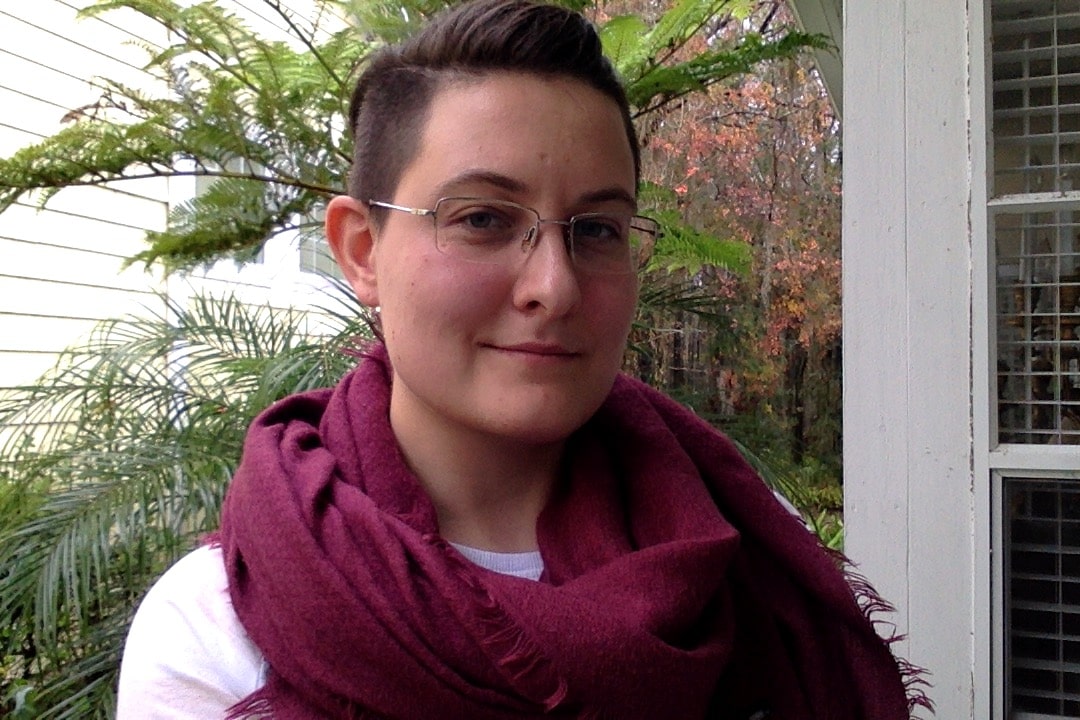
Tatsiana Shchurko is Assistant Professor of Instruction in Women’s, Gender, and Sexuality Studies at the University of South Florida. As a scholar and activist from Belarus and now working in the U.S., she brings a transnational and intersectional feminist lens to her research — committed to de-centering Western epistemologies and highlighting transformative knowledge production across Eurasia and the U.S. Her work focuses on the politics of empire, post-socialist and Eurasian studies, and feminist genealogies of solidarity, migration, labor, racialization, and knowledge infrastructure. Her current book project — supported by an ACLS Fellowship (2023) — explores the connections between Black women’s international activism and Eurasian feminist knowledge production. Through teaching, research, translation, and digital archiving, she seeks to build relational scholarly practices that challenge Russocentric and Eurocentric defaults while amplifying marginalized voices and life-worlds across the region.