ASEEES thanks Jasmina Tumbas (Communications Advisory Committee) for her work in compiling this interview and sourcing the images.
- Nataša Kovačević is Professor in the Department of English Language and Literature at Eastern Michigan University.
- Djordje Popović is Assistant Professor of South Slavic Studies in the Department of Slavic Languages and Literatures at UC Berkeley.
- Antje Postema is Continuing Lecturer of South Slavic Studies in the Department of Slavic Languages and Literatures at UC Berkeley.
- Ena Selimović is a writer and translator who works from Bosnian, Croatian, Montenegrin, Serbian (BCMS) into English.
- Bojana Videkanić is Associate Professor in Fine Arts at the University of Waterloo.
The New Yugoslav Studies Association (NYSA) is an ASEEES-affiliated interdisciplinary organization dedicated to the study of the Yugoslav political project, culture, and society from a transnational perspective. The association exists to facilitate critical scholarly inquiry, promote the exchange of knowledge about Yugoslavia, and maintain its legacies and ongoing relevance. It seeks to bring together researchers, educators, and students of Yugoslavia from across diverse academic, national, and linguistic backgrounds. The “new” in the name of the association refers not only to a renewed scholarly interest in a country that no longer exists, but also—and more importantly—to a shared methodological stance: namely, a refusal to accept ethno-nationalism and the destruction of socialist Yugoslavia as the only lens through which its significance ought to be viewed. Finally, it also signals an orientation toward the future of research in which Yugoslav critical, historical, social, cultural, and artistic interventions matter—in the region and beyond.
How did the New Yugoslav Studies Association come to be?
Nataša Kovačević: At the 2022 ASEEES Annual Convention, some 40 scholars interested in the study of socialist Yugoslavia came together for the first time. It was clear that each one of us had at some point attempted to form an organization dedicated to Yugoslav studies, so we recognized that this was an opportune time to join our efforts and become an affiliate group of ASEEES. Our aim was to create an infrastructural hub to unite these dispersed initiatives and connect researchers, artists, and communities with similar interests—hence the idea for New Yugoslav Studies. It turned out there was a vast, global community of people deeply engaged with questions surrounding the Yugoslav project. We went from a community of 41 back in 2022 to over 614 as of December 2025.
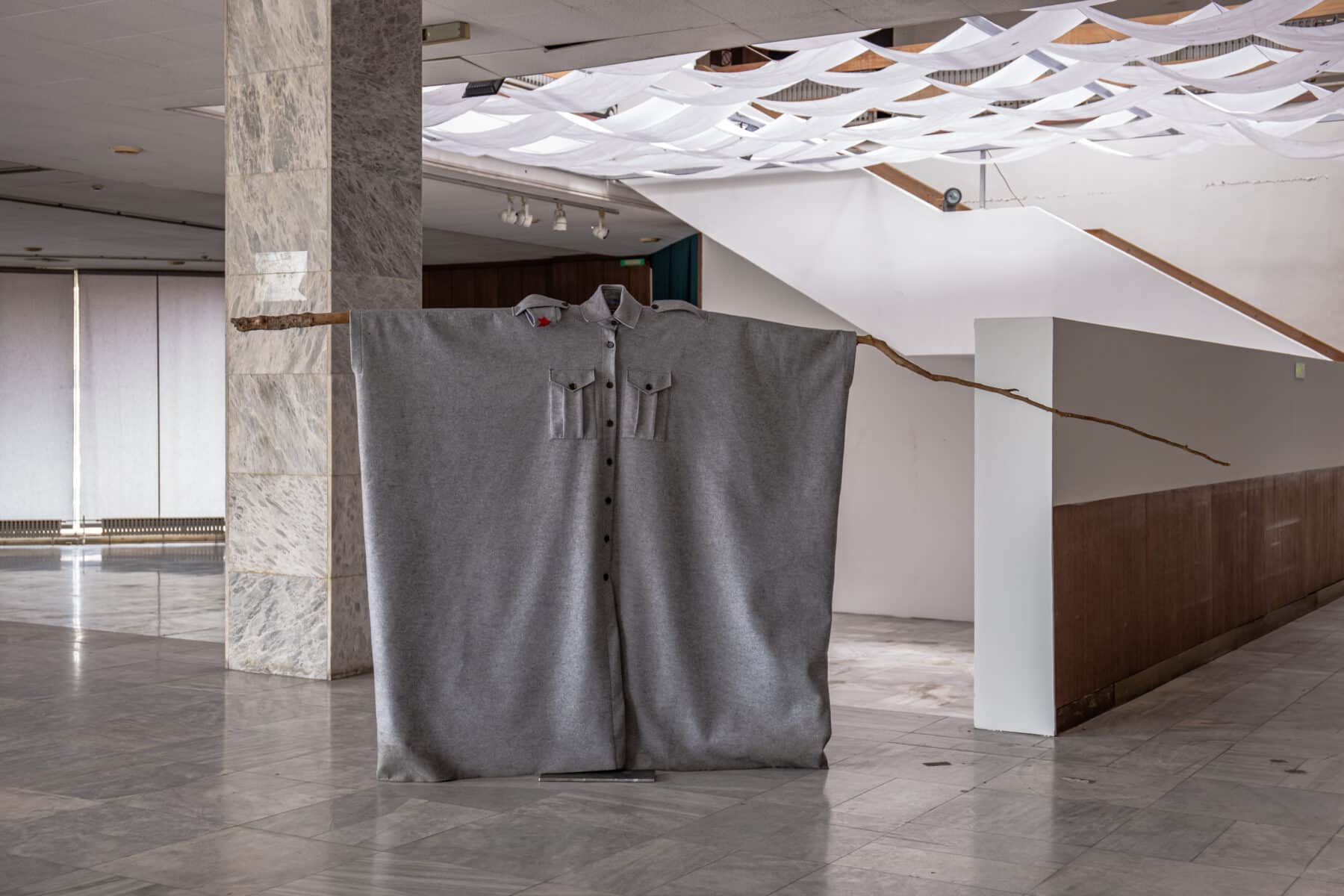
Bojana Videkanić: We also had another thing in common. For many of us now involved in NYSA, the process of discovering alternative epistemic frameworks and methodologies was often solitary, undertaken without the benefit of established networks or supportive academic environments. Particularly in the 1990s and early 2000s, the majority of available literature on Yugoslavia—in English and in other languages—revolved around the themes of ethno-nationalism, the “failure” of socialism, the collapse of multinational states, and the inadequacies of Yugoslavia’s economic and social system. Our shared experiences—a desire for comprehensive, inclusive, anti-nationalist approaches, and a refusal to accept the marginalization of Yugoslav studies—led us to create an association that could provide solidarity, support, and a platform for change. We envisioned NYSA as a space where students, early-career researchers, community members, artists, and cultural workers could connect, share resources, and critically engage with the history and legacy of Yugoslavia without the fear of stigmatization.
What were your priorities? What is the organization’s mission? What challenges did you face?
BV: NYSA is unapologetically Yugoslav in orientation—this is its priority, its mission, and, effectively, its challenge. After three decades of ethno-nationalism in the region, it has become clear that, despite its undeniable challenges and contradictions, socialist Yugoslavia offered a more equitable and progressive model than its successors. The word “New” in our association’s name reflects our historical consciousness: we seek not a return to the past but rather a critical re-engagement from the vantage point of three decades of subsequent experience. We strive to identify those aspects in which Yugoslavia represented a progressive alternative and to consider how its legacy can inform emancipatory responses to the pressing political and social dilemmas of our own time. The choice to retain “Yugoslavia” in NYSA’s name is therefore a deliberate act of resistance against the corrosive effects of neoliberal capitalism, imperialism, intensifying ultra-nationalism and fascism (both in the region and internationally), and new forms of social and political oppression that have emerged since the 1990s. Our association welcomes those who continue to view Yugoslavia as a meaningful political and social idea, whether or not they have familial or personal ties to the region. Our membership includes people born in socialist Yugoslavia who now live abroad, those residing in the successor states, and others who have encountered Yugoslavia exclusively through research or political interest.
Djordje Popović: I like to think of NYS as a mode of inquiry that sprung over time from a number of different initiatives, publications, groups, and gatherings—some academic, others cultural and political. Over the last two decades, we’ve witnessed a methodological reorientation, a (re)emergence of a critical, historical-materialist approach that draws its inspiration from constitutive moments of the Yugoslav experiment, such as the partisan struggle and Yugoslav revolution, workers’ self-management and social ownership, and the Non-Aligned Movement.
Over the last two decades, we’ve witnessed a methodological reorientation, a (re)emergence of a critical, historical-materialist approach that draws its inspiration from several constitutive moments of the Yugoslav experiment.
At first, these and a myriad of other forgotten, discredited, or outright forbidden Yugoslav phenomena may appear solely as objects of New Yugoslav analysis. But they are more than that, for they all contain, to different degrees, a trace of something missing in today’s social and political practice—namely, the presence of a (revolutionary) subject able to affect its own conditions of possibility. This engagement with what appears to be the Yugoslav past thus draws its rationale, perhaps paradoxically, from the future it wrests from our own fallen present. All of this is to say that New Yugoslav Studies designates a lot more than a renewed interest in the socialist Yugoslav past or a desire to preserve the remnants of that past from its systematic destruction at the hands of positivist scholarship, liberal triumphalism, and nationalist violence.
NYSA has become a major presence at the ASEEES Annual Convention, with a steady increase in panels and events (and attendees). Could you go into more detail about your numbers?
Ena Selimović: We are proud of the program and all the new members we were able to bring together at the convention this year. It was our largest gathering to date—and arguably the largest gathering in the United States—with over 100 participating scholars in 20 NYS sessions. In addition to our six clustered streams, we also organized a number of ancillary events, such as film screenings, art exhibitions, poetry readings, and our annual social gathering in collaboration with the Black Sheep Society—an interdisciplinary group of scholars in Russian, East European, and Eurasian Studies working within the tradition of leftist analysis and critique—which routinely attracts many hundreds of our colleagues. This collaborative approach is key to the growth of the association. For instance, last year in Boston, the graduate student member of the NYSA board, Nace Zavrl, curated a fifty-film retrospective, The Yugoslav Junction: Film and Internationalism in the SFRY, 1957-1988, in collaboration with the Harvard Film Archive. This year in DC, we also supported a reading organized by Turkoslavia celebrating Slavic and Turkic poetry and prose. We understand that next year’s ASEEES convention will spotlight Balkan studies, and we’re sure that NYSA will be back with an even more ambitious program.
BV: The growth of our association over the past four years has been remarkable. From just a handful of organizers in Chicago to a single overflowing room at our inaugural “Introducing New Yugoslav Studies” lightning round at ASEEES in 2023, NYSA has expanded to more than 600 members. Together with our sister organization, the Black Sheep Society, we are now 1,000-members strong and likely among the fastest-growing affiliate groups within ASEEES. NYSA continues to attract undergraduates, graduate students, and early-career researchers, reflecting a vibrant and growing interest in Yugoslav themes.
Antje Postema: I’m particularly pleased with how many students are involved in New Yugoslav Studies. While it’s still probably the case that most New Yugoslav practitioners stem from the region, there’s been a noticeable surge over the past several years in the number of scholars who, like me, don’t have familial ties to the former Yugoslavia. For example, Djordje and I teach at UC Berkeley and our courses in BCMS and Yugoslav culture are overflowing with students, the vast majority of whom have no ties to Yugoslavia. We’ve noticed huge increases in student enrollments since the founding of the Bay Area New Yugoslav Studies chapter, which students have flocked to as a welcome complement to our classes. We currently have 40 undergraduate students in three years of BCMS language and many more in our classes on Yugoslav literature, film, and folklore. What draws them to study the Yugoslav experience is their (and our own) imploding reality: “Yugoslavia” is becoming an expression of an insurgent and critical spirit, and an increasingly rare model of engagement that’s not predicated on acquiescence.
How has the interdisciplinary foundation of NYSA changed various intersecting fields of research related to the (post-socialist) Yugoslav space? What methodological shifts have you observed?
NK: Past research on Yugoslavia often deployed a one-dimensional perspective that overlooked the broader historical and social complexities of the region. Contemporary research, by contrast, adopts a much wider and more nuanced lens. Nationalism is no longer the overarching or sole explanatory framework. Instead, many current studies employ materialist and other critical theory approaches to analyze the breakup of Yugoslavia and the history of socialism in the region. This shift allows for a deeper, more balanced understanding of both the socialist legacy and the multifaceted nature of Yugoslav society.
Nationalism is no longer the overarching or sole explanatory framework. Instead, many current studies employ materialist and other critical theory approaches to analyze the breakup of Yugoslavia and the history of socialism in the region.
Another significant trend in recent scholarship is the internationalization of research themes and methodologies. Scholars are increasingly situating Yugoslavia’s history in a global context, drawing comparisons to other regions and emphasizing Yugoslavia’s active participation in international movements such as the Non-Aligned Movement and the United Nations. This comparative approach highlights Yugoslavia’s connections with countries both within and outside the socialist bloc, moving beyond the formerly dominant narrative that Yugoslavia was merely a failed multinational state in the Soviet sphere of interest.
How has NYSA extended its reach beyond ASEEES to include the rich intellectual and activist local and global Yugoslav networks?
ES: We realized early on that so much of what we took for granted about Yugoslavia—its multilingualism, the specificity of its historical experience with socialism, its transnational positioning, its experimental culture in which art took center stage in building a new society—is not widely accessible to our students and colleagues. This includes those facets of the Yugoslav project that were never realized, resulting in the enduring marginalization of Albanian and Romani languages. Translation is key in our efforts to both reinterpret Yugoslav materials and make those materials accessible to a wider audience. Whether we are working with multiple languages or across disciplines, translation has made our analysis more comparative and open to new perspectives. Of course, there is a long way to go in treating translation as an art form in itself and a mode of scholarly work.
DP: This question is also related to the one above regarding the challenges we face as an organization. Like many other organizations with similar research agendas, NYSA has little if any stable institutional support. What exists, instead, are collective efforts of hundreds of Yugoslav scholars to free the object of our analysis from the limitations that national institutions place daily on our work. These efforts take a number of different forms and often develop independently of each other. A new community of scholars, artists, teachers, political activists, students and other comrades from the Yugoslav region and beyond—from Pula, Prizren, Ljubljana, Sarajevo, and Belgrade, to Vienna, London, New York, Toronto, and San Francisco—are breaking through whatever conceptual and institutional limitations they are placed under (and changing in the process of this struggle their relationship to each other and to their work).
There are many other YU groups and networks organized around a myriad of projects, such as, for example, the annual Socijalizam na klupi conference in Pula, the long-standing series Razgovori o Jugoslaviji, organized by Muzej Jugoslavije in Belgrade, and the international South Slavic Graduate Student Conference in Vienna. Some of the folks associated with these initiatives are also affiliated with NYSA, but these projects (and scores of other panels, publications, exhibits, and so on) exist and thrive independently of the association. In fact, many predate NYSA. The strength of the surge we’re witnessing in the engagement with the Yugoslav experience lies in part in this decentralized pattern of development. NYSA is another node in this vast network.
NYSA is a scholarly association, but are you also involved in the work of diasporic communities?
BV: A core element of NYSA’s mission is community building. The Yugoslav diaspora is significant, with estimates suggesting at least 10 million people worldwide who are in some way connected to the region—either as first-generation immigrants, refugees, or as descendants several generations removed. This demographic is increasingly curious about the history, language, and culture of Yugoslavia, making diasporic communities absolutely vital for research, artistic production, and cultural preservation. NYSA recognizes the importance of engaging with these communities, supporting language retention, and fostering cross-generational and cross-disciplinary dialogue.

Diasporic community initiatives are a crucial component of our growing network. For instance, in Toronto, some of our members organized Crvena dijaspora, which holds bi-weekly online meetings that bring together participants from around the world. The Bosnian-Herzegovinian Film Festival in New York serves as another vibrant public cultural hub for community gatherings. Additionally, the project Sve su to vještice [They are all witches] demonstrates the intersection of community and academic engagement. Other examples include community-based diasporic programs such as the radio show No-Hope, No Fear, which recently celebrated its tenth anniversary of weekly broadcasts dedicated to Yugoslav music on McMaster University’s CFMU Radio Station. Similarly, dynamic diasporic communities have coalesced around Yugoslav music and culture, such as The Little Lighthouse in Cleveland and Yugowave in the San Francisco Bay Area.
In addition to the main ASEEES affiliate, NYSA also operates independent local chapters which carry the scholarly work of your association on a weekly basis. Can you tell us more about this organizational model?
BV: Today, numerous groups are working on Yugoslav-related themes, spanning academic, non-academic, and community-based initiatives. These groups are connected through formal academic channels, institutional partnerships, as well as through collaborative projects that bring together a wide range of interdisciplinary participants. Vienna stands out as a particularly dynamic center, due, in part, to the presence of tens of thousands of people from the region; indeed, one chapter of NYSA is based there. In California, the Berkeley-Stanford chapter has been active for four years, has close to 200 members, and regularly attracts scores of participants to their lectures, reading groups, film screenings, etc. The Toronto-Waterloo chapter recently held its inaugural series of events around the theme of Yugofuturism, with an exhibition by Sadko Hadžihasanović at the University of Waterloo Art Gallery, a discussion panel, and a conference that featured nearly 250 participants online and in-person over the course of four days of panels, film screenings, performance art, and live music. This past October, another chapter was launched in New York City with a packed two-day symposium titled “Revolutionary Yugoslavia: Partisan Art, Archive & Films.” Other chapters and initiatives are in the works, including one in the UK.
Today, numerous groups are working on Yugoslav-related themes, spanning academic, non-academic, and community-based initiatives.
What is the continuing relevance of Yugoslavia for the present moment and what are the organization’s plans for the future?
DP: A line in Nika Autor’s 2023 film Obzornik 242 – Sunčane pruge captures the spirit of the intervention NYSA is making in our field: “Pisci naučne fantastike XX vijeka zamislili su onolike distopične svjetove koji liče na ovaj naš, ovaj sadašnji, a nama istovremeno pogled u prošlost deluje kao naučna fantastika” (“Twentieth-century science fiction writers invented so many dystopian words that describe our own reality; whereas from our vantage point today the past seems like science fiction”). In our current dystopian present, our understanding of the Yugoslav revolutionary past is, on the one hand, a reminder that none of us need to accede to what passes for historical inevitability, and, on the other hand, a critical perspective through which we can assess the absolute historical regression in the national and economic transformation of the former Yugoslav society.
BV: Yugoslavia’s legacy today remains striking, particularly in its leadership role in the Non-Aligned Movement, its practical and theoretical development of self-managed socialism, its unique cultural and artistic production, and its ongoing attempts to foster connections across borders, languages, and cultures. In a contemporary world marked by increasing polarization, the rise of new and resurgent forms of fascism, and the rejection of humanist values—including solidarity, respect for difference, and the pursuit of economic equity—the lessons of socialist Yugoslavia are more urgent than ever. In sum, Yugoslavia’s political commitments, exemplified by its sustained support for Palestine and other liberation movements, stand in stark contrast with the limitations of the region’s successor states, which have often proven incapable of responding positively to complex local and global challenges. The study, preservation, and critical extension of Yugoslavia’s emancipatory legacy is thus essential if we are to cultivate the knowledge, imagination, and political courage necessary to resist the imperial and militarized politics of our present moment. An association that operates on the principles of solidarity, harnessing emancipatory potential in its widest sense, provides a necessary counterbalance. NYSA will grow its local chapters so that our work is not limited to an annual gathering. We’ll soon begin to work on a new peer-reviewed academic journal. We’ll continue to support the expansion of South Slavic academic and language programs across the world, as well as work in collaboration with organizations from the Yugoslav region and in various diasporic communities.
NYSA thanks Nikola Radić for his help in compiling some of the text that appears here. For more, see his November 2025 story in Novosti.