Universities in the United States are presently under assault from hostile federal and state governments that seek to end academic freedom. Slavic, Eurasian, and East European studies (SEEES) scholars can stand at the forefront of the defensive line, bracing the gate against these attacks by ensuring that our students, colleagues, administrators, and the public we serve fully understand what is at stake. From our research, we know what happens to countries once academic freedom is lost, as well as what the conditions are like in countries where it has never been allowed to flourish. It is imperative that we disseminate this knowledge so that the vital role that universities play in a free society can continue.
SEEES scholars know what happens to countries once academic freedom is lost, as well as what the conditions are like in countries where it has never been allowed to flourish.
The Origin of Academic Freedom in the United States
Academic freedom is a principle that now governs higher education in the United States, but this was not always the case. It is not synonymous with First Amendment protections nor the constitutionally granted right of free speech and free expression. Rather, academic freedom is the result of professional organizing around the domain of knowledge production in the face of threats by powerful external interests. Until the establishment of academic freedom as a principle in 1915, faculty could be, and indeed were, dismissed if their research, teaching, or extramural speech was deemed unfavorable to presidents, trustees, donors, religious bodies, and the governors or state legislators who selected chancellors and regents. For example, faculty at institutions such as Stanford University, Vanderbilt University, Columbia University, and others were dismissed for such things as supporting the concept of evolution, critiquing the gold standard, and opposing child labor, railroad monopolies, and World War I.
In response to these threats, members from multiple disciplinary associations came together to create the American Association of University Professors (AAUP), which then drafted in 1915 its Statement of Principles on Academic Freedom and Academic Tenure. The statement affirmed that universities are a public trust, not the personal fiefdom of those who govern them. They provide knowledge to the public, and the rigor and soundness of knowledge claims are best adjudicated by trained professionals, insulated from the interests of politicians, donors, and religious groups. Trust in professors grows from the surety of their independence. The principles of academic freedom maintain a firewall between universities and powerful parties with interests to defend beyond that of truth.
The Future of Academic Freedom in the United States
The present moment again sees threats to academic freedom, and it is scholars themselves who must defend it if free inquiry is to survive. The First Amendment is helpful, but insufficient to ensure that universities maintain their autonomy. Threats are coming from both state and federal governments, who believe that they have the power to dictate the content of courses, mandate hiring and firing, and oversee the structure of departments and operations. At the federal level, the Trump Administration has engaged in numerous attacks, some of which border on extortion. Several elite research universities faced demands that they follow the administration’s dictates or face the withholding of billions of federal dollars. The demands included hiring faculty on the basis of political ideology and closing certain established academic programs.
Rather than promoting research into areas that the federal government deems to be a priority, this new path signals that the government is determining that some scientific questions should not be asked.
While the government has long provided research funding to universities and has prioritized certain issue areas, the quality and substance of scientific research would be determined by the scholarly community itself. Peer reviews and expert panels oversaw the awarding of grants based upon the quality of the contribution and methodological rigor of the proposal. In the spring, however, the administration pulled funding from grants, not on a metric of disciplinary standards, but rather on the basis of whether certain words appeared in the titles or abstracts. The list of red-flag words was ideological: “women” and “female” would potentially cause you to lose grant funding, but not “men” or “male.” The word “historical” could cause a grant to be revoked. “Equality” made the list of suspect words, as did “race” and “diversity.” Researchers could lose funding if they addressed anything using the word “political.” Apparently studying such a pertinent topic as “polarization” might result in a terminated grant. Rather than promoting research into areas that the federal government deems to be a priority, this new path signals that the government is determining that some scientific questions should not be asked.
At the state level, legislatures have been writing laws designed to limit permissible curricular content and eliminate faculty governance. Appointed administrators, who are not credentialed faculty members, have actively sought to wrest control over the curriculum away from academic peers, whose expertise as trained practitioners is discounted. In Florida, the Stop W.O.K.E. Act banned the teaching of systemic racism or other concepts related to privilege and oppression of different groups within American society. Texas A&M approved a policy that requires all courses on race and gender to be approved by the president – a clear violation of academic freedom, as well as disciplinary standards for knowledge. The states of Florida and Texas are particularly egregious cases, but certainly not the only ones. The University of Oklahoma recently suspended a graduate instructor for failing an essay that was clearly outside the domain of the course’s disciplinary standards.
As someone who has studied Russia, past and present, for most of my adult life, I found many of these tactics uncomfortably familiar. To my eyes, they were eerily reminiscent of the Communist Party’s attempt to control information and ensure the propagation of only a particular, “correct” interpretation or narrative – one that was beneficial, or at least non-threatening, to its hold on state power. I realized that my area studies knowledge enabled me to see patterns that might be less visible to others. The administration was defending its moves using phrases like “protecting women,” “combating antisemitism,” and “promoting viewpoint diversity,” and some people may miss the forest for the trees. They may believe they are choosing morally worthy goals while actually granting the state unprecedented control over what qualifies as legitimate knowledge. American citizens have taken academic freedom for granted for several generations; they need SEEES scholars to explain to them what they stand to lose.
The Role of Area Studies Experts in Defending Academic Freedom Today
Many of the battles described above are taking place in court; however, it would be folly to rely on the legal system alone and ignore the court of public opinion. The general public must be reminded of the importance of autonomous universities. SEEES experts are especially well-positioned to argue in defense of academic freedom because of our deep awareness of what can happen in societies where the state dictates the terms of what counts as knowledge. Our regional expertise enables us to discuss academic freedom in a way that elides the tribalism that characterizes so many contemporary American political discussions. Stripped of the signifiers of group identity and partisan loyalty in the United States, stories from the history of Romania, contemporary Turkmenistan, or a wide range of other SEEES countries, past and present, can bring a clear-eyed perspective to the importance of academic freedom to an audience in America, where free inquiry is increasingly under threat.

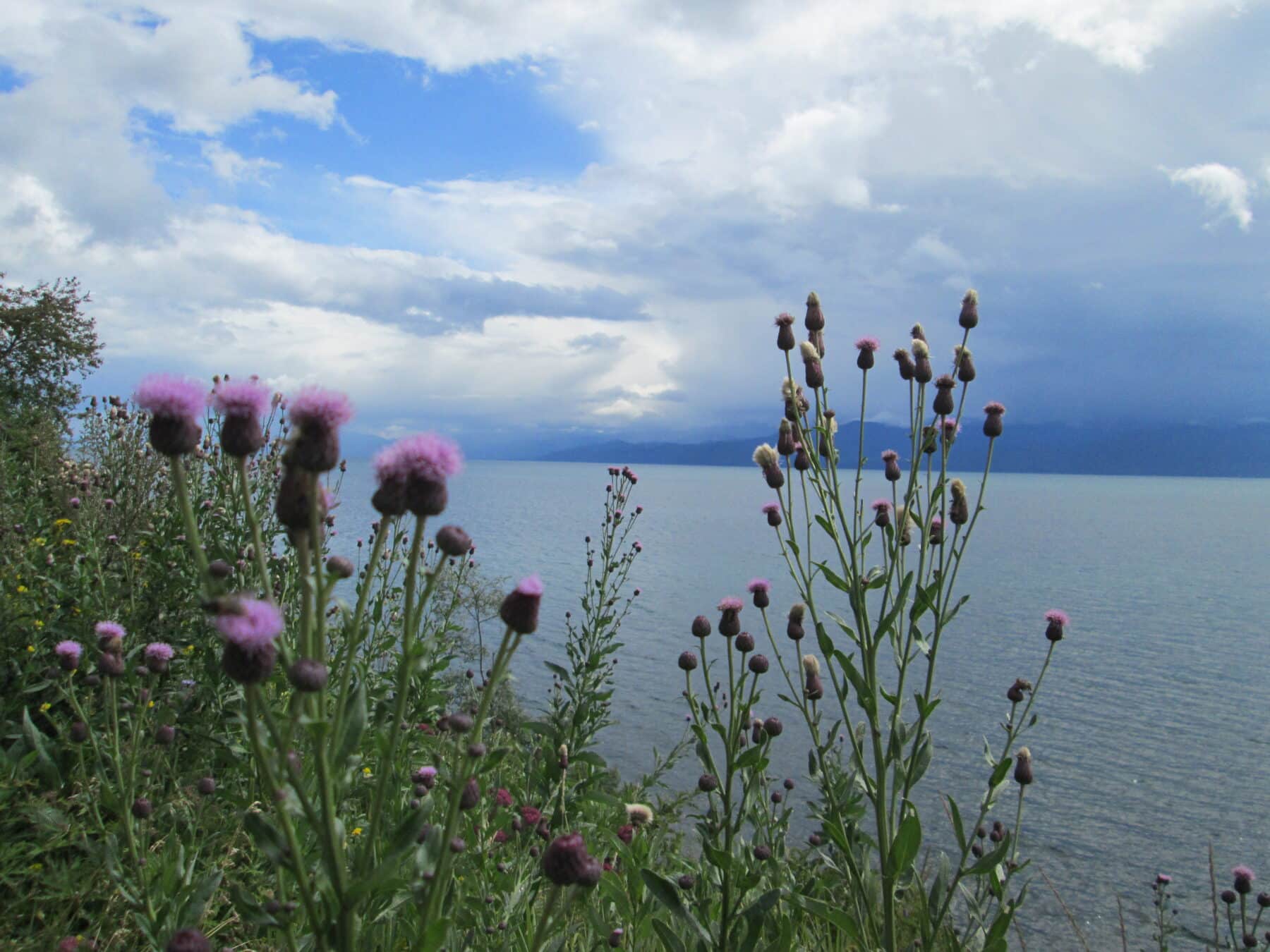
There are many ways that SEEES scholars can share the information we have about state control over knowledge production and dissemination. The most obvious place is within our classrooms. As we design syllabi for the coming semesters, we can plan modules that focus on higher education in the regions we study, particularly attending to instances in history when academic freedom was denied and the consequences of that denial. In Russia, the history of Lysenkoism is a clear example of how political ideology can distort truth and set scientific knowledge back for generations, as occurred for the field of genetics in the Soviet Union. Over 3,000 biologists were fired, and many scientists faced imprisonment or even execution for defending legitimate scientific knowledge. From my own research area – environmentalism around Lake Baikal – the scientist Grigory Galazii, head of the Limnological Institute, lost his laboratory for producing studies of pollution in Lake Baikal. The studies were censored so that the public would not know about the harm the local factory was causing to the environment and the people within it. When we share these histories with our students, they carry this important knowledge with them into the future, and hopefully they will stand ready to protect academic freedom over the long term.
We need broad public support to ensure the integrity and independence of higher education.
However, long-term strategy alone will not meet the moment. Higher education needs to have the general public’s sympathy and solidarity in the immediate term; otherwise, people holding state power will come to accept that the attempt to exert control over university operations is a legitimate and acceptable practice. The citizenry must join faculty in making clear that there is no public mandate for ending academic autonomy. To maintain academic freedom, faculty must defend their position, but they cannot do it alone. Professors make up less than a single percent of the U.S. population. We need broad public support to ensure the integrity and independence of higher education.
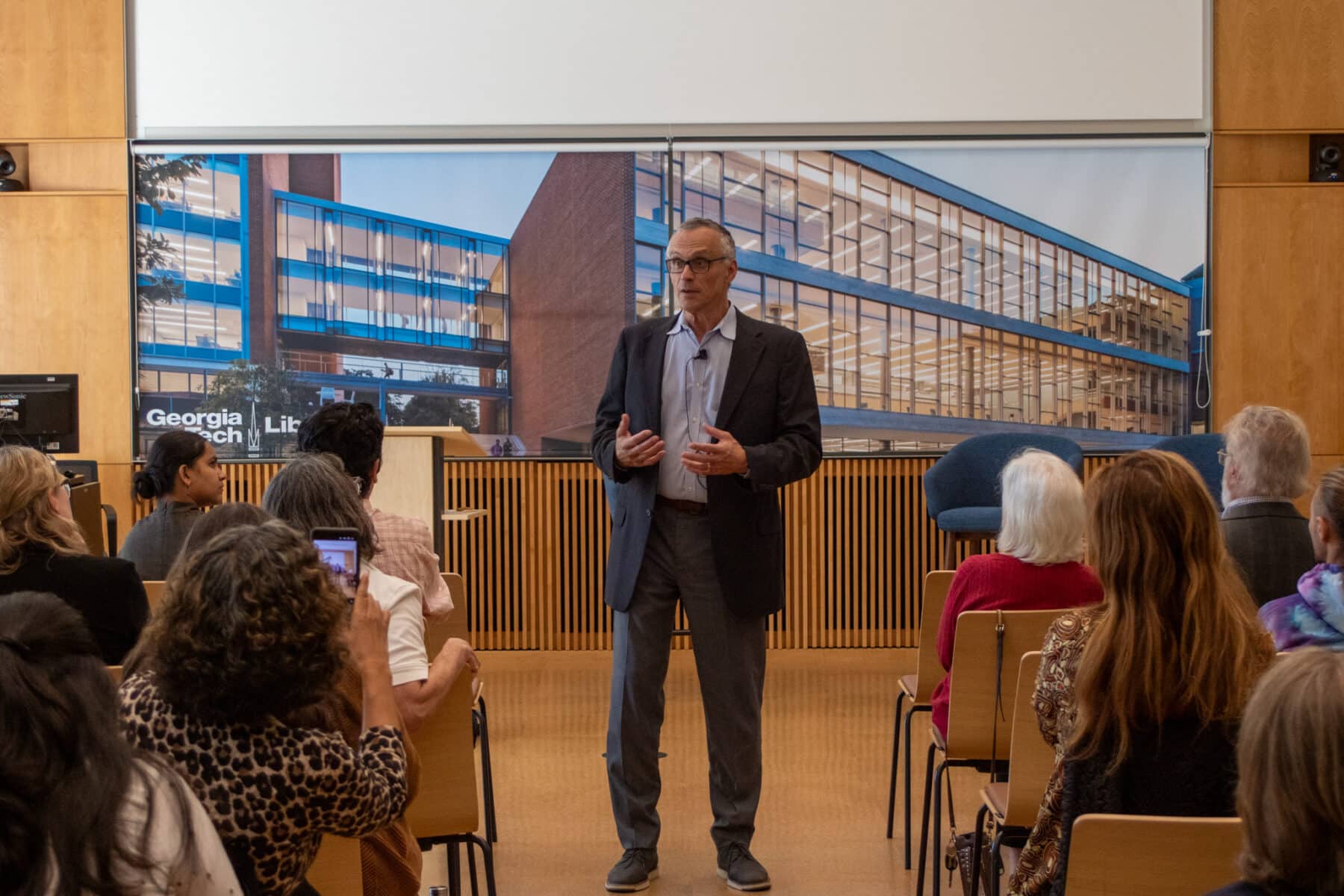
To that end, SEEES experts should start to speak out in wider venues than simply inside the classroom. The Symposium on Academic Freedom and Human Rights that I organized at Georgia Tech is one replicable model. This full-day symposium gathered historians and social scientists from Georgia Tech and Georgia State University to speak about instances, past and present, when governments sought to dictate the operations of universities, and what the consequences of these moves were for the state of knowledge and for human rights. Although I was undoubtedly prompted to organize the symposium based upon current events in the United States, the symposium itself targeted none of that. Instead, what I hoped to showcase was the knowledge we have from history and from other countries around the world that make these new attacks in the U.S. so very worrisome.
The program had four panels and a keynote address. It opened with a presentation on the history of academic freedom in the United States, as knowledge of this history has waned over time and cannot be taken for granted, even by faculty themselves. Subsequent speakers covered such topics as the trial of Galileo, the Cultural Revolution, Nazi science, Soviet censorship, the Tlatelolco massacre, and contemporary events in Russia, Turkey, Venezuela and Nicaragua. In the end, the collected presentations left those in attendance with a powerful sense of what is at stake when it comes to academic freedom. Without ever mentioning the current administration or the repeated blows it has inflicted upon academia, the symposium made the dangers of these tactics starkly evident.
There are many other ways to share our knowledge with the broader public: penning opinion essays, developing podcasts, or writing articles in the newsletters of our professional associations (such as I am offering here). One important outlet that SEEES scholars could target is alumni magazines, at either their present institution or at their alma mater. This audience should be predisposed to appreciate the value of autonomous higher education, since they have reaped its benefits for themselves. Alumni may not be fully aware of the current threats to higher education, but SEEES scholars discussing comparative cases in current or formerly authoritarian regimes from our regional areas of expertise could help raise consciousness of what can happen to liberal democracies when knowledge itself becomes subject to the dictates of the powerful.
By sharing our knowledge about the problems and pathologies that have resulted from authoritarian domination over higher education, we can encourage our students, colleagues, administrators, and the general public to place contemporary state actions into a different, defamiliarized framework. In doing so, the public may come to see that, however justified they may feel in tolerating state action against an independent academe – for whatever reason – the consequence of breaching that firewall between state power and independent inquiry is not compatible with a robust and flourishing free society.
Conclusion
Following the Soviet collapse, after decades listening to ideological Cold War rhetoric, the American public needed SEEES scholars to help them understand that Soviet people were neither brainwashed ideologues nor cowed, terrified victims. People living in dictatorships were still normal people who went about living their lives. Now, it seems, we need to remind them that, just because normal people lived their lives inside authoritarian states does not mean we should normalize authoritarianism.