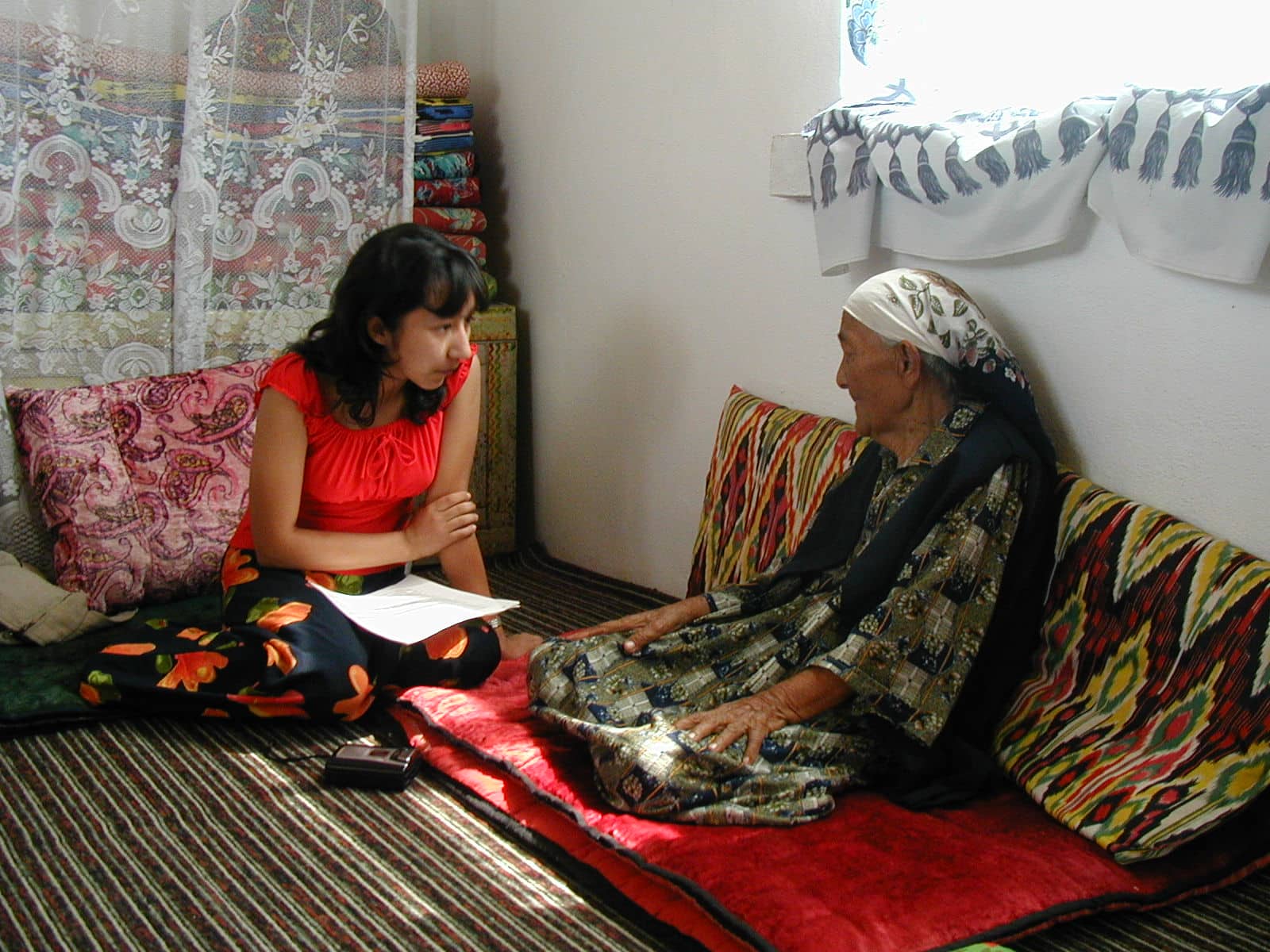
For more than three decades, I have had the good fortune of interviewing many people in Uzbekistan about their Soviet-period lives. My historian colleagues in Central Asia used to be confused as to why someone who does interviews calls herself a historian. As Alisher Sabirov, oral historian and professor at Nizamiy Pedagogical University in Tashkent, writes: “In Russian humanities scholarship, the mode of collecting information from oral recollections attracted ethnographers rather than historians” (Istoriiagrafiia i zarubezhnyi opyt ustnoi istorii, 2022). Recently oral history has gained a degree of legitimacy and popularity in Central Asia as a mode of qualitative research across numerous disciplines, including history.
Oddly, I started doing oral history interviews during the early 1990s archival revolution, when foreign historians could easily access imperial and Soviet period archives, even in Uzbekistan. We foreign researchers were thrilled by our archive finds, and we were skeptical, aware that Party-state chose what went into those documents. Interested in Uzbek women’s experiences of the 1920s unveiling campaign, I added oral history interviewing to my archive and library research, positing that women who lived through that political moment might tell their stories in ways that differed from, and maybe resisted, views found in Party and government archives or in the contemporaneous Uzbek periodical press. I also thought that the illiteracy that was still dominant among Uzbeks in the 1920s made it unlikely that many women who unveiled had written about their experiences.
One of oral history’s values is capturing the ways that speakers evaluate and express emotions about their lived experiences.
As it turned out, some of the women whom I interviewed in 1992-1993 were illiterate, but most urban interviewees had gone to school, and a few had even written their own memoirs (Kamp, “Three Lives of Saodat,” 2001). Eventually I understood what many oral historians before me had found out: while one of oral history’s values is bringing otherwise unheard voices and unknown facts into history writing, another is capturing the ways that speakers evaluate and express emotions about their lived experiences. As a product of US Cold War-era training in Soviet Studies and of the Saidian turn in Middle East studies, I expected to hear women telling me about how oppressed they felt at having been forced to unveil, but I heard more stories about feeling liberated. Their accounts forced me to think critically about myself as a researcher: what ideas shape my interests, how do those lead to the questions I ask or do not ask, and how do my assumptions guide my interpretations? Can I recognize and break from my assumptions? These are questions that any well-trained historian asks about their work, but the ethics of research, and of evaluating a narrator’s account, differ when we instigate that narrative and interact with the speaker, rather than engaging with their lives through already-existing documents.
I was far from the first scholar to seek out recollections for the purpose of learning about Central Asian social history (my interest) or about Soviet state crimes. In the Soviet Union’s radical 1920s mode of incorporating the working class into history-making, regional divisions of the Commission on the History of the October Revolution and the Russian Communist Party (ISTPART) collected worker and peasant memories of the Civil War. Methods were academic, with forms, questionnaires, and sometimes stenographic records of individual narratives, but widespread regional efforts were abandoned in the 1930s when, as Sabirov puts it, “individual interpretations of events became unacceptable.” In Central Asia, scholars collected oral accounts of the so-called Basmachi war, the murder of Hamza Hakimzoda Niyoziy, and other important moments, sometimes in government-approved projects that led to publications fostering a popular and ideologically acceptable version of the past, and sometimes as a sideline to their assigned research. In the 1930s, the Tajik author Sadriddin Ayni collected oral accounts from formerly enslaved people while working on his collectivization-era Uzbek-language novel, The Slaves (Qullar). In the 1950s, the Uzbek historian Hamid Ziyoyev interviewed Fergana Valley Uzbeks about their memories of the 1916 uprising, while he was formally working on a different official project (Abdullayev, Ustnaia Istoriia v Uzbekistane 2012).
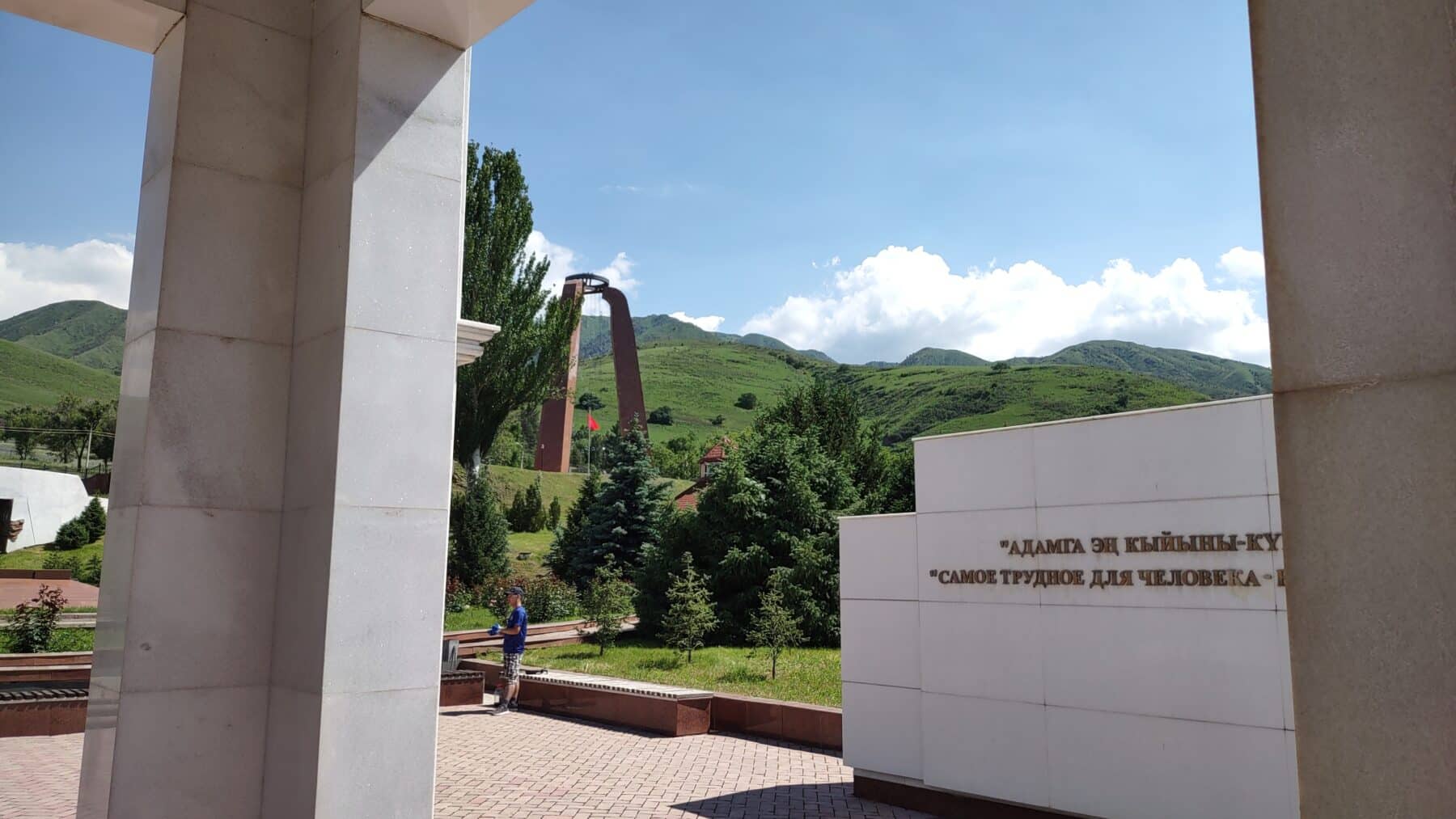
Many researchers casually refer to any interview where the past is discussed as a form of oral history, but trained oral historians insist on audio-recording of interviews, so that we can faithfully represent the words of respondents, whom we recognize as individual authors. Stenography made recording a speaker’s exact words possible, but the field’s flourishing is directly linked the spread of affordable sound recording technology. In the Soviet context, journalists such as Svetlana Alexeevich, who had access to that equipment, were better positioned than other researchers to record life stories. For example, in 1980s Kazakhstan, journalist Valeriy Mikhailov collected many eyewitness accounts of the 1930s famine, later using them in a work that is translated into English as The Great Disaster: Genocide of the Kazakhs.
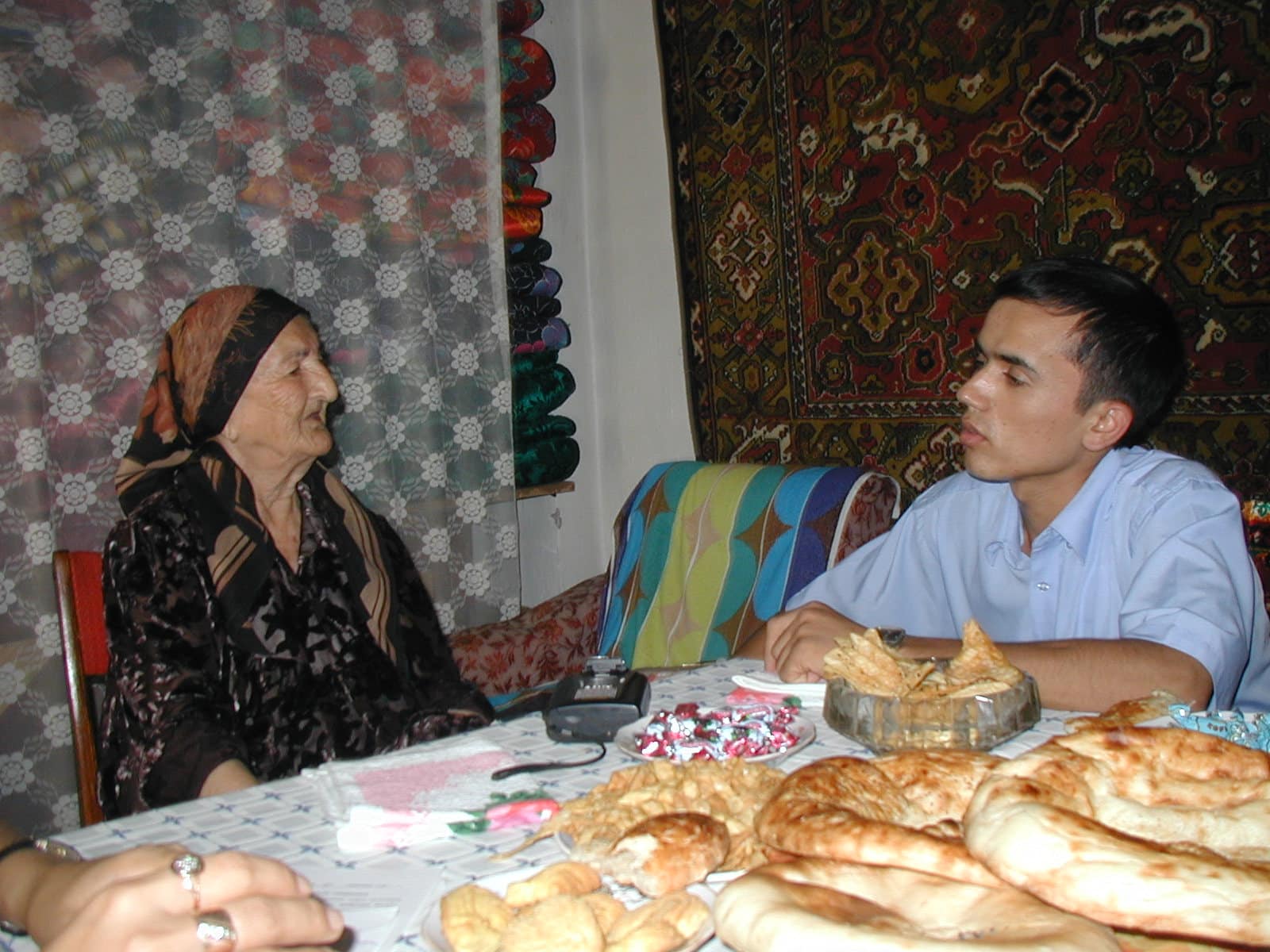
In the USSR, oral history research took off in the Perestroika period, with the founding “Memorial” in 1987. Memorial’s activists sought information about the victims of Soviet repression. They combined demands for archival documents with gatherings where they elicited oral accounts from Soviet citizens who had been victims or knew victims. Detailed recollections could lead to gravesites and other concrete evidence of the Soviet state’s crimes. In Kyrgyzstan, that kind of recollection led to excavating the hidden gravesite of 138 leading members of Kyrgyzstan’s Communist Party or national intelligentsia who were executed in 1938. In 1991, the elderly Bubyra Kydyraliyeva, told a KGB officer about her recollection that bodies had been dumped in an old kiln at the Party’s holiday site in Chong-Tash where her father worked, and the family lived, in the late 1930s. Bolotbek Abdurakhmanov, the KGB officer who followed up on Kydyraliyeva’s account, initiated an excavation and then became a historian who worked with other Kyrgyz scholars to open a museum and memorial complex now known as Ata-Beyit. The museum presents the lives of those 138 victims, drawing on archival records, oral histories with those who knew them, and photos in family collections.
Not surprisingly, Central Asian oral history researchers often focus on tragic events. Oral histories about individuals who were repressed, told by family members who lived with then and remembered them, are included in collections presented at Uzbekistan’s Museum of the Victims of Repression, which opened in 2002. The Museum is located next to a monument in Tashkent, the “Memorial to Martyrs,” itself built on a site where political prisoners were executed in the 1930s. In Kazakhstan some oral history projects concern deportation, led by historian Michaela Pohl’s groundbreaking interviews with Chechen survivors of forced exile to Kazakhstan (Pohl, “It cannot be that our graves,” 2002). Oral histories are an important element in the collections held by the museum on the site of the former women’s Gulag prison, Alzhir. Historian Zulfiya Imyarova uses oral histories to assess Soviet and post-Soviet conditions for smaller national groups such as Dungans and Kurds. In the most politically fraught project, Kazakhstani researcher Gene Bunin spearheaded collecting oral histories with Kazakh asylees and repatriates about their experiences of China’s repression of Muslim minorities; the interview collection is no longer easily available online, but it has been used by numerous researchers and activists. In Tajikistan, researcher Tim Epkenhans led an OSCE Academy-sponsored oral history project that collected about one thousand individual accounts of the Civil War; to date, access to the collection is limited.
I emphasize the distinction between oral history and oral tradition…For oral history per se, the research theme must concern things that the respondent lived through.
Oral historians differentiate oral history from oral tradition. An oral history interview means a recorded account from an eyewitness or participant in an event or a living individual’s own narration of their life story. Oral tradition, which provides vital knowledge of the past, is recorded with living speakers who transmit accounts of events and other stories that they did not themselves experience but rather learned by listening to an older generation. Collecting oral traditions remains central to ethnographic studies in Central Asia, and many people in Central Asia place high value on learning orally transmitted accounts of family history, as something that is crucial to identity formation and social relations. In the extensive effort to document the history of Kazakhstan’s 1930s famine, researchers working in the 2010s assembled hundreds of individual accounts, but only a handful come from Kazakhs who had lived through the famine as children, while the rest are accounts that younger family members, born after famine ended, heard from their parents (Dulatbekov, The Famine of 1931-1933, 2023). I was able to do oral history research on collectivization in Uzbekistan in the early 2000s, when it was still possible to find elders who were children or young adults in the early 1930s, but there is often no clear line between individual and social memory. When colleagues in Central Asia ask me what I think might be important themes for oral history research, I emphasize the distinction between oral history and oral tradition: scholars work in different ways with source material produced by interviewing a living eyewitness to events, than with accounts that come from transmitted knowledge. For oral history per se, the research theme must concern things that the respondent lived through.
Oral history in Central Asia is not solely about tragedy. Elmira Nogaybayeva, an early advocate for oral history research in Kyrgyzstan, founded the Esimde (I Remember) Center to support popular memory and community-oriented oral history. Esimde’s researchers encourage Kyrgyzstan’s citizens to record memories about politics, culture, and social change. They present the results to the public in exhibits, events, publications, and documentary films. The OSCE Academy in Bishkek carried out a project that focused on elite recollections of the final Soviet decade, Oral History of Independent Kyrgyzstan, and makes the collection of transcripts available online. Oral history is the basis for scholarly studies on themes as diverse as Adrienne Edgar’s investigation Soviet-period interethnic marriage in Central Asia (2022); Zamira Abman’s reconstruction of Tajik women’s lives in the 1950s (2024); Bakhtiyar Babajanov’s exploration of changing Muslim communal authority and practice in Uzbekistan (2014); and Sofiya Kasymova’s research on Tajik women who migrate to Russia (2012). Ali İğmen and I are researching Central Asian experiences of the 1991 end of Communism and beginnings of independence, in a collaborative project with colleagues in Kyrgyzstan, Uzbekistan, and Kazakhstan. Other scholars collect oral history interviews to bring human voices and insights that complement their other sources and methods. Examples include historians Artemy Kalinovsky, writing about the Nurek Dam project in Tajikistan (2017), and Sarah Cameron, investigating the demise of the Aral Sea (ongoing), and political scientists Khassan Redjapov, examining women’s agricultural labor in Soviet Uzbekistan (forthcoming), and Toghzhan Kassenova, depicting resistance to nuclear testing in Kazakhstan (2022). Oral history interviewing is engrossing and rewarding: for example, one of my IU colleagues, Gulnisa Nazarova, has carried out hundreds of oral history interviews with Uyghurs who immigrated to Central Asia in the 1940s to 1960s.
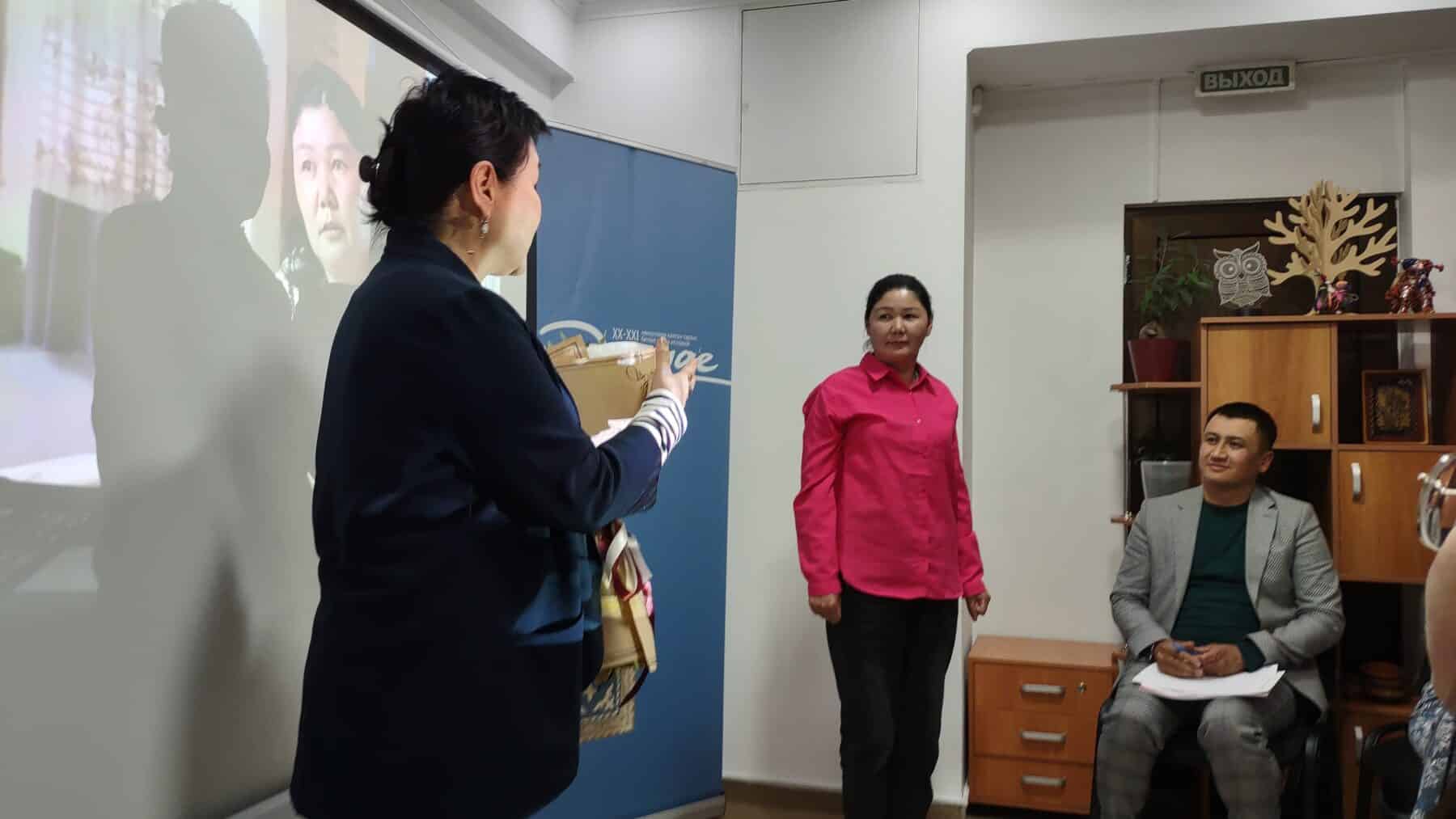
Challenges to doing oral history research in Central Asia are multiple and varied. The Oral History Association articulates ethical standards for every phase of a project, from initiation through archiving and making use of interviews in publications. Those standards give researchers a bit more confidence as we plan, seek grants, and work our way through Institutional Review Board approval. Some of my colleagues in Central Asia do not face IRBs, but they are as concerned about research ethics as I am. I cannot work in Central Asia without collaboration: Central Asian partners are far more aware than I am of what topics and practices may make interviewees fearful or put them into some jeopardy. Interviewees are rarely willing to sign an informed consent form; recorded, oral consent to the interview and to its use is far more common. One can do interviews in a community or country, and then a shift in the political climate suddenly makes potential respondents unwilling to be interviewed and recorded.
From this social historian’s perspective, the primary reason to do oral history is to document the unwritten and the seemingly unimportant elements of daily life.
Some of the challenges that researchers face in Central Asia are common to oral history research anywhere. Researchers often carry out interviewing projects without accounting for the time and effort that transcribing will take. For the foreign researcher like me, the fact that I use interviews in English language publications means that I also need to plan for the effort of translation. Interviews are not useful to scholars until they are turned into text; fortunately, recent developments in voice-to-text software can now produce very high-quality auto-transcriptions in English and in Russian. Kazakh and Uzbek auto-transcribe programs exist, and this capacity is quickly encompassing less commonly spoken languages. But auto-transcription, unless done in a completely firewalled system, raises frightening ethical questions: names and personal stories could be collected by LLMs and by surveillance apparatuses. More ethical questions arise when we think about how much of an oral interview to present to any public, whether through published research, in a museum, or through a broadly accessible online archive. Should a collection of oral history interviews be archived in a democratic, decolonial way so that any interested individual can access it? Should my collections of interviews be made available to the public in Uzbekistan through a website? When the question is put that way, “yes” seems like the obvious answer. If so, they will also be accessible to malign actors, to state surveillance, and to Artificial Intelligence. Archiving that limits access, either by demanding discrete permission to use a protected online collection, or by forcing the researcher to travel to a specific physical repository, runs counter to a fundamental oral history ethical position: that we do these interviews to bring more voices into the writing of history.
From this social historian’s perspective, the primary reason to do oral history is to document the unwritten and the seemingly unimportant elements of daily life. We interview and document without knowing which of our respondents’ words may become important to future research, or what kinds of topics may become forbidden or dangerous due to political changes. In Central Asia, oral history methods are now widely used by researchers, sometimes as a workaround for inaccessible archives, but more frequently because oral history enriches and humanizes our questions about the past and provides a way to reclaim and reinterpret contested and silenced stories.

Marianne Kamp, Professor of Central Eurasian Studies at Indiana University, is the author of Collectivization Generation: Oral Histories of a Social Revolution in Uzbekistan (Cornell 2024); The New Woman in Uzbekistan: Islam, Modernity and Unveiling under Communism (Washington 2006); editor and co-translator with Mariana Markova of Muslim Women of the Fergana Valley (Indiana 2016); and various book chapters and articles. In her current collaborative research project, on remembering 1991 in Central Asia (supported by NEH until DOGE axed the funding) she is working with historians Ali İğmen, Alisher Sabirov, Roza Abykulova, Aijamal Sarybaeva, Zulfiya Imyarova, Ravshanbek Shamsitdinov, and Rabia Han.