This article was written in August 2025.
Dire warnings about the future of our field have long been a staple of ASEEES presidential addresses. I myself gave a speech in this genre at our Annual Convention in 2014, when diverging scholarly opinions about our Association’s response to the Russian annexation of Crimea and invasion of Ukraine threatened to generate a serious schism in our ranks. Such interventions generally perform a salutary role, reminding the profession of the precariousness of longstanding federal and foundation sources of funding that may otherwise be taken for granted, and rallying collective action in their defense. The danger, however, is that if repeated too frequently, such cries of alarm may fail to rouse people to action when the wolf is really at the door.
So let me begin this short essay by insisting that this crisis is qualitatively different from any we have faced as scholars since the invention of modern area studies associations in the aftermath of World War II. The return to office of President Donald J. Trump represents not merely a pendulum swing toward far-right policy positions that will naturally generate an equally powerful counterreaction in the next electoral cycle. Instead, we need to understand Trump’s reelection in 2024 as the beginning of a true regime change in the United States, bringing decades of consolidated liberal capitalist democracy to an end, and inaugurating a new patrimonial order of uncertain duration.
This crisis is qualitatively different from any we have faced as scholars since the invention of modern area studies associations.
In our 2024 book The Assault on the State, Jeff Kopstein and I drew on Max Weber’s sociological theory to lay out the key features of patrimonial rule as it has swept across the globe during the first decades of the 21st century. Patrimonialism, Weber taught us, is a type of traditional domination in which loyalty to the ruler is the central motive for obedience to his—gendered pronoun intended—commands. In short, patrimonialism amounts to the rule of the “good father,” who claims the right to treat the state itself as a “family business” of sorts. It is a mistake to analyze contemporary versions of this regime type as in any sense novel: patrimonialism, in fact, is the oldest and most common form of legitimate domination in human history. Conditioned by Marxian analysis and modernization theory alike to think of history as in some essential sense “progressive,” we are now surprised to discover that this relatively simple form of political order has retained its power and appeal for hundreds of millions of people on every continent.
Scholars of Slavic, East European, and Eurasian studies are relatively well equipped to understand the dynamics of patrimonial regimes. Richard Pipes famously deployed Weber’s concept of patrimonialism to the analysis of Russian tsarism, and while a robust revisionist historiography rightly questioned his oversimplified depiction of Russian state-society relations in 19th and early 20th century, Pipes was surely right about the core basis of the Romanov dynasty’s claim to legitimacy. Now, in the wake of the chaotic collapse of Soviet institutions and the subsequent deep economic crisis of the 1990s, Vladimir Putin has constructed a personalistic patrimonialism that is analytically quite similar to the tsarist Russia Empire.
Scholars of Slavic, East European, and Eurasian studies are relatively well equipped to understand the dynamics of patrimonial regimes.
The consolidation of Putin’s patrimonial order has had powerful effects on our region as a whole. Since coming to power, Putin has supported preexisting patrimonial regimes like that of Alexander Lukashenka in Belarus and the Aliyev dynasty in Azerbaijan. Within the Russian Federation, he has encouraged the formation of pro-Kremlin patrimonial satrapies like Ramzan Kadyrov’s regime in Chechnya. Putin has also directly and indirectly backed patrimonialism further afield, in places like Viktor Orban’s Hungary, Benjamin Netanyahu’s Israel, and Donald Trump’s America. And the unexpected emergence of patrimonial regimes in so many former bastions of liberalism has reinforced the power of similarly constituted polities such as Recep Erdoğan’s Turkey, Narendra Modi’s India, and even Xi Jinping’s China, which is slowly devolving from its Leninist origins toward the sort of arbitrary personalistic rule that is patrimonialism’s hallmark. As a result, almost all of the most powerful militaries in the world are now commanded by patrimonial leaders. In this context, Ukrainian society’s heroic resistance to Putin’s attempt to incorporate Ukraine into his patrimonial empire is even more remarkable.
Wherever patrimonialism has seized power, we have seen the same social outcomes. The impersonal rule of law is gradually subordinated to a legal system based on the ruler’s will. Cronies and loyalists are promoted to state positions in the place of qualified experts. The state uses its power to carry out assaults on the rights of women, LGBTQ+ communities, and immigrants. Universities are attacked and slowly brought to heel. The defense of internationally recognized state borders is abandoned in favor of the promotion of imperialist foreign policy goals.
The very nature of the regime change we now confront makes our field particularly vulnerable to institutional suppression.
Specialists on our region have had a front row seat to witness the gradual unfolding of this tragic saga. It is hardly much of a silver lining given the dark storm clouds gathering around us, but after years of trying to explain the relevance of Russian, Ukrainian, East European and Eurasian studies to skeptical opinion leaders in the West, our expertise is finally, unequivocally in demand. Regime change has gone from being a topic mostly of interest to international relations experts analyzing the developing world to an urgent problem of contemporary political life. Those of us who cut our scholarly teeth trying to understand the causes and dynamics of the collapse of the Soviet Union and the trajectories of post-Soviet regimes, after three decades of marginalization, suddenly possess the necessary historical and comparative perspective to grasp the present moment.
Unfortunately, however, the very nature of the regime change we now confront makes our field particularly vulnerable to institutional suppression. Patrimonial rule everywhere tends to train its coercive power against experts who claim to know more about their spheres of public policy than the “great leader.” Wherever it is established, patrimonialism tends to subordinate autonomous institutions of higher learning to the mandates and whims of the personalistic regime. And patrimonial rule is implacably opposed to any signs of compromise with “foreigners” and “globalists” who might pollute the purity of the political community. Scholarly associations like ours, then, already have three strikes against us: we are dedicated to the generation of independent scholarly expertise, we celebrate the cultural contributions of diverse global peoples, and our members are largely employed by colleges and universities dependent on various forms of state support. It should be no surprise that we are ripe targets for attack.
Indeed, the crisis we now face isn’t just about the potential loss of particularly important funding streams like the Title VI programs at the U.S .Department of Education, the Title VIII programs at the State Department, or support for international exchange programs like the Fulbright Scholarships—although they all remain crucial to our ability to train the next generation of specialists on global and regional affairs, and the admirable work of the brave individuals who continue to defend them must be acknowledged and celebrated. The issue now is whether interdisciplinary area studies associations themselves can survive the onslaught of attacks against experts, universities, and “globalists.” Seeing the writing on the wall, some American members of our association are considering relocation abroad in anticipation of the possible elimination of scholarly freedom in the United States.
Yet while the outlook is troubling at best, there are still reasons for hope. The Trump regime in the United States, unlike the Putin regime in Russia, is not yet fully consolidated. And comparative sociological analysis highlights several key differences between the American and Russian social environment that will impact the prospects for the solidification of patrimonial rule in the U.S.
First, Putin’s regime emerged after a decade of economic disaster in the Russian Federation that led a majority of Russian citizens to equate “liberalism” and “democracy” with poverty, oligarchic corruption, and national humiliation. Trump inherited an economy that, despite its serious ongoing problems with lingering post-COVID inflation, visible inequality, and a general loss of dynamism, was hardly in the shambolic state of Russia during the so-called “roaring 1990s” (likhie devinosti). Putin’s consolidation of personalistic rule happened to coincide with skyrocketing energy export revenues and an accompanying economic boom. Any serious economic downturn in the American economy now would surely be attributed by American citizens as a product of Trumpism, not of liberal democracy itself—shaking the loyalty of all but Trump’s most die-hard supporters.
American civil society, too, is stronger than Russian civil society was under Yeltsin. This point should not be overstated, to be sure: the stereotype of Russians as culturally “passive,” naturally accepting of state authority, is belied by the repeated uprisings from below against arbitrary autocracy throughout Russian history. The brave resistance of Alexei Navalny until the very end should never be forgotten. Yet just as scholars in our field have fruitfully analyzed the impact of “legacies of Leninism” that have impacted political, economic, and cultural change in the post-communist era, the “legacies of liberalism” in newly patrimonial countries like the United States must also be taken into account. Simply put, it is a lot harder to consolidate a patrimonial “vertical of power” in a society with so many robust horizontal ties. While many leading U.S. universities, law firms, and media outlets have shown initial deference to Trump’s demands for professions of loyalty, many more professional association and businesses remain fiercely dedicated to their independence. And discontent with the new rules of the political game among engaged citizens is steadily growing.
Comparing the personalities of Putin and Trump themselves provides a final reason for guarded optimism. While the two leaders share essentially the same political orientations, they have very different styles and strategies. Putin patiently placed loyalists in positions of power over the course of his first decade in power. He even agreed to swap the positions of President and Prime Minister with his subordinate Dmitrii Medvedev for four years, rather than make an immediate break with the clear demands of constitutional legitimacy. Trump’s four years away from the White House, by contrast, were anything but voluntary—and his return to power has been marked by a manifest passion to destroy American liberalism at a genuinely revolutionary pace. Yet Trump lacks the institutional vehicles that have historically been necessary to carry out massive social revolutions, such as a coherent ideology, a revolutionary party, a loyal personal militia, and mobilized revolutionary youth movements across the country. Trump’s attempt to reach the end state of consolidated patrimonialism through revolutionary means may well generate more social turbulence than his nascent regime can manage.
In this context, scholarly associations like ours have a vital role to play.
To conclude with a well-known question asked by underground activists chafing under an earlier form of patrimonial rule: what is to be done, exactly? The analysis proffered above highlights the world-historical nature of the era we are fated now to live through. There is a real chance that the “liberal world order” founded in the aftermath of World War II will come to an end soon. There is even a chance that the modern “rational-legal” state (in Weberian terminology) as we have known it for the past several centuries will be subordinated to patrimonialism in all but a handful of isolated countries, ushering in a new era of personalistic rule, imperialism, and arbitrary violence.
Our political destiny is not yet preordained, however. Even formerly skeptical opinion leaders are increasingly beginning to grasp the fundamental nature of the regime change we are now living through. Public outrage over arbitrary detentions, military rule in American cities, censorship, and the curtailing of civil liberties is growing. Inevitably, then, opportunities for mobilization of civil resistance will also increase.
In this context, scholarly associations like ours have a vital role to play. Precisely because we represent the values of independent expertise, cultural diversity and inclusion, and academic freedom that are now the prime targets of the Trump regime, our ability to hang together and defend what we believe in has never been more important. Specialists in Russian, East European, and Eurasian affairs have the added advantage of having watched this sort of regime change unfold before—and knowing precisely how this story often tragically ends. We must all do what we can to ensure a different outcome in the years ahead.
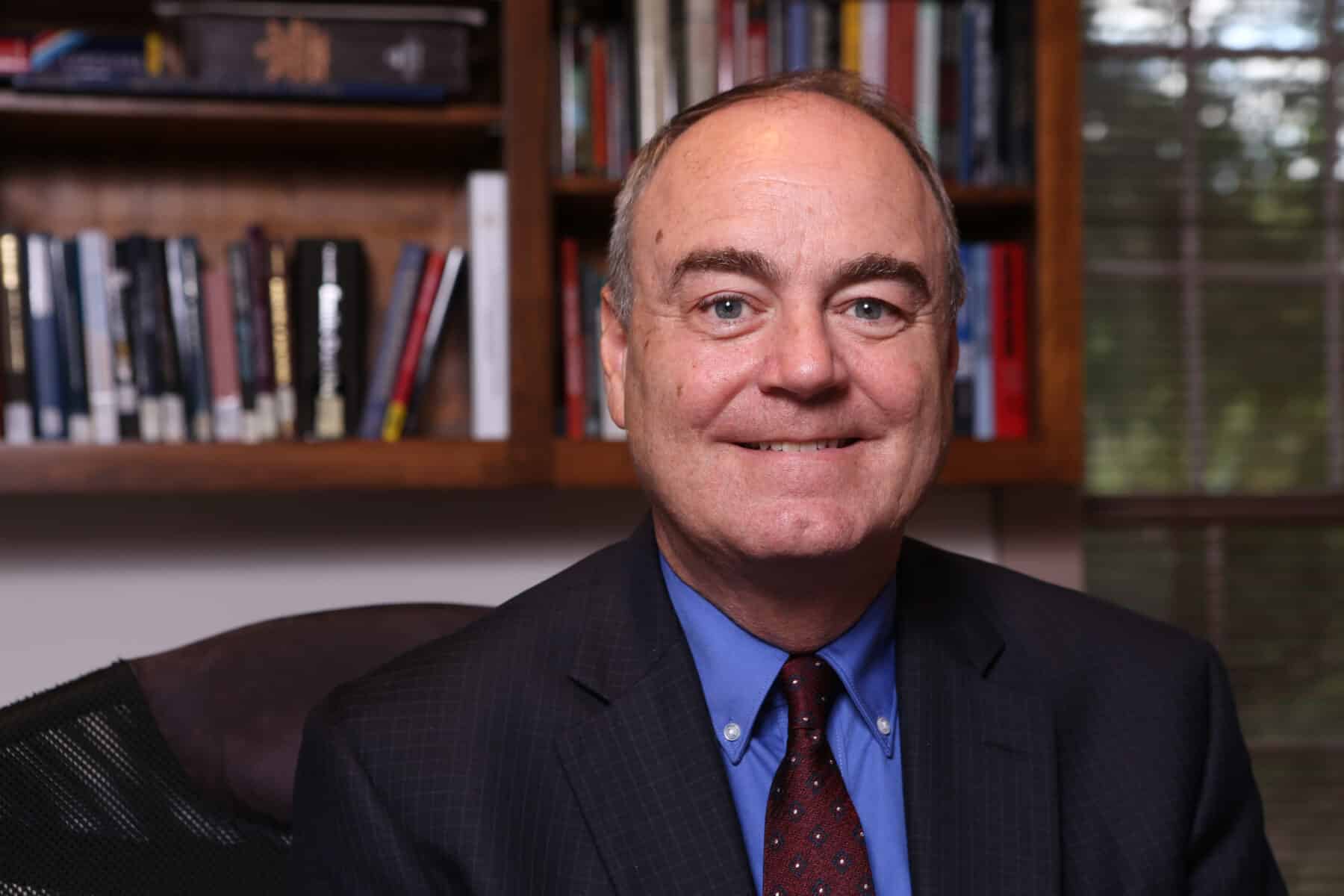
Stephen E. Hanson is Lettie Pate Evans Professor in the Department of Government at William & Mary. He served as Vice Provost for International Affairs at W&M from 2011-2022 and as Vice Provost for International Affairs at the University of Washington from 2008-2011. Hanson received his B.A. in Social Studies from Harvard University (1985) and his Ph.D. in Political Science from the University of California, Berkeley (1991). A specialist in Russian, post-communist, and comparative politics, Hanson has written, co-written, or co-edited seven books as well as dozens of scholarly articles. His most recent publication, co-authored with Jeffrey Kopstein, is The Assault on the State: How the Global Attack on Modern Governance Threatens Our Future (Polity, 2024).