
It has been more than 40 years since the feminist breakthrough in traditional modes of musicology that resulted from a movement led by Susan McClary and Marcia Citron among others. The impact on the industry of classical music of academic work on musical women is manifested in general music conference programs and the season brochures of concert halls and opera houses where we can be sure to find the names of several women composers through a simple perusal. Such a difference in programming also extends to recordings in recent years, especially by specialist musicians Antonio Oyarzabal and Samantha Ege. There has indeed been a consistent effort to discover the stories (and music) of these lost agents within and beyond the academy. My short-term involvement with the Boulanger Initiative as a Research Intern highlighted the commitment of performers and enthusiasts to not only discover more about women and gender-marginalized composers but also to make knowledge about them easily accessible to all. Today, scholars, students, and concertgoers alike are likely to be able to profess at least a vague familiarity with the research field’s poster figures of Clara Schumann and Fanny Hensel.
One observable trend that I would like to bring to the attention of our scholarly community is that while more is ardently being discovered about female figures (largely) associated with Western Europe in Anglo-American feminist musicology, the work on their Eastern European counterparts remains in embryonic stages. Scholarship on the former group is highly commendable indeed, but its preponderant focus on those of the German-speaking lands (especially from the nineteenth-century) inadvertently poses a risk of perpetuating the Teutonic hegemony in music historiography – which has raised several unsettling questions of aesthetic judgement and musical superiority since the nineteenth century to musicology today.
Scholarly work on Eastern European female figures in music historiography remains in embryonic stages.
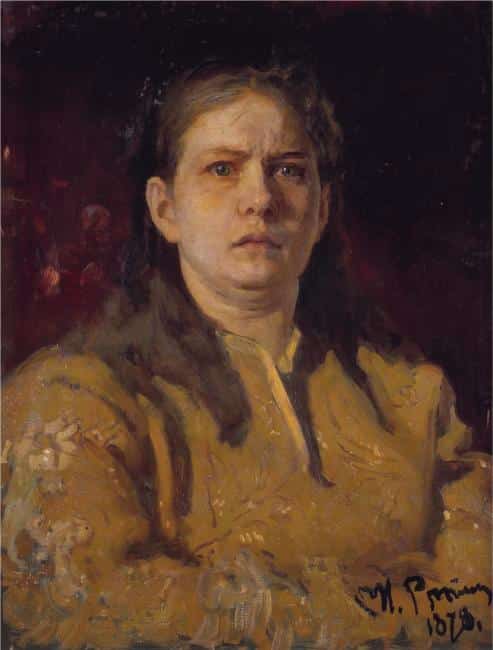
In this piece, I wish to share my experience of studying the life and works of Valentina Serova (née Bergman, 1846–1924) – a woman musician of imperial Russia – and highlight the reasons why such studies, in spite of prevalent challenges at present, may advance the mission of decolonizing the field of Slavic, East European, and Eurasian studies. For clarity, I refer to feminist musicologists as scholars who seek to understand the experience of music through a gendered lens and/or to explore musical women from historical and historiographical perspectives. In my conversations with musicologists working on the music of Eastern Europe, there seems to be a consensus that scholarship on musical women of the region remains only as a growing field while researchers continue to assume a revisionist position with greater concerns of past state ideologies that have defined music history (especially of post-Soviet states). While major issues have arisen in relation to archival access for Anglo-American scholars since Russia’s full-scale invasion of Ukraine in 2022, I hope to demonstrate that a strengthening of the commitment to the upward trajectory of feminist studies will further enhance the quality of knowledge production and thus, as an academic community, we should not let such studies slip down the priority list.
(Non-)Development of Gender Studies in (Post-)Soviet States
For scholars of Slavic, East European and Eurasian studies, the reasons for the lack of and (then) slow development of gender studies in Soviet and post-Soviet states are probably familiar. The inextricable link between research and state ideologies alluded to above meant that our predecessors in the Soviet Union had to shun conceptions of gender in their work due to its associations with identity and equality. As has been shown by many since the collapse of the Soviet Union, the construction of Homo Sovieticus rendered irrelevant the challenges of chauvinism and questions of the sociological female during the Soviet regime. To facilitate the democratic reforms of the perestroika, greater pursuits were made in gender studies, though this also supported the states’ corollary aim of integrating into international politics. Foreign investment was received for academic work not simply at the European University at Saint Petersburg but at the university’s center for gender studies specifically, to give but one example. Having seen sociological research effect democratic reforms, the pioneers of gender studies in the USSR were empowered to view their knowledge as a weapon for fighting against gender inequality in society.
In the case of Russia, the fascination with the progressive ideas that flowed from the academy into public discourse, however, can be said to be preserved by its ‘exoticness’; in other words, there was curiosity around how such ideas functioned in foreign contexts, but suspicions were raised when ruminations on gender were applied to the local context, resulting in consistently contained levels of interest and commitment of the vast population to addressing gender inequality. The myth of women’s emancipation propagated and so deeply instilled in the people’s consciousness by the communist regime has put into question the applicability in Russia of the gender and feminist theories developed overseas, particularly the United States which grounded itself on the other end of the ideological spectrum in the 1990s. Distaste was also developed by the openly political standpoint of gender studies which contradicted the conventional notion of the politically neutral social sciences. Indeed, the stability afforded by the socio-economic stratification of gender – especially when it relates to familial roles – proved more alluring (even to some women) than the yet unknown liberties that will befall women should there be a re-evaluation of the societal constructions of women. While women’s liberation was regarded as a distraction from the class struggle during the Soviet times, it was branded as a bourgeois Western import in post-Soviet Russia. As a result, the development of a functional gender or feminist theory never came to fruition, and a patriarchal order was maintained in Russia across its varied styles of governance. This is further supported in recent years by the regression to Russian cultural and patriarchal traditions in public discourse, the increasing authority accorded to the Orthodox Church, and a reprise of the alienation from the West. Several decades on and what prevails in academic inquiries is the master narrative of a distinctive post-Soviet individual and a neglect of the diverse experiences and voices of historical and contemporary agents in the country.
The neglect of the stories of marginalized figures in Russian musicology is demonstrated by recent publications that continue to focus on the life and works of canonic figures from Mikhail Glinka to Dmitri Shostakovich and those of non-Russian origin. Notwithstanding the challenges in Russian scholarship delineated above, there has been a slow increase in the amount of attention devoted to East European women composers in recent years, especially by scholars connected to the West. Publications on the topic of Russian women composers (such as this one by Philip Ross Bullock), however, are few and far between and are limited to descriptive lists that merely serve to encourage future projects.
Insights from Research on Valentina Serova
Due to the low likelihood of finding materials in archives that are associated with historical women, historians working on these figures need to be selective with their focus. My choice to write a thesis on Valentina Serova was inspired by my discovery of her memoirs of her life with her husband and her son – the critic-composer Alexander Serov (1820–1871) and portrait painter Valentin Serov (1865–1911) respectively – and the possibility of doing so was greatly facilitated by the existence of such a source. I also benefit from the wealth of materials and publications relating to the Serovs that were in existence. Having discovered much more about Serova’s life through a trove of archival documents, my initial goal to fill the lacunae in the Serovs’ familial story has developed into one that seeks to lay the groundwork for future investigations into nineteenth-century Russian women musicians.
As is well understood in history, roles in public and private lives of Russians – and Europeans more broadly – were highly gendered in the nineteenth century. That said, the existence and preservation of articles and music published by Serova that I have accessed challenge the notion that women were forbidden from engaging with the public via the press and communal spaces (such as theaters and concert halls). In contrast with her counterparts in Western Europe, Serova did not write under a pseudonym even though the ‘-a’ ending in her name would certainly have revealed her gender to readers (thus highlighting the non-discriminatory approach of journal and newspaper editors). While it does not negate the difficulty that women faced with such engagements, it proved that the borders of male-dominated creative spaces were porous and not entirely off-limits to women in the nineteenth-century.
Networks and affiliations are crucial to understanding the lives of historical women.
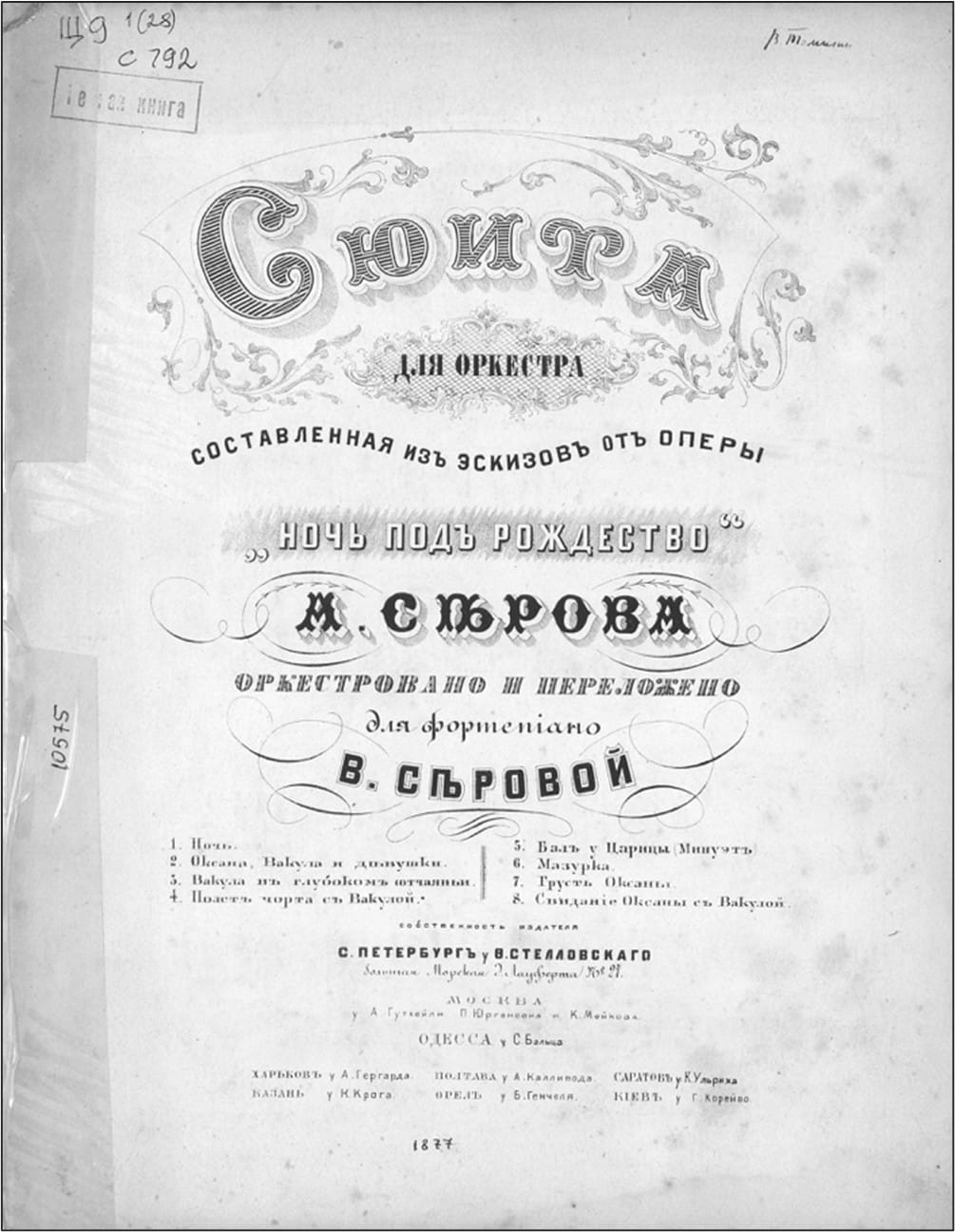
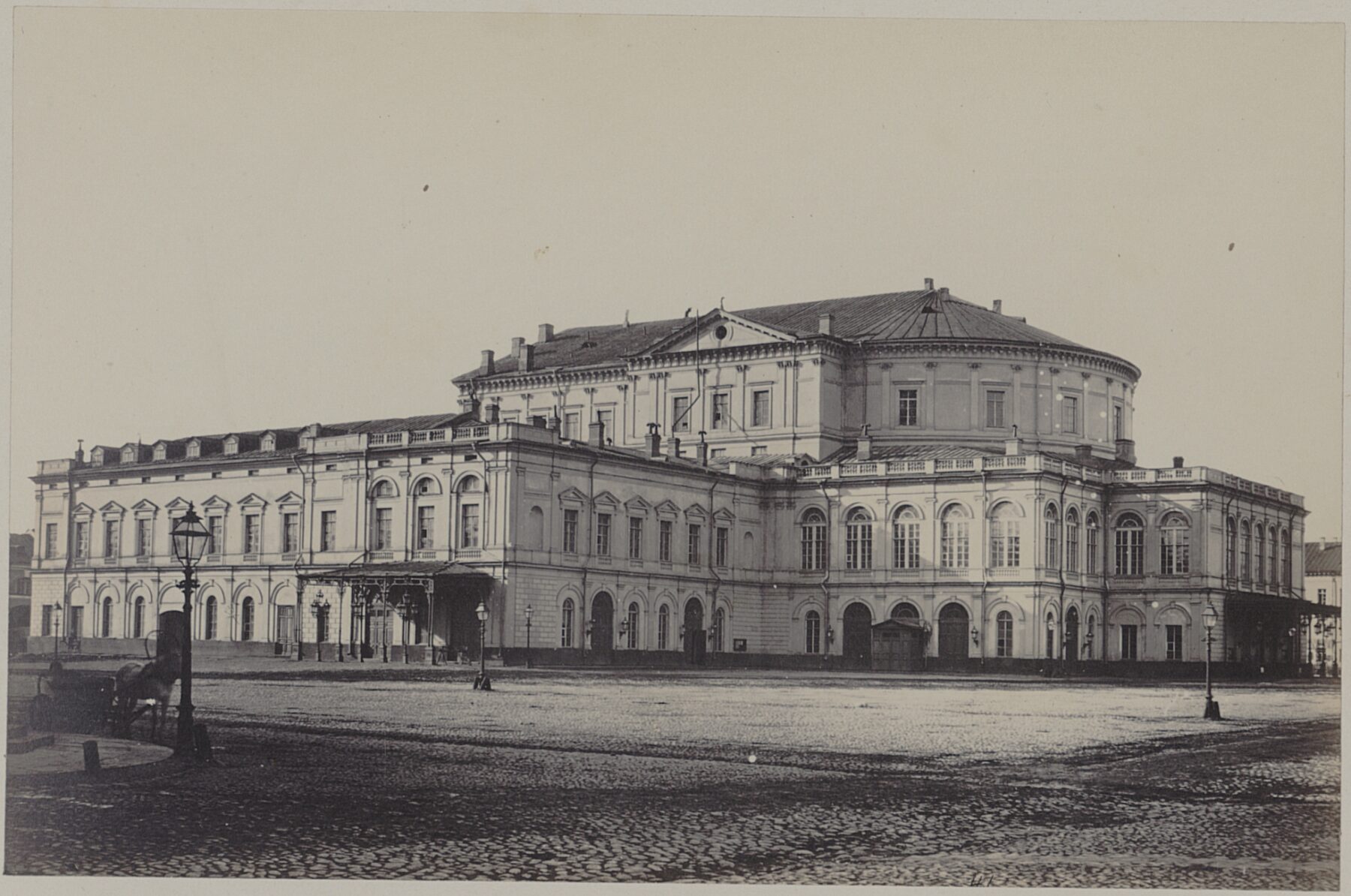
Why was Serova let into such spaces? Such a question raises other darker ones: was she accepted because of her close association with a (male) musician of a high standing? Did that then mean that her connection with Serov was directly linked to her access to such highly prized opportunities in musical performance and criticism? Networks and affiliations are indeed crucial to understanding the lives of historical women (especially of the middle and upper classes) who often navigated multiple social and cultural circles. Based on knowledge of Serova’s activities after Serov’s death, it seemed that she had recognized the importance of maintaining Serov’s legacy for her own artistic career; Serova completed Serov’s opera The Power of the Fiend for performance at the Mariinsky Theatre, consolidated the sketches of his planned fourth opera into a piano suite for publication, republished all of his articles into four volumes over a period of several years, and supervised posthumous productions of Serov’s operas across the empire. Whether or not her activities can be attributed to a genuine admiration for Serov or self-preservation of her creative authority by association remains a moot point, but it is difficult to deny the significance of the Serovs’ connection, especially when reading Serova’s obituaries and reviews of Serova’s own operas in which the authors never fail to bring to the readers’ attention her status as a widow of the acerbic critic.
In addition to questions of womanhood and widowhood, Serova afforded a fascinating insight into the intricate identity of Jews in the Russian Empire. I found myself with an imperative to reconcile how Serova felt about her Jewish identity with that of her musical milieu that sometimes reared the head of an antisemite – one agent being Alexander Serov himself! Her relationship with Jewry was indeed a complex one; the Bergmans had purportedly converted to Lutheranism, and Serova made no recollection of religious practices in memoirs of her childhood (therefore indicating that her ethnoreligious provenance played little to no part in her upbringing), but there is great significance to the fact that she composed her first opera on the story of the Sephardic philosopher Uriel da Costa (with the use of Jewish folk songs and prayers). Additionally, after a successful premiere in Moscow in 1885, she ensured that her opera was staged at the civic theatre in Kyiv, then a cosmopolitan city surrounded by the Pale of Jewish Settlement. Such a complex relationship with religion in the Russian empire is perhaps not a novel discovery, but Serova’s case highlights the need to understand our historical agents with an intersectional lens that considers the multiplicity of one’s identity.

An Enriched History
Serova is but one of the many figures to be reintroduced into numerous histories. Archives, libraries, and museum collections hold a wealth of official documents and ephemera that reveal much about individuals and communities that challenge our long-held beliefs and understanding, and who can help to refine our list of tools with which we might use to uncover their stories. In music, we continue to be fascinated by the genius and rich biographies of canonic figures, but a discovery of that of their acquaintances and adversaries would at once enhance the narratives of the former and offer more nuanced accounts of music histories.
As Russia continues to see an absence of a societal imperative for research on historical women, I wish to call to action members operating outside the Russian academy to assume the mantle of addressing the reticence exhibited by Russian scholars in musical historiography. As has been demonstrated in history – and indeed in modern times – musical works and the lives of musicians are often reflective of the socio-political systems in which they operate, thus there is undoubtedly much to discover in pursuing such lines of inquiry. Aside from social purposes, music also offers itself as an aesthetic entity that pervades the various spaces of society, whether they be majestic or modest, acting as social adhesive to the most fundamental of human interaction. To produce an enriched knowledge of history and be better acquainted with such interactions, it is important that we give voice to the many silenced musical figures and allow their music to once again inhabit physical spaces.

Nicholas Ong is a PhD candidate in Music at the University of Cambridge (UK), where his research focuses on critic-composer Valentina Serova (1846–1924) and, more broadly, on women and music in nineteenth-century Russia. Through an assessment of primary sources relating to Serova and her music, his thesis situates Serova within the musical and socio-political contexts of late nineteenth- and early twentieth-century Russia, addressing questions of womanhood, widowhood, nationalism, and Jewishness.

#/media/File:Serova_by_Repin.jpg)
