Gender as a Lens on Tajikistan
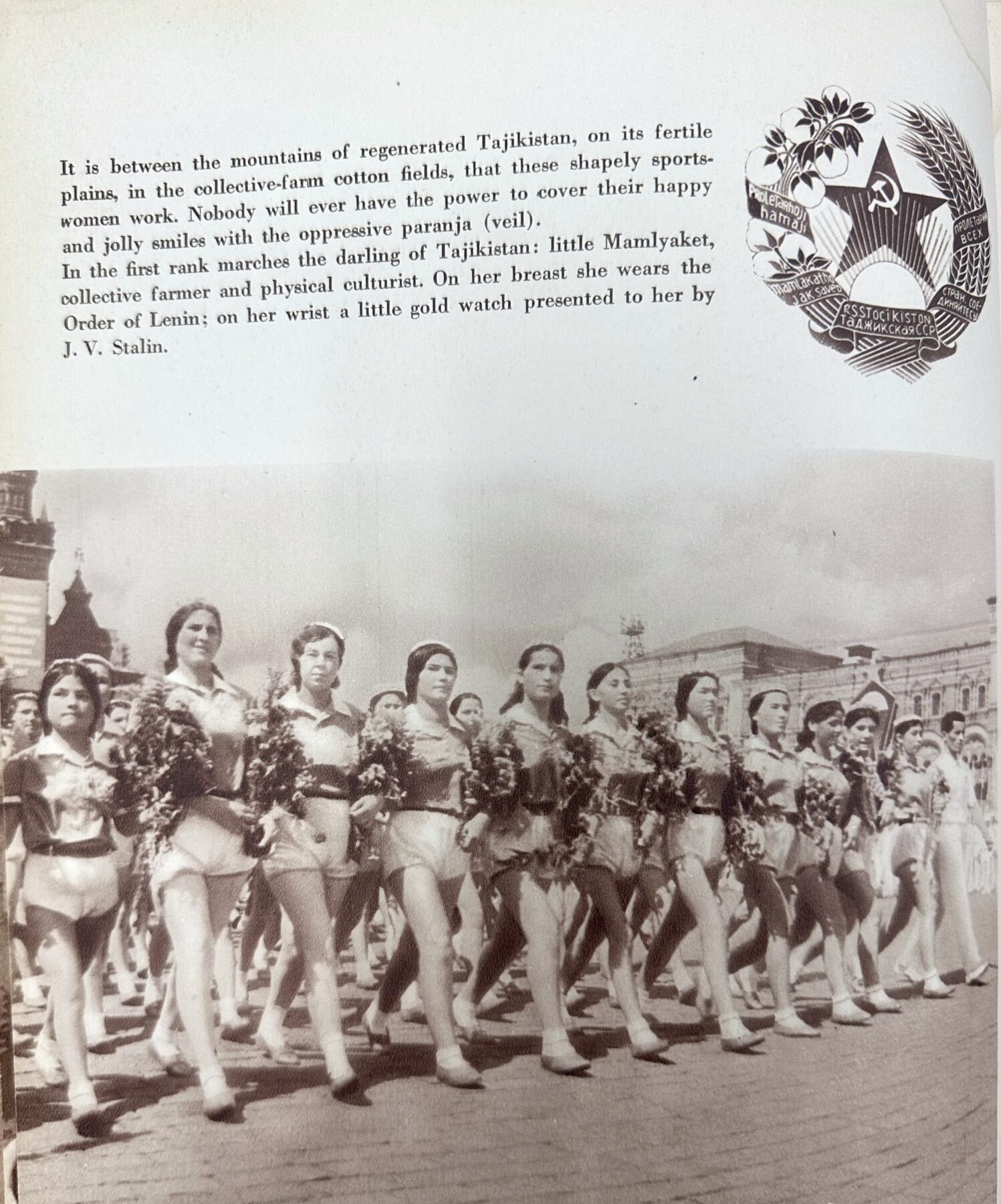
The Soviet Union’s campaign to “liberate” women in Soviet Tajikistan, from the 1920s through the late 1980s, remains one of the most ambitious and contested modernization efforts in Central Asia. Informed by Marxist-Leninist ideology, Soviet authorities viewed Muslim women, particularly those veiled and secluded, as both symbols of patriarchal “backwardness” and potential agents of socialist transformation. While these reforms expanded access to education and labor markets for many women, they also imposed homogenizing, externally defined ideals of emancipation that often misunderstood local cultural meanings and practices. Moreover, gendered experiences of modernization varied dramatically depending on one’s ethnic, linguistic, and social positioning.
This article offers a state-of-the-field reflection on the study of gender in Tajikistan, with a particular focus on the Soviet and post-Soviet periods. Drawing on archival documents, census records, and oral histories conducted in Tajik, Uzbek, and Russian, I argue that gender remains a critically underutilized analytic for understanding Soviet modernization, nationality campaigns, and their long-term social and political legacies. In addition to examining these thematic concerns, I reflect on the methodological challenges of conducting fieldwork in Tajikistan today, ranging from restricted archival access to the ethical and political complexities of oral history in an increasingly surveilled environment.
Gender remains a critically underutilized analytic for understanding Soviet modernization, nationality campaigns, and their long-term social and political legacies.
I draw from my own research into the Chala community, descendants of Bukharan Jews who either converted to Islam in the late 18th and early 19th centuries or became Chala through intermarriage, grew out of a gendered inquiry into the politics of exclusion and assimilation in Soviet Tajikistan. The term Chala derogatorily means “incomplete” in Tajik and other Central Asian languages and captures this community’s liminal status, rejected by the Jewish community and marked as different by Muslims. For Chala individuals who spoke Judeo-Tajik, the Soviet system of ethno-national classification presented both a profound dilemma and an avenue for new social and professional opportunities. Many families registered as “Tajik” in official documents, leveraging shared linguistic and cultural traits to sidestep entrenched discrimination. Oral histories show that korenizatsiya (indigenization) policies facilitated the integration of Chala men into party and professional ranks, particularly those with higher education and Russian fluency. This mobility often allowed Chala men to marry outside the community, including women from other marginalized groups, such as ethnic minorities, lower-status Muslim families, or women with disabilities, thereby extending the community’s fluid boundaries. In contrast, Chala women experienced more restricted forms of mobility. Marriage options were typically confined to endogamous unions with cousins, and women bore the burden of maintaining familial and cultural continuity under conditions of marginality.
Muslim Women and Soviet Modernity
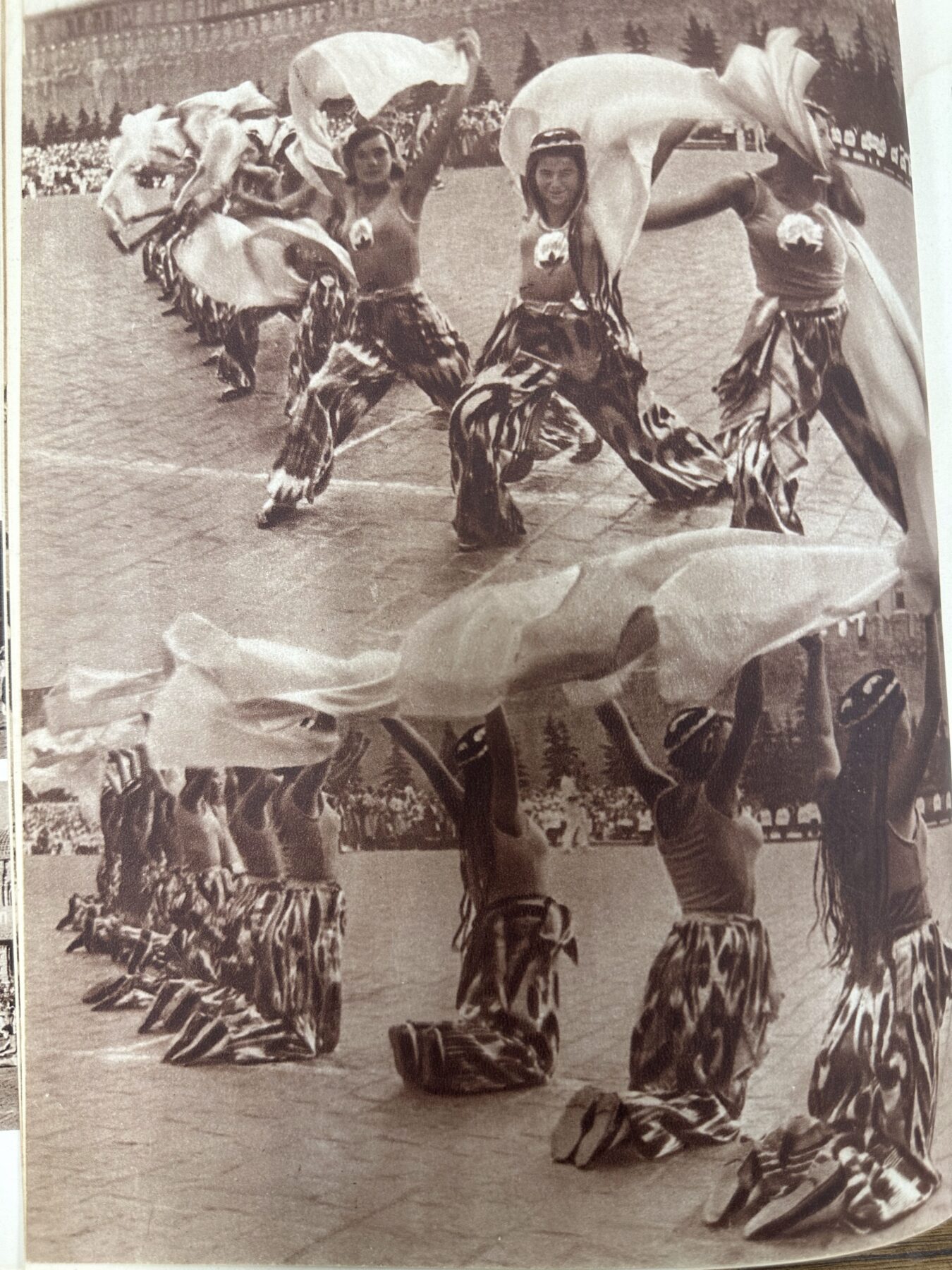
Early Soviet campaigns framed the unveiling of women as both a symbolic and material break from the “feudal” past. Unveiling was not merely about discarding a garment, it represented a rupture with Islamic tradition, patriarchal control, and religious communal authority. In Tajikistan, this campaign targeted garments such as the paranja and chachvan (in Tajik chapon), full-body coverings worn by many urban and elite Muslim women. Veiling was less prevalent in some rural areas, where women wore headscarves (in Tajik rumol). The Communist Party archives of Tajikistan often portray women as passive recipients of state benevolence, flattening their experiences into narratives of gratitude or resistance. Oral histories tell a different story, one of negotiation, ambivalence, and adaptation.
Rural women, in particular, experienced Soviet policies unevenly, with many families continuing to prioritize established gender roles. Testimonies gathered over a decade of fieldwork complicate the emancipatory narrative. One interviewee recalled how unveiling put her at risk of harassment in her village; another described how access to education was mediated by family negotiations, not state decree. For women like Muhiba Yakubova, the first Muslim woman biochemist in Soviet Tajikistan, Soviet feminism opened doors but did not eliminate gendered labor at home or in institutions. Her marriage, she explained, was contingent on her husband’s pledge to her parents not to interfere with her pursuit of college degree.
Gendered Boundaries and Marriage Politics
The marginalization of Chala women in Soviet Tajikistan was deeply entangled with structures of kinship, genealogy, and marriageability. In a society where marriage served as a critical pathway to social mobility, it also became a mechanism of exclusion. Endogamous practices, particularly cousin marriage, not only reinforced social insularity but over time raised concerns about hereditary health risks. In Tajik society, genealogy functions not merely as a record of lineage but as a potent form of social capital. As Tajik ethnographer Rustam Azizi observes, families lacking a “deep memory” of noble descent often constructed one through strategic narrative invention. Yet Chala women were rarely afforded this imaginative space. Their identities and marriage prospects were collectively scrutinized, policed through whispered genealogies and reputational knowledge passed quietly along family lines, unwritten, yet inescapable.
[In] a distinctly gendered form of marginality, women became both the custodians of silenced histories and their most exposed inheritors.
The post-Soviet period of re-traditionalization further reinforced the constraints facing Chala women. In the 1990s, a resurgence of ethnic nationalism and an intensified focus on “authentic” Tajik identity reanimated older hierarchies of belonging. Chala individuals, their daughters and granddaughters, in particular, were subjected once again to informal exclusions from marriage markets and communal acceptance. This produced a distinctly gendered form of marginality, women became both the custodians of silenced histories and their most exposed inheritors.
While conducting research in Dushanbe in the spring of 2025, I received a call from a family member. She recounted the story of a relative who is ethnically Uzbek and had married into a Chala family years earlier. For decades, the marriage appeared unremarkable. Her daughter, a poised, accomplished nursing student with a bright future, was widely regarded as beautiful and highly marriageable by prevailing Tajik social standards. Yet a potential in-law quietly withdrew from a proposed match. The reason emerged as a piece of gossip: “She’s from a Chala family.” The past had reappeared, uninvited, unverifiable, and yet powerfully disqualifying. In that moment, buried descent and unspoken histories surged back to the surface, foreclosing a future that, until then, had seemed entirely open.
Embodied Memory and Gendered Transmission Through Food
Oral history interviews reveal that everyday domestic practices, such as the preparation of meals, often served as intimate spaces where ancestral heritage quietly endured beneath the surface of Tajik and Soviet identities. Many Chala women continued culinary traditions they did not initially recognize as distinct or non-Tajik. For example, several interlocutors recounted learning to cook bakhsh, or “green osh,” a rice dish prepared with liver and cilantro, from their mothers and grandmothers. Others described a variation known as bakhshi khaltagi, a version of osh-i plov cooked in small burlap sacks. These culinary inheritances, transmitted through female kin and practiced without explicit acknowledgment, offer a window into how cultural memory persists in gendered forms.
[Archival] collections are shaped by male-centered bureaucratic logics that often obscure or entirely omit women’s lived experiences… underscor[ing] the critical need for alternative methodologies…that can help recover silenced voices.
These practices, maintained inside the home, were often mocked by outsiders. One woman recalled how neighbors ridiculed her family’s method of boiling rice in cloth bags. For some, this led to a quiet abandonment of the tradition in pursuit of social conformity. The preference for chicken in Chala households offers another subtle marker of difference. While lamb and beef were standard in Tajik diets, and duck was more readily available in Soviet stores, Chala families often sought out chicken, a dietary choice with cultural and possibly religious roots. In a society where overt religious practice was discouraged, the Chala’s continued consumption of chicken served as a discreet form of cultural continuity.
Challenges of Conducting Research in Tajikistan
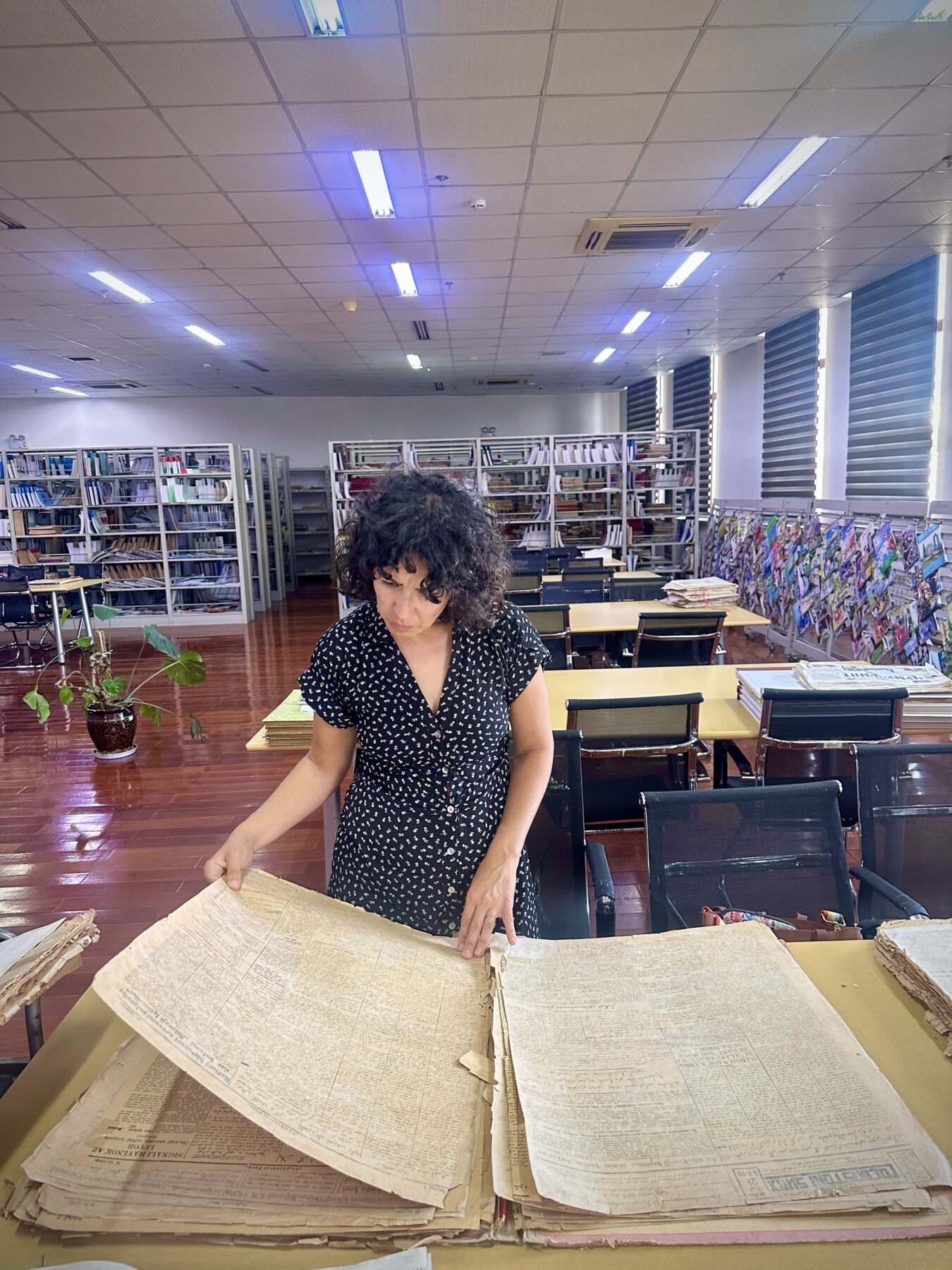
Scholars entering this field must be prepared to confront significant barriers to archival access. A prime example is the Communist Party Archive, recently merged into the Central State Archive of the Republic of Tajikistan, which remains largely closed to researchers. I was ultimately granted access only after months of persistence and, tellingly, because my research topic, “the women’s question,” was considered marginal and therefore unthreatening. While I am grateful to have eventually accessed every major archive in the country, I remained acutely aware that these collections are shaped by male-centered bureaucratic logics that often obscure or entirely omit women’s lived experiences. This reality underscores the critical need for alternative methodologies, particularly oral history and ethnography that can help recover silenced voices and expand the contours of the historical record.
In this context, oral history is not merely a supplement to official records, it is often the primary means of recovering lost or deliberately concealed histories. Conducting such interviews in Tajikistan involves real risks for local participants, especially amid the recent surge in arrests of journalists and ordinary citizens over social media activity. Between 2015 and 2025, while collecting oral history interviews for my project on the Chala community, shifting political conditions, including increasing authoritarian repression and global geopolitical tensions, heightened participants’ fears of being publicly identified. Ethical considerations were central to every stage of this research, including obtaining informed consent, safeguarding anonymity, and sensitively navigating interviewees’ discomfort.
Chala individuals were often reluctant to acknowledge their identity. Securing interviews with those willing to speak openly, especially men, proved exceptionally difficult. Since the early Soviet period, Chala families have frequently engaged in generational processes of concealment, externally through name changes and cultural assimilation, and internally through silence and distancing from Jewish heritage. This long history of erasure presents a profound challenge for research, especially when potential narrators remain understandably hesitant. While some interviewees agreed to the use of their full names, others declined even the use of initials, fearing the potential consequences of public exposure.
I encountered similar challenges while conducting interviews for my earlier research project, later published as Coerced Liberation: Muslim Women of Soviet Tajikistan, as well as for my current ACLS fellowship project, Inevitable Conflict: A History of Water Disputes between Tajikistan and Kyrgyzstan. Although these projects did not center on concealed or stigmatized identities, a pervasive sense of caution persists. Many people in Tajikistan still believe that “the walls have ears,” and remain hesitant to speak openly, especially when discussing politically or socially sensitive topics. Building trust with participants was essential and often required multiple conversations before they felt comfortable enough to share their stories. In many instances, access was only possible through familial and community networks, relationships facilitated by my mother, sisters, cousins, and neighbors proved to be invaluable entry points. I also had to pay close attention to nonverbal cues, indirect speech, and long silences. Often, what was left unsaid conveyed as much as, if not more than, what was spoken aloud. Ultimately, the difficulty of gathering these oral histories mirrors the dynamics my research aims to uncover, persistent stigma, subtle identity negotiations, and the pressures that shape whether to speak or remain silent.
Methodologically, our field must continue to prioritize collaborative and locally grounded work, particularly in regions where official archives are incomplete or selectively open. I find it imperative to involve our colleagues on the ground. Fieldwork is not only about access and documentation; it is also about navigating intellectual hierarchies and relationships shaped by geopolitical imbalance. On April 13, 2025, I visited a married couple who are prominent Tajik researchers, introduced to me through my colleague and a good friend, ethnographer Zulyakho Usmonova. Their apartment, like many in Dushanbe, was slated for demolition, and they were in the process of moving. Despite the disruption, they welcomed me warmly and set a dastarkhon, the traditional spread of hospitality.
Our conversation began cordially but quickly shifted. When I described my recently published book, the mood changed. They criticized me sharply, accusing me of disregarding Soviet-era Tajik historiography and overlooking the contributions of local scholars. Caught off guard, I struggled to recall specific names I had cited, which only deepened their frustration. While we all understood that many works produced during the Soviet era functioned as propaganda to glorify the regime’s supposed success in emancipating Muslim women, I chose to remain silent, allowing my senior colleagues to voice their frustrations without interruption. Such direct confrontation is rare in Tajik cultural contexts, where hospitality and deference toward guests are highly valued. I interpreted the exchange in part as a reflection of their Soviet-era professional formation. Despite the tension, I chose to remain, recognizing that this moment revealed deeper anxieties about recognition, authorship, and the marginalization of local scholars within global academic discourse.
What emerged from this exchange was more than a disagreement over historiography. It reflected a profound resentment among senior Tajik scholars who feel persistently dismissed, uncited, and sidelined by Western academics. Their anger was not only personal, it was emotional, and shaped by years of being both celebrated and marginalized. This conversation underscored a core tension: that researchers from the region often experience international scholarship as extractive, with their intellectual labor and local authority rendered invisible in global academic discourse. This confrontation also revealed how positionality shapes scholarly encounters. It was, in some sense, my Tajikness, my perceived insider status that placed me at the center of their critique. In Tajik society, academia is structured by a hierarchy in which young, female, native-born researchers often occupy the lowest rung. I encountered this dynamic not only in conversations but also in the archives, where local staff frequently offered noticeably better treatment to Western scholars. This disparity is shaped in large part by cultural norms: in Tajik society, we place great value on guests, especially those who have traveled from afar. I share this reflection not to discourage others, but rather to encourage more of my colleagues to continue conducting research in this region, despite the challenges. Tajikistan is an incredibly hospitable and welcoming place, especially toward Westerners, and there is much to be gained from engaging with it on the ground.
At the same time, I have found that being a native of the region offers distinct advantages. I am often better positioned to navigate the intricate social networks required to research sensitive topics, such as the history of the Chala community. Yet I am continually confronted by a fundamental ethical tension: how does one responsibly uncover histories that were hidden not by oversight, but as a deliberate strategy of survival? The story of the Chala presents a distinct methodological and moral challenge.
Consider the case of a Tajik family now residing in Omaha, Nebraska, where a significant number of immigrants from Khujand have established a close-knit diaspora community. Locally, they are known as Chala, but they do not claim the term themselves. “It’s others who say they are Chala,” a community member explained. A friend visiting family in Omaha recently shared their story with me, knowing about my research. She called them the most successful Tajik family in this region of the U.S., a vivid illustration of what diaspora success can become. When I asked whether she could help put me in touch with the family’s matriarch, she hesitated and later wrote through WhatsApp:
“Zamirajon, hello. I was told that they themselves do not identify with the group historically labeled as Chala, it’s others who say they are. It’s possible she might feel sensitive about it, and we can’t know for sure. Maybe it’s better to approach the first contact differently? Right now, they might respond better if you present them as successful Tajiks who migrated from Khujand and built a thriving business in America. They are currently the most successful Tajik family in Nebraska. If you do that, she’ll probably be open to talking. Later, you can ask other questions if you sense she’s comfortable.”
This interaction is telling. It reveals how Chala identity continues to be shaped by external labeling rather than by open self-ascription. The family’s success has afforded them a new public narrative, one focused on entrepreneurship and migration from Khujand, rather than any link to a historically stigmatized identity. And yet, the knowledge of their Chala background lingers quietly within community discourse, passed along with caution, sensitivity, and a deep understanding of inherited silence. This dynamic of being known as Chala without claiming it, encapsulates the fraught interplay between identity, memory, and erasure. It shows how ethnic and religious belonging can remain governed by silence and coded knowledge, especially in contexts shaped by displacement, migration, and historical rupture.
Unlike more widely studied crypto-Jewish or convert communities, such as the Dönme, Marranos, or Hemshin, the Chala remain largely absent from Western academic discourse. Their silence is not a void to be filled, but a protective shield, an intentional act of concealment forged across generations of social vulnerability. This inherited discretion resists conventional tools of oral history, archival research, and ethnography, calling instead for approaches that are attuned to the politics of absence and the ethics of what remains unsaid.
How does one responsibly uncover histories that were hidden not by oversight, but as a deliberate strategy of survival?
Women, particularly older women, often emerged as key interlocutors, stewards of memory encoded in domestic rituals and oral transmission. My conversation with a retired doctor, Dr. Firuza apa began with a moment of shared nostalgia: a vivid memory of Dushanbe as a cosmopolitan city where diverse communities once coexisted and collaborated, especially in academic and professional settings. When I asked about the Chala community, Firuza apa immediately called her best friend and longtime colleague, Muyasara buja. The two had studied medicine together in Dushanbe and sustained a personal and professional bond, working side by side for decades.
Muyasara buja, originally from Khujand but living in Dushanbe since she was 17, possessed an astonishingly detailed knowledge of Chala families in her hometown. She could name nearly every Chala household in Khujand and quickly identified some of my interlocutors. It was a complicated moment. I found myself questioning whether this knowledge, once spoken aloud, might unintentionally cause harm. Would acknowledging my interviewees’ Chala identity affect their daughters’ marriage prospects? Could it reinforce stigma? Muyasara buja’s precise memory, undiminished by time or distance, underscored how informal social networks and communal knowledge persist across generations and geographies. In the second largest city in Tajikistan, Khujand, where arranged marriage remains common, the memory of lineage and communal affiliation continues to carry immense social weight.
Men, by contrast, were frequently more reticent. In one instance, I contacted a man whose friend had told me he was openly Chala, noting that his background was occasionally the subject of lighthearted group jokes. Yet when I reached out directly, he immediately denied the claim, responding, “No, my friend who referred me is the one who’s Chala—he’s the one who misdirected the arrow” («Нет, мой друг тот, кто Чала, это он перевёл стрелки»). His deflection echoed a broader cultural tendency, men were more likely to conceal or reject this identity, shaped by pride, stigma, and the demands of masculinity. Despite bearing the heaviest burden of Chala identity, its social costs, genealogical risks, and the constant threat of exposure, women were often more willing to participate in interviews and share their stories.
Soviet records, while instrumental in mapping the state’s rigid frameworks of ethnic and religious classification, offer limited insight into the lived realities of those who slipped between, or quietly resisted, such imposed categories. The experience of Muslim and Chala women in Tajikistan reveals a complex choreography between ideology, kinship, national identity, and familial memory. Rather than viewing Soviet reforms as a linear progression toward gender equality, we must understand them as deeply entangled in local structures of power and recognition. By attending to oral history, linguistic nuance, and unofficial lineages, we can recover voices long overlooked in both Soviet archives and academic literature. Gender, in this sense, is not just a category of analysis, it is a lens through which the hidden architectures of Central Asian history become legible.
Zamira Abman is Assistant Professor of History and Comparative International Studies at San Diego State University. Her recent book, Coerced Liberation: Muslim Women in Soviet Tajikistan (University of Toronto Press, 2024), explores the contested legacies of Soviet gender reforms in the region. Her work has also appeared in The Palgrave Handbook of Soviet Women’s History. Dr. Abman received her Ph.D. in History from the University of California, Santa Barbara. She holds a B.A. in American Studies and International Comparative Politics from the American University of Central Asia (Kyrgyzstan), and an M.A. in International Peace Studies and Conflict Resolution from the Kroc Institute for International Peace Studies at the University of Notre Dame. Prior to her academic career, she worked with international NGOs in Washington, D.C., Atlanta, West Africa, and her native Central Asia. She is currently completing her second manuscript, Bridging Worlds: The History of the Chala People—Jewish-Muslims in Soviet Tajikistan, which examines the complex identities of Bukharan Jewish converts to Islam, known as Chala, during the Soviet era. Drawing on multilingual oral histories and archival sources, the project engages questions of memory, secrecy, and intergenerational transmission. Dr. Abman is also conducting fieldwork for a new project, Inevitable Conflict: A History of Water Disputes between Tajikistan and Kyrgyzstan, a historical case study of northern Tajikistan from the 1930s to the 1990s. This research investigates the long-term consequences of Soviet territorial and ethnic boundary-making, and is supported by a fellowship from the American Council of Learned Societies (ACLS).