NewsNet spoke with three historians working on Russia at Indiana University Bloomington to learn about new directions and trends in the field. Editor’s Note: This interview was conducted in spring 2025.
What are you currently working on and how do you see your topic relating to other periods, including the present day?
Clare Griffin: I am currently writing a book on wounded soldiers. The records I have are from the seventeenth century and there are lots of details about people receiving wounds in various battles, particularly ones that took place in what is now eastern Ukraine. The major battle I’m looking at is actually only a few hundred kilometers from the present front. Similarities in geography and some of the bureaucratic processes require that I consider both early modern wars and the current war in this book. I need to think across the seventeenth century and the twenty-first century to really understand how we are dealing with wounded soldiers and Russian imperialism.
Tatiana Saburova: I’m working on a book about the scientific exploration of the late Russian Empire’s borderlands in Siberia and Central Asia through cartography, botany, geology, and photography. It involves looking at the ideas of nature and environment, human-nature relations, and knowledge production from the late-eighteenth to early-twentieth centuries. In this research I am crossing borders between regions and countries and listening to the language of landscapes, which were shaped by different peoples, empires, and independent countries. It makes me think more about center-periphery relations, contact zones, imperial legacies, and colonialism in a long perspective, while helping me see the landscape’s transformation and the extraction of natural resources through the lens of climate change today.
Andy Bruno: My newest project is driven by current circumstances, but it is also trying to think about something distinctive from the deep past to the present. I’m exploring the environmental history of economic growth in the Soviet Union. The analysis starts with ideas about economic development in the late imperial era and focuses on the environmental and material contours of the varied economic systems that have dominated over the long twentieth century. I am also inspired by a desire to reconsider the Soviet experience for the sake of trying to inform ideas about how to build a more sustainable future. I want to better understand how the Soviet Union came to embrace a growth imperative that was just as environmentally destructive as what existed in the capitalist world but functioned under its own logics. Contemporary theorizing about degrowth is one of the springboards for this project.
Together your scholarship covers the early modern, imperial, and Soviet eras. What are some of the most important insights about these different time periods that have emerged in the field?
Tatiana Saburova: It is a challenging but very interesting task to see new and emerging directions in our fields and how we can change our academic gaze when we look back at traditional and well-known sources. Of course, we have been talking so much about the Russian Empire and its legacy, and I really appreciate when we shift our perspective from the Russian Empire’s center to the so-called imperial “peripheries.” Now we try to reconceptualize “periphery” by looking at the center from the peripheries and reexamining political and social dynamics. This might sound obvious, but it can be hard to get done because the central perspective has in many ways been shaped by the imperial archives. Now we have to deal with that and look for missing or invisible parts, untold stories and unheard voices. This means that we need to rethink our use of traditional archives and go beyond them. For example, there are very interesting works that demonstrate the potential of visual sources and maps in the study of the Russian Empire.
Andy Bruno: The historiography of the Soviet period has obviously flourished in many ways. Some older trends have now come to fruition, such as deeper investigations of the post-Stalinist period extending now up to even the Soviet collapse. Excellent work continues to come out that interrogates the multiethnic character of the polity, the history of the non-Russian republics, and the continuities and commonalities that unite the Soviet project with other modernizing states. Interrogations of economic and technological history have grown in sophistication, and I eagerly welcome a much-needed revival of labor history, which is starting to make some murmurs. We’ve recently seen attention of historians to neglected topics like disability history. Many projects have explored how imperial structures of dominance reproduced themselves in the Soviet period, while others have looked at the cultural influence of socialist internationalism on the world stage and transnational endeavors more broadly. Personally, I am probably most excited by the mainstreaming of environmental history, which I now think is being more fully integrated into other historiographical conversations in ways that was still not the case five years ago.
Clare Griffin: I am inspired by both of your thoughts, and in particular Tatiana’s. At one point there was a concept of Russian exceptionalism that took Russia as this bubble that was not connected to the world in the same way as the maritime empires of Western Europe. But we’ve really moved away from that in recent decades and towards looking at how Russia was connected to the rest of the world, how it exploited global markets, and how it thought about and kept track of other people’s empires and other world regions. Thus, we are now seeing early modern Russia as a global entity rather than an isolated tsardom.
What are the difficulties and opportunities of thinking across time periods?
Andy Bruno: I’ve always loved thinking across time and space in my work, including in my teaching. Sometimes historians lack a curiosity about other time periods beyond their specialist interests, but that is something easily combated with the right combination of modesty, open-mindedness, and critical engagement. A more recalcitrant difficulty is the way that nationalist narratives continue to structure and organize our long-term knowledge. It is one thing to do big history or consider transnational trends over the long haul. It is another to try to integrate that thinking into centuries of the development of a particular state like Russia. The abiding power of states and a desire to maintain narrative coherence can push against incorporating some of these alternative perspectives. For instance, even I sometimes find it hard to bring in environmental insights when teaching about longer periods of Russian history. The upshot, though, is that this difficulty is also an opportunity. A long-term climate history of Northern Asia, for instance, might de-emphasize standard political developments from our national narratives of Russia’s history simply by dint of its topical focus.
Clare Griffin: I think in terms of opportunities, there is a huge arena where medieval and early modern histories of East Slavic areas are important, which is for the current narratives of the Russia-Ukraine war. These narratives have a lot to do with what “really” happened historically, who did Crimea “really” belong to, and what “really” was the history of links between Moscow and Kyiv. We have a lot of political scientists considering this history, but we also need medieval and early modern historians who know the past really well to examine modern events and collaborate with them. This will allow us to better understand things like Putin’s speeches about the importance of various events in Kyivan Rus´ and why he does not like to talk about the Crimean Khanate.
Tatiana Saburova: I take this question differently because I look across different times from a spatial perspective. I examine how borders and borderlands have changed, applying a political macro-perspective to empire-building processes and a botanical micro-lens to see plants growing or disappearing in some areas, assess the movement of tree lines, and compare data about glaciers and water use. I think this spatial dimension will help us to understand, as Claire pointed out, what’s unique or exceptional about the Russian Empire, and what connects it with other imperial spaces and practices.
The three of you have engaged with issues of space, nature, and environment in your scholarship. How has the field been evolving in light of these concerns?
Clare Griffin: Nature is really helpful for us to think about because we often have a problem when we are trying to do comparative scholarship. For example, what is theology in a Catholic setting versus a Russian Orthodox setting? How do we record and express theological concepts? Muscovites didn’t really write theological texts in the same way that Catholics did. But if we look at something different, if we look at nature, all societies have concepts of nature. Focusing on nature allows us to see different and important elements of the worldview of a society. For Muscovites of the early modern era, concepts of nature were part of religion. They had a moral aspect related to the notion of the human in a created world.
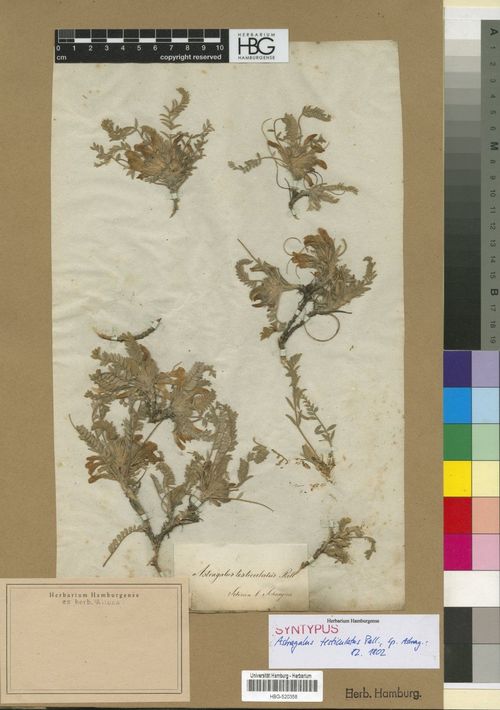
Tatiana Saburova: Going back to the point about non-traditional sources, we can look at history using natural archives. In particular, I am fascinated by the herbarium as a natural archive which can tell you about more than natural history. One can trace how plants were transposed or uprooted, replanted, settled in different areas, or eventually dried out and brought to some herbarium across the world. Herbaria can tell you about networks and knowledge production, colonial policies and cultural projects, and understandings of identities and belonging. But also, I think it is really important that we try to change our anthropocentric view to be able to see plants, insects, or animals, and their roles in shaping history like we see people.
Andy Bruno: Environmental and ecological questions have really become more vibrant within the Russian, East European, and Eurasian Studies field in recent years. I say this as someone who has been focusing on it for two decades now. Rather than environmental historians just engaging with our own debates and conversations, we have begun to make in-roads into broad assessments of the political and economic history of the region. Here scholarship encompassing sweeping time periods and many spaces has helped. My hope is that we are on the cusp of the natural environment seeming like the categories of gender and ethnicity. Even in works that are not explicitly focused on questions of gender or ethnicity, most of us now understand that a scholar should evince an awareness of their importance for almost any aspect of the human experience. In my view, engagements with the non-human natural world matters with comparable capaciousness.
All of you work in the Department of History at Indiana University Bloomington. What types of collaborative endeavors exist at your institution to make connections between Russian studies and other disciplines?
Andy Bruno: I’ll start off by saying I just came to Indiana University as the first Stephen F. Cohen Chair of Russian History in August 2024. Indiana, of course, has a long tradition of being a center of excellence for the field. Not only do we have the Robert F. Byrnes Russian and East European Institute, but we are also home to a Department of Central Eurasian Studies and offer training in more languages than anywhere else in the country. Some of the resources that come with the Cohen Chair are to help assure that we continue to thrive as a center for training graduate students and engage in robust programming in the field. The history department is also in the midst of training students in a topical PhD cluster on environmental history. I would very much look forward to graduate applications from emerging scholars of Russian history who want to work on environmental topics.
Clare Griffin: I work jointly for the history department and the Robert F. Byrnes Russian and East European Institute. The institute is necessarily interdisciplinary. We have a whole range of courses from ethnomusicology to political science. Because Indiana University is so big, we also have opportunities for collaborating across different departments. Something I’ve been involved with recently is the Ethics of Violence Research Group, which is run by Morten Oxenbuell in the East Asian Studies Department. The project brings together scholars from different disciplines who work on different time periods to think about the concept of violence and discuss questions about the boundaries between acceptable and unacceptable versions of violence across different societies.
Tatiana Saburova: I can add that for several years we had the Russian Studies Workshop at Indiana University supported by the Carnegie Corporation. We developed teaching and research resources, and I think one of the most important outcomes of this program was that we built connections and networks with even more value than just material resources. Speaking of institutional collaboration, the Institute for Digital Arts and Humanities at Indiana University (now the Digital Arts and Humanities Initiative) gave me an opportunity to learn more about digital humanities, connect with colleagues and students from other departments, and start a new digital project that uses mapping, data analysis, and data visualization. Our graduate students enormously benefit from having this opportunity to use digital humanities in their research.
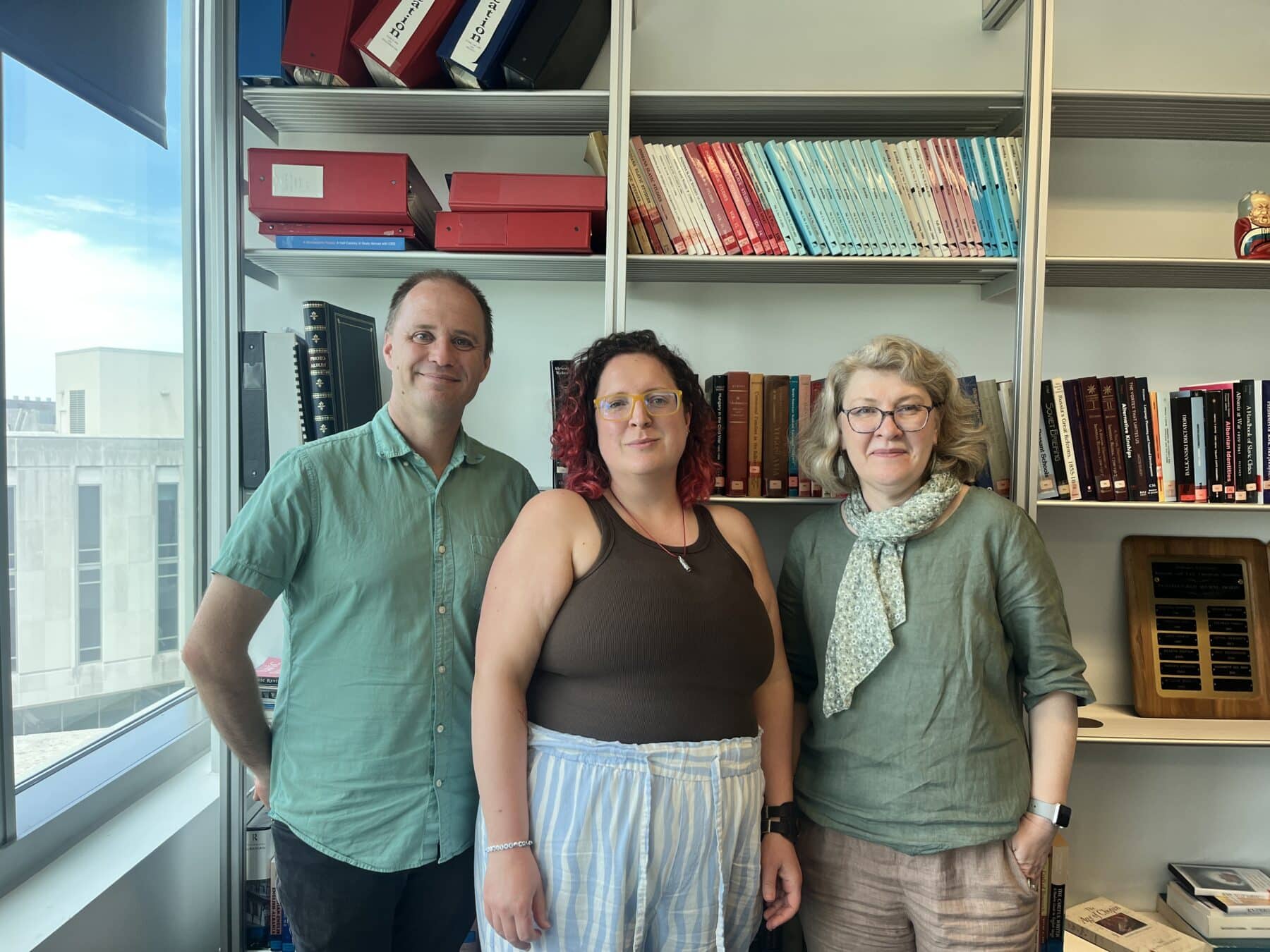
Andy Bruno works as the Stephen F. Cohen Chair of Russian History at Indiana University Bloomington. He is the author of The Nature of Soviet Power: An Arctic Environmental History (Cambridge University Press, 2016) and Tunguska: A Siberian Mystery and its Environmental Legacy (Cambridge University Press, 2022). His current project explores the environment history of economic growth in the Soviet Union.
Clare Griffin is an Assistant Professor at Indiana University Bloomington and the author of Mixing Medicines: The Global Drug Trade and Early Modern Russia, which appeared with McGill-Queens Press in 2022. She is currently working on her second monograph, which explores the embodied experiences of soldiers in the context of Russian colonialism from the seventeenth century to the present day.
Tatiana Saburova is a Senior Lecturer at Indiana University Bloomington. Her first book was Mythologies of the Russian Intellectual World: Socio-Cultural Representations of the Russian Intelligentsia in the Nineteenth Century (in Russian, 2005). Her second book Druzhba, sem’ia, revolutsiia: Nikolai Charushin and pokolenie narodnikov 1870-kh godov (Moscow, 2016) was co-authored with Ben Eklof. Its English-language version, A Generation of Revolutionaries: Nikolai Charushin and Russian Populism from the Great Reforms to Perestroika, was published by Indiana University Press in 2017. Her current research focuses on the history of exploration, botany, cartography, and photography in the Russian empire’s borderlands from the late eighteenth century to the early twentieth century.