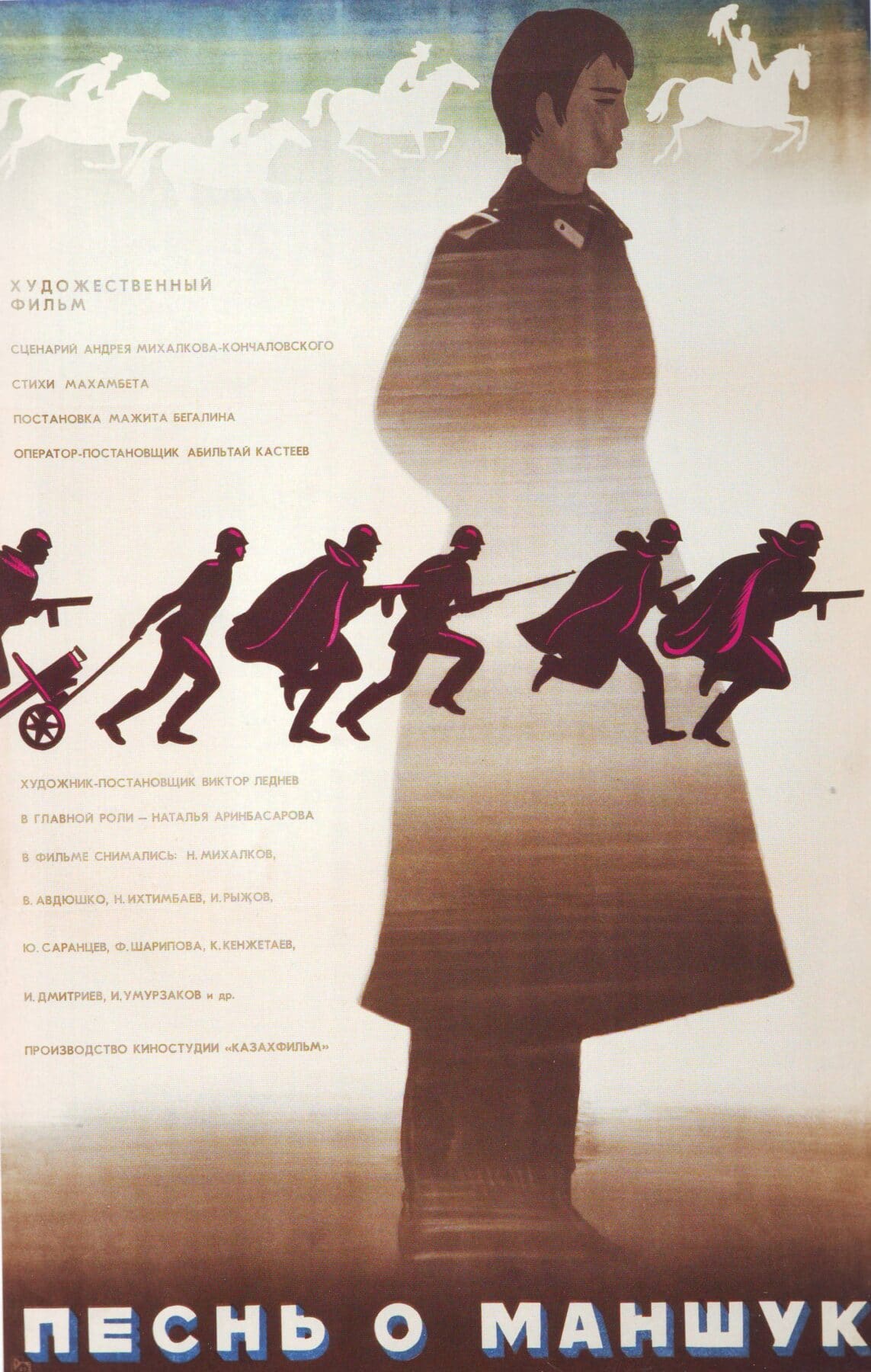
Despite its vibrant artistic output, Soviet-era cinema from Central Asia has remained largely overlooked by and inaccessible to Western scholars. This neglect stems from a number of factors. Chief among them was the limited international exposure afforded to non-Russian films. Russian productions were consistently prioritized for inclusion in international film festivals, while even within the USSR, films from Central Asia were underrepresented at All-Union film events. Instead, the region was relegated to its own localized festival — the Review-Competition of Filmmakers of Central Asia and Kazakhstan. In terms of domestic distribution, films produced in Central Asia were often assigned the so-called fourth category, restricting them to regional screenings only. This was symptomatic of a broader Soviet cultural policy that systematically downplayed or marginalized the accomplishments of national cinemas.
Why, then, should we turn our attention to the study of Soviet Central Asian cinema today? Because these films embody a rich tapestry of national cultural traditions, latent forms of resistance to Soviet ideological narratives, and offer an invaluable framework for analysis through the lens of postcolonial theory.
Soviet cultural policy systematically downplayed or marginalized the accomplishments of national cinemas.
This article proposes several key avenues of inquiry:
- What influence did Russian directors exert over the development of Central Asian cinematic traditions?
- Who were the pioneering figures behind the region’s earliest documentary films, and what historical conditions gave rise to their emergence?
- The so-called “Emancipation of the Eastern Women” was not merely a slogan of the 1920s and 1930s, but a central tenet of Soviet policy in the region. How was this agenda reflected in film narratives and aesthetics?
To date, Western SEEES and film studies scholars have not produced a comprehensive canon of the most important Soviet Central Asian films. Nor do we have a reader or scholarly compendium organized by thematic, national, or historical period – as we do for Russian cinema. And yet, Central Asian cinema is no less significant or compelling.
The following five titles represent the limited corpus of scholarly works on this subject available in Western academia:
- Jean Radvinyi, Le Cinéma d’Asie Centrale Soviétique (Paris, 1991)
- Michael Rouland, Gulnara Abikeyeva, and Birgit Beumers (eds.), Cinema in Central Asia: Rewriting Cultural Histories (London, 2013)
- Cloé Drieu, Cinema, Nation, and Empire in Uzbekistan, 1919–1937 (Indiana University Press, 2018; originally published in French)
- Rico Isaacs, Film and Identity in Kazakhstan: Soviet and Post-Soviet Culture in Central Asia (I.B. Tauris & Co. Ltd, 2018)
- Peter Rollberg, The Cinema of Soviet Kazakhstan, 1925–1991: An Uneasy Legacy (Lexington Books, 2021)
This article will explore the potential areas of inquiry for future scholarship in the hopes of recentering the field of Soviet Film Studies, noting well-studied areas as well as understudied topics across Central Asian cinema.
The Formation of Cinema in Central Asia: “Good” and “Bad” Russians
Russian filmmakers played a pivotal role in the development of Central Asian cinema. From the 1920s onwards, they traveled to the region to direct the earliest narrative films. Their involvement continued throughout the Second World War, during which major Soviet film studios were evacuated to the southern republics, and extended into the early 1950s, when national cinematic professionals had yet to be trained. Thus, one could assert that the foundations of cinema in the region were laid by Russian cinematographers.
The direction in which national cinemas began to evolve often depended on the caliber of these “visiting specialists.” In some instances, the peripheries were assigned second-rate or “bad” Russians – filmmakers who had little demand in Moscow or Leningrad and therefore produced formulaic, state-commissioned Soviet films. Among them were Aleksandr Karpov, Yefim Aron, and Pavel Bogolyubov. At other times, however, prominent and creative figures – “good” Russians – contributed positively to the shaping of national cinema. These included Larisa Shepitko, Vladimir Motyl, and Andrei Konchalovsky. In my view, this subject remains underexplored, especially within the framework of postcolonial theory.
Kazakh cinema, it can be said with some certainty, was less fortunate than its neighbors in terms of recognition. The first film officially recognized as a “Kazakh” production was Amangeldy (1938), directed by Moisey Levin – a Soviet attempt to create a Kazakh counterpart to Chapaev, the ideal hero of Soviet mythology. The film was produced at Lenfilm Studios with Kazakh actors and served as a typical ideological narrative promoting the establishment of Soviet power. During WWII, the Central United Film Studio (TsOKS) was established in Almaty, where major Soviet filmmakers such as Vsevolod Pudovkin, Dziga Vertov, the Vasilyev brothers, and Sergei Eisenstein worked. However, following the war, these eminent directors returned to the center while lesser-known filmmakers remained in the Kazakh SSR to develop what came to be known as “national cinema.” Among them were Yefim Aron (The White Rose, 1942), Yefim Dzigan (Jambul, 1952), Karl Gakkel (Daughter of the Steppes, 1954, co-directed with Shaken Aimanov), Pavel Bogolyubov (The Girl-Jigit, 1956), and Aleksandr Karpov (A Tale of a Mother, 1963), among others. Dziga Vertov and Grigory Roshal stand as notable exceptions. In 1941, Vertov directed the impassioned documentary To You, Front!, in which he extolled Kazakhstan’s contributions to the war effort – lead, oil, grain, horses, and more. Grigory Roshal directed the short film Batyrs of the Steppe (1942) and Songs of Abai (1945), both of which sought to convey the spirit of Kazakh culture.
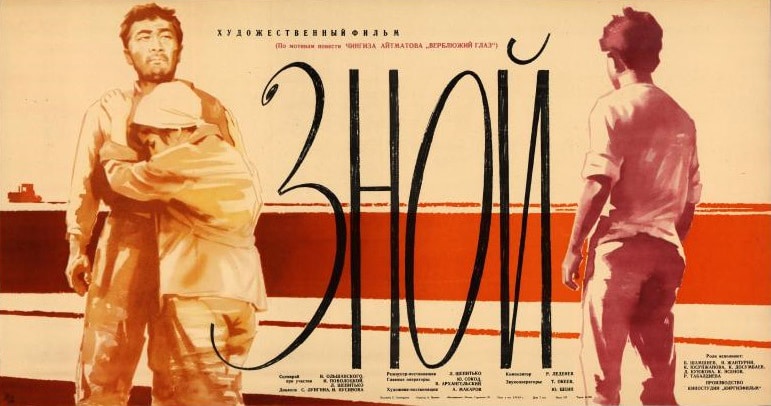
The cinema of the Kyrgyz SSR was considerably more fortunate. Prior to the war, there had been no film studio in the Kyrgyz SSR, but in the postwar period – specifically, in the early 1960s – a wave of talented young filmmakers arrived and created their debut works: Larisa Shepitko’s Heat (1963), Andrei Mikhalkov-Konchalovsky’s The First Teacher (1965), Irina Poplavskaya’s Jamila (1969), and others. These films set a high artistic standard that the nascent Kyrgyz national cinema would later aspire to. Each of these films could be productively studied from the perspective of post-colonial theory. For example, the fact that nearly all the key Kyrgyz filmmakers of the time participated in the production of Heat speaks volumes: Bolotbek Shamshiyev played the lead role of Kemel, Tolomush Okeyev served as the sound engineer, and assistants included Gennady Bazarov and Dinara Asanova. The second female lead, Kalipa, was played by Klara Yusupzhanova. The film took two years to shoot, meaning the entire crew had a prolonged opportunity to observe the director’s honest and selfless work ethic. The film’s power lies in its portrayal of a domestic story that reveals more than just a clash of personalities. It dismantles the image of the Soviet hero of the Stalinist era – “the region’s best tractor driver.” In his place emerges a hero of the 1960s: a young intellectual who believes in the ideals of collective purpose and justice, and is ready to defend them. By contrast, I have more critical questions about Konchalovsky’s The First Teacher (1965). To me, it appears just as colonial in nature as Vladimir Motyl’s White Sun of the Desert (1970). More broadly, the genre of “easterns” – popular stylized action films set in Central Asia – and the depiction of the Basmachi (who, in reality, represented the interests of Turkestan’s peoples) is an underexplored area of study. Historians such as Alexander Morrison, Adeeb Khalid, and Beatrice Penati have written on these topics, but there remains little scholarship on how Basmachi were portrayed in Uzbek, Kazakh, Kyrgyz, and Tajik “easterns.”
Uzbek cinema was the earliest to develop in Central Asia. In 1924, the Leningrad-based film organization Sevzapkino signed an agreement with the government of the Bukharan People’s Republic to establish a Russo-Bukharan film cooperative called Bukhkino in the city of Old Bukhara. It was here that the first Uzbek narrative films were shot: Minaret of Death (1925) by V. Viskovsky and The Muslim Woman (1925) by D. Bassalygo. This was still the era of silent film, and it is evident that Uzbek cinema was shaped by the experience of filmmakers who had worked in pre-revolutionary Russian cinema. For example, Mikhail Doronin, director of The Second Wife (1927), had acted in the 1912 film The Mystery of House No.5. Mikhail Averbakh, director of The Veil (1927), was primarily known as a silent-era director. Lastly, Yakov Protazanov – director of Aelita (1924) – had made 80 films before the Revolution, and his final work, Nasreddin in Bukhara (1943), was shot in Uzbekistan. In this sense, Uzbek cinema was also relatively fortunate. It was not immediately transformed into a purely propagandistic tool. Rather, early Uzbek films had an “orientalist” tone and focused significantly on the uniqueness of Uzbek culture and daily life.
The cinema of Tajikistan developed under unique circumstances. While Russian directors were active there as well, its geographic and cultural proximity to Uzbekistan enabled early activity on the part of Tajik filmmaker Kamil Yarmatov. During WWII, the Soyuzdetfilm studio was relocated to Tajikistan, but after the war, the studio was shut down until the mid-1950s. It was during this time that Boris Kimyagarov emerged as a major figure: he first gained recognition for the docudrama Tajikistan, which won a prize in Venice, and later directed Dokhunda, Death of a Poet, and the Rustam Trilogy, among other works.
Lastly, the cinema of Turkmenistan presents a separate case, somewhat similar to Kazakhstan. Many “Varangians” – visiting Russian directors – worked there, while the national cadre gradually gained experience and received training at VGIK. Notably, the literature that served as the basis for film scripts was being developed concurrently with the cinematic medium itself.
Documentary Cinema of the 1920s–1930s
Surprisingly, early Soviet documentary cinema of the 1920s–1930s, particularly that produced by Russian filmmakers in Central Asia, has been relatively well studied. Key examples include the works of Dziga Vertov: A Sixth Part of the World (1926), Man with a Movie Camera (1929), and Three Songs about Lenin (1933). Also notable are the ethnographic films about the Pamirs, such as At the Foot of Death (1928) by V. Shneiderov and The Roof of the World (1928) by V. Erofeev. Another landmark is Viktor Turin’s Turksib (1929), which documents the construction of a railway through Turkestan.
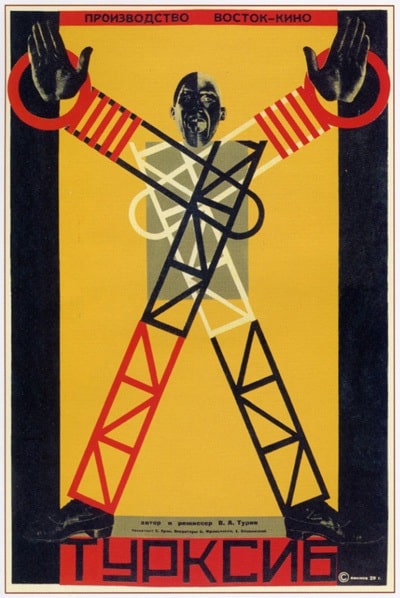
Olga Sarkisova’s book Screening Soviet Nationalities: Kulturfilms from the Far North to Central Asia (2017) provides a compelling account of the so-called Kulturfilms – films aimed at visualizing the Soviet Union by defining its boundaries and projecting the new imagery of the state. Emma Widdis has written extensively on the theme of Russian Orientalism in early Soviet cinema. In her book Socialist Senses: Film, Feeling, and the Soviet Subject, 1917–1940, she emphasizes that the vision of a reimagined East as the foundation of the new Soviet world held powerful appeal. The East, she notes, occupied a central position in the imagined space of the Soviet avant-garde. Unsurprisingly, the majority of scholarship focuses on Dziga Vertov, a towering figure of Soviet cinema, whose legacy stands alongside that of Sergei Eisenstein and others in shaping the visual and ideological framework of the Soviet experience. Foundational studies have been contributed by scholars such as John MacKay, Yuri Tsivian, Elizabeth Papazian, Philip Cavendish, Oksana Bulgakova, among others. The British documentarian John Grierson had already acknowledged the influence of Viktor Turin’s Turksib on British documentary practice in a 1946 publication. In sum, the early documentary films made in Central Asia by prominent Russian directors have been well documented and analyzed – in relation to theories of Orientalism, the emergence of Soviet propaganda cinema, and the evolution of montage and film aesthetics.
The Emancipated Woman of the East
The theme of the emancipated/liberated/unveiled woman of the Soviet East has been examined by such Western historians as Shirin Akiner, Douglas Northrop, Adeeb Khalid, and others. However, very little has been written about the films that engaged with this topic –despite the fact that it was arguably one of the central themes of Soviet ideology in regard to the region. This topic has so far been explored primarily through early Uzbek films of the 1920s–1930s. Most of the credit for this belongs to Cloé Drieu, who recently conducted a serious study of early Uzbek cinema. Not only were agitprop films of Central Asia and Kazakhstan in the 1920s and 1930s built around this idea, but later, in the 1940s through the 1960s, a large number of films emerged with titles that were simply female names: Raykhan (1940, Kazakhstan), Dursun (1940, Turkmenistan), Asal (1940, Uzbekistan), Saltanat (1955, Kyrgyzstan), Botagoz (1957, Kazakhstan), Aina (1959, Turkmenistan), Nisso (1965, Tajikistan), Urkuya (1971, Kyrgyzstan), and others.
The theme of the emancipated/liberated/unveiled woman of the Soviet East…raises the question: what, in the end, did Soviet power gain?
Almost all of these films depict a young woman escaping an old or tyrannical husband or a feudal bai, pursuing education or work, and building a career. Some of them find personal happiness, but more often, they become revolutionaries or Stakhanovite labor heroines. Another strand in the representation of women in Central Asian cinema concerns interethnic marriages or the integration into Slavic families. Such films developed the Soviet ideological construct of “friendship of the peoples,” inaugurated in cinema with Ivan Pyryev’s The Swineherd and the Shepherd (1941). These films also served the policy of Russification.
Another promising topic for future research is the hujum – the movement to forcibly remove the veil (paranja). This was especially relevant for Uzbekistan and Tajikistan, since in Kazakhstan, Kyrgyzstan, and Turkmenistan, the paranja was not traditionally worn. The quintessence of the hujum in cinema is Ali Khamraev’s film Fearless (1972). On the one hand, it was an ideological commission – to show the struggle against the veil. On the other hand, the film gives the impression of being made without censorship: it portrays women participating under literal threat of violence, not because they sought freedom, but out of fear for the lives of their loved ones. One striking scene shows the women of a kishlak (village) fleeing to a small island in the middle of a lake upon learning that a hujum action would take place that day.
Thematically, “The Emancipation of the Woman of the East” is highly relevant in the context of contemporary postcolonial theory, as it raises the question: what, in the end, did Soviet power gain? Above all, cheap labor in the form of women who had previously been occupied mainly with household duties and family. The Bolsheviks mobilized what might be called a “surrogate proletariat” to work in factories and cotton fields. There were, of course, civilizational transformations such as the elimination of illiteracy and access to free healthcare. But Soviet power also dismantled the traditional way of life, waged war against customs and belief systems, and deprived people of religion and faith.
In Western SEEES, the image of the Soviet Russian woman in cinema has been thoroughly examined in books and articles by Helen Goscilo, Lynne Attwood, Catriona Kelly, Birgit Beumers, and other scholars. However, very few have written about female images in Central Asia – except for Maya Turovskaya’s seminal article Stalin’s Stepdaughters, Dilyara Tazbulatova’s chapter in the collection Red Women on the Silver Screen: Soviet Women and Cinema from the Beginning to the End of the Communist Era (Routledge, 1993), and recent articles by Andrey Apostolov (Limits of Emancipation: The Liberated Woman of the East in Stalinist Cinema) and Olga Khan (The Emancipation of the Woman of the East in the 1920s: Ideology, Practice, and Cinema).
Other Avenues for Future Research
What other topics related to Soviet cinema in Central Asia are of interest for deeper exploration and analysis?
- Soviet comedy – instruments of “socialist realism” – is well described by Western researchers like Rimgalia Salys or Alexander Prokhorov, but almost nothing has been written about comedies from Central Asia. And yet, it was in them that the Soviet ideological formula, “national in form, socialist in content,” was most vividly expressed.
- Films about WWII, which predominantly depicted heroes of Slavic origin. One must question why there were so few national, Asian heroes in these films? Why was permission mainly given to films about the home front in our region?
- Female characters of the “Thaw” era definitely deserve special attention. In films such as The Tracks Go Beyond the Horizon (1964, Kazakhstan), The White, White Storks (1967, Uzbekistan), and Jamilya (1969, Kyrgyzstan), women are shown fighting for the right to choose love.
- Children: Due to the Soviet policy that adult heroes should predominantly be “the elder brother – the Russian,” national Soviet films from Asia often featured elderly people or children as main characters. In this way, they could be bearers of national character and worldview.
- During the “stagnation” period, there was a boom in the so-called “production theme.” It is generally underexplored in film studies. Yet these were exemplary, and in some ways absurd, films that reflected insane Soviet projects – the Virgin Lands Campaign, the diversion of rivers which led to the destruction of the Aral Sea, and so on.
- Cinema of the “Perestroika” era has been described more or less due to the great resonance of the “Kazakh New Wave,” but regarding the other republics – Uzbekistan, Kyrgyzstan, Tajikistan, and Turkmenistan – little is known about the state of their cinematography on the threshold of two eras, although they also had their own “new wave.”
- Finally, and most importantly – a list of the most significant Soviet-era films from Central Asia has still not been compiled.
The Soviet-era cinema of Central Asia remains a vast and underexplored repository of films, reflecting five distinct yet interconnected cultures – each navigating the tensions of ideology, identity, and artistic expression under socialism. Unlocking this cinematic legacy promises a deeper understanding of the region’s rich cultural history and perspectives on the Soviet experiment and its enduring contradictions.
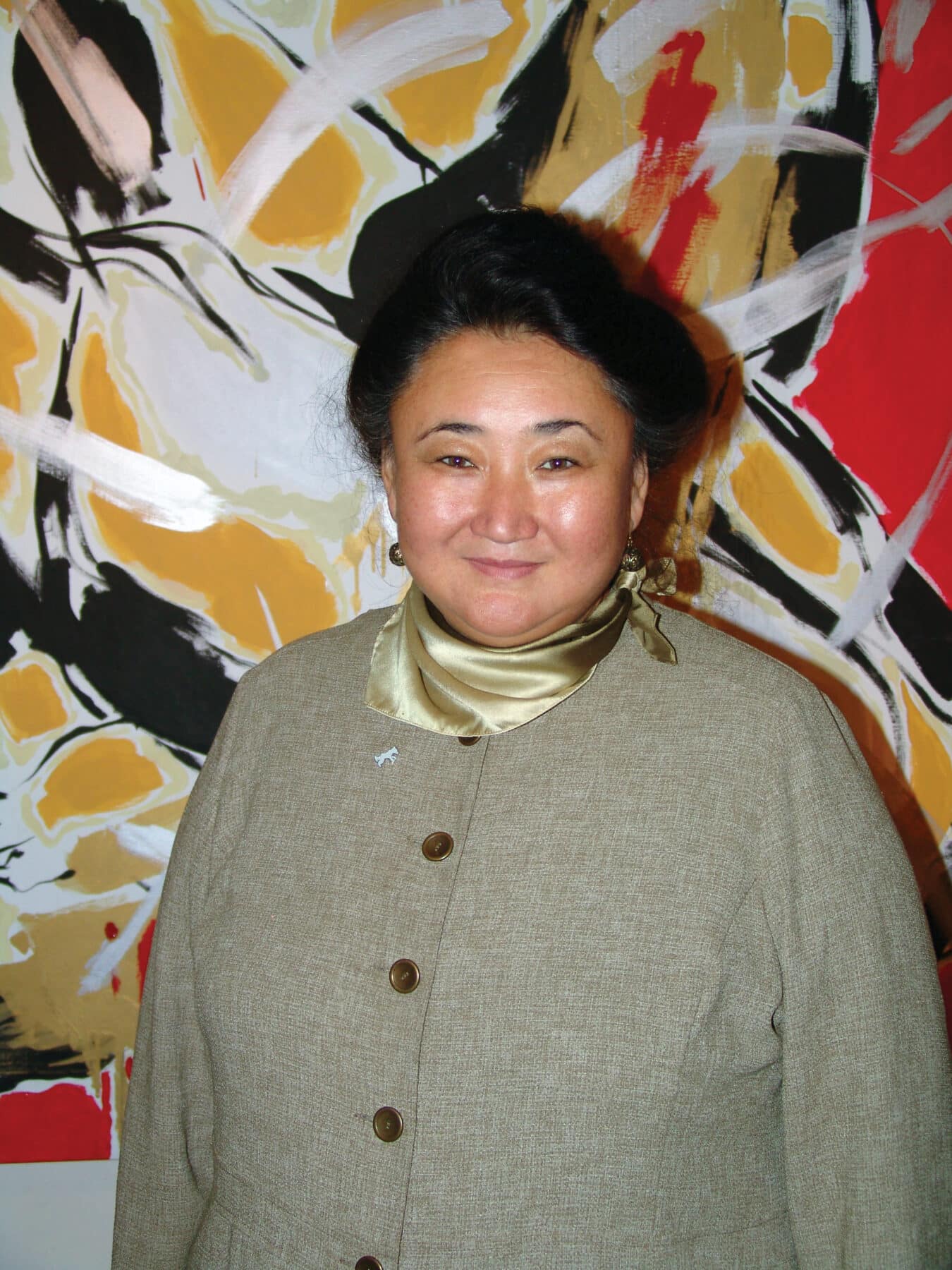
Gulnara Abikeyeva, known Kazakh film researcher, has been President of the Association of Film Critics of Kazakhstan since 2015. She was Program Director of the International Film Festival Eurasia in 2005-2013 and 2022. She is the author of twelve books about cinema, mostly about Kazakhstan and Central Asian countries. Among them are: Cinema of Central Asia: 1990-2001, Nation-Building in Kazakhstan and other Central Asian States, and How This Process is Reflected in Cinematography, Cinema in Central Asia: Rewriting Cultural Histories, co-edited by Michael Rouland and Birgit Beumers, The Unknown New Wave of Central Asian Cinema, co-edited by Kim Ji-Seok. She is a Professor at Turan University in Almaty, Kazakhstan. Recently, she was a visiting scholar at Trinity College of Cambridge University where she started to work on her new book, Soviet Cinema of Central Asia.