
2025 Recipient
Katya Motyl
Embodied Histories: New Womanhood in Vienna, 1894-1934
The Barbara Jelavich Book Prize, established in 1995 and sponsored by the Jelavich estate, is awarded annually for a distinguished monograph published on any aspect of Southeast European or Habsburg Studies since 1600, or nineteenth and twentieth century Ottoman or Russian diplomatic history in the previous calendar year.
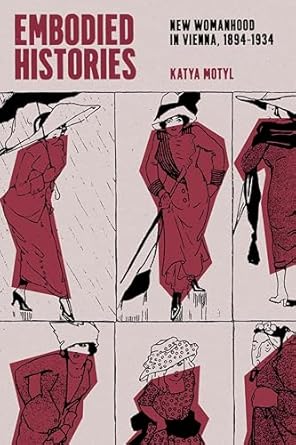
Winner: Katya Motyl, Embodied Histories: New Womanhood in Vienna, 1894-1934 (University of Chicago Press, 2024)
Katya Motyl’s Embodied Histories represents transformative scholarship that takes abstract theories of embodiment and gives them empirical substance. Rather than focusing on representations of the “New Woman,” Motyl shifts attention to bodily practices as the actual mechanisms of gender transformation, demonstrating not merely that “bodies matter,” but precisely how they matter through intelligently identified mechanisms. The book’s methodological imagination is striking, merging intellectual and cultural history with feminist theory, fashion, and art in an interdisciplinary approach that pays attention to dress, posture, and movement alongside visual evidence. Drawing on an impressive range of archival materials—fashion magazines, medical texts, novels, memoirs, photographs, and art—Motyl reframes the New Woman as a locally specific, racially coded, and materially embodied figure in fin-de-siècle Vienna. Spanning from the late Habsburg period through the interwar years, the work dispels myths that the 1920s represented a total break, instead revealing the evolution of women’s lives and experiences through war and social transformation. Motyl masterfully connects aesthetic analysis to the social processes of everyday life, illuminating how patriarchy and traditionalist cultures were reworked within Vienna’s urban fabric. Her analytical yet vivid writing style brings readers into the lived experiences of urban modernity. Embodied Histories shows how changes in gender and sexuality occurred “from the body up,” making New Womanhood visible as a contested and performative identity shaped by class, sexuality, and body politics. The book promises to influence scholarship far beyond Central European studies, offering a compelling model for writing corporeal experiences as history.
Winner: Vladimir Hamed-Troyansky
Prize Committee: Vladimir Kulić (chair), Emily Greble, and Elidor Mëhilli