
Wednesday, April 15, 2026
Veronica Anghel

Veronica Anghel is an Assistant Professor at the Robert Schuman Center for Advanced Studies at the European University Institute and a Visiting Professor at the College of Europe.
When did you first develop an interest in Slavic, East European, and Eurasian Studies?
I first developed an interest in Slavic, East European, and Eurasian Studies as a practitioner. The turning point was 2014, when Russia invaded Crimea. At the time, I was a junior foreign affairs advisor in the Romanian Presidential Administration, working on U.S. relations and NATO coordination. The experience exposed how vulnerable Eastern European states were to external threat–and how unprepared they were to respond.
What stood out was not only the weak first response defense capabilities on NATO’s Eastern Flank, but also the fragility of domestic political systems. Crisis management was limited, and decision-making often driven by short-term political considerations rather than institutional resilience. The gap between external threat and internal preparedness was stark.
At the same time, divisions within the European Union and NATO made it harder for Eastern European concerns to gain attention to Russia’s increasing belligerence. This combination of geopolitical pressure, institutional weakness, and uneven alliance dynamics shaped my interest in the region–and led me to study how domestic politics conditions the European Union’s capacity to act externally.
How have your interests changed since your initial interest in the field?
My research began with domestic political dynamics in post-communist Europe. I focused on party politics in Romania, examining coalition behavior, clientelism, and weak institutionalization, and how these distort governance outcomes.
From there, my work expanded to broader regime weaknesses in transitional settings – including presidential informal powers, elite constraints on party development, and the role of individual incentives in shaping political outcomes. The core concern was how political actors operate within – and often exploit – weak institutions, such as in Hungary.
Over time, my focus shifted beyond the domestic level to the interaction between internal fragility and external pressure. Questions of democratization, authoritarian resilience, and security became central, particularly in Eastern Europe.
Russia’s full-scale invasion of Ukraine marked a decisive break. It forced a move from analyzing domestic political dysfunction to understanding how war reshapes societies and political systems at both national and supranational levels.
What is your current research/work project?
My current research examines how wartime and world order shifts are reshaping the European Union and its role in international affairs, focusing on three interlinked dynamics: total defense, relational geopolitics, and enlargement as a strategic tool for EU integration.
First, in my book project, I aim to conceptualize ‘total defense’ at the EU level as the repurposing of its existing toolkit – regulatory power, market integration, financial instruments, and societal resilience – into a coherent security strategy. Investing in conventional military power is insufficient. The EU strengthens its capacity to deter and withstand pressure by deepening European identity and integration across sectors such as industrial policy, infrastructure, and economic security. In its external relations, the EU practices ‘relational geopolitics,’ which understands power as emerging from networks of rules, institutions, interdependence, and the co-creation of rules with partners.
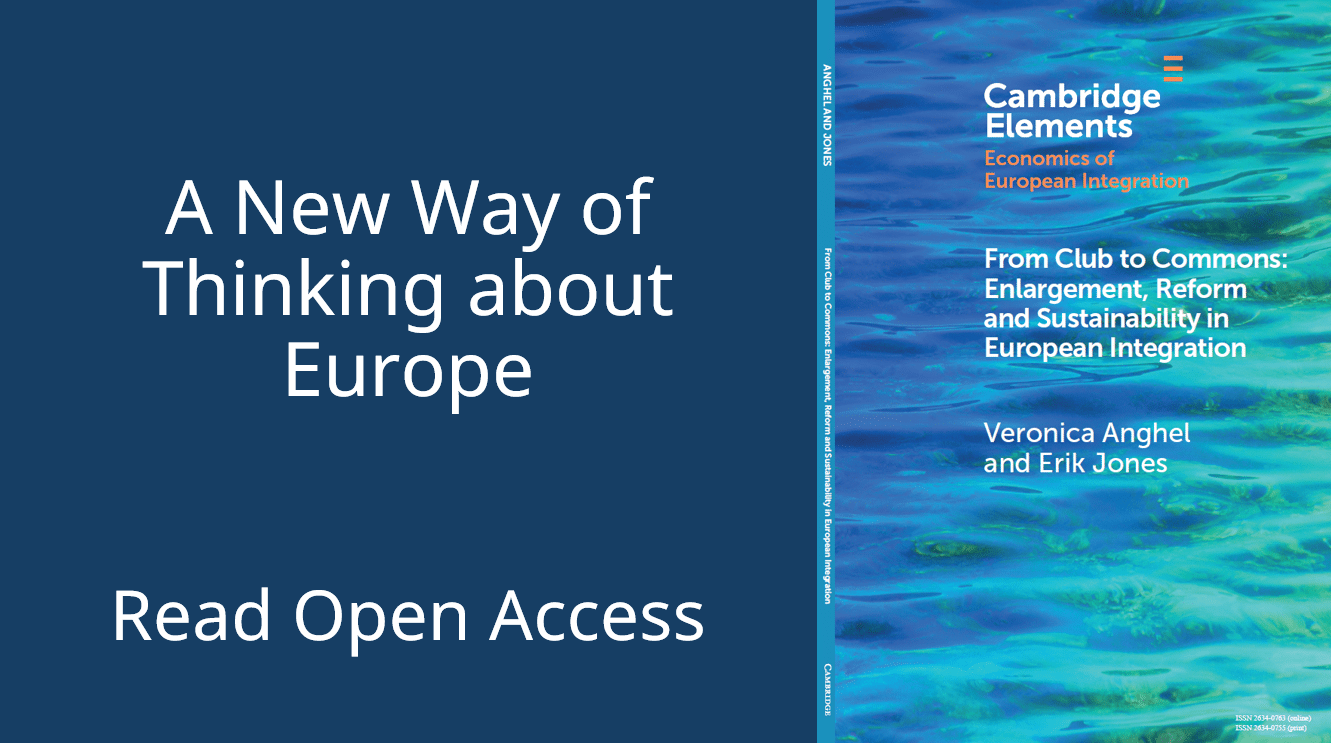
Second, I analyze enlargement as a geopolitical instrument. The accelerated integration of countries such as Ukraine and Moldova through phased and sectoral approaches shows that accession is not a purely technocratic process, but a strategic response to external threat. The aim is to expand and test the theoretical insights in the Cambridge Element From Club to Commons Enlargement, Reform and Sustainability in European Integration – where we revisit what the European Union is and how it voids the tragedy of the commons.
Tell us about your most interesting/enjoyable research or work experience.
One of my most rewarding research experiences has been editing the special issue Wartime Europe: EU Integration, Reform and Enlargement. What made it stand out was the community the project brought together–a diverse network of scholars from Europe, Canada and the United States, many of whom I first connected with through ASEEES panels and conversations that grew into long-term collaborations and friendships.
The project was deeply rewarding. We never worked in isolation, and we continuously engaged with each other’s ideas, refining arguments through ongoing exchange. Many of the core insights were first developed and tested in ASEEES settings, where early work benefited from rigorous and open debate. I am grateful for – and inspired by – this community of colleagues, who committed to supporting each other’s work throughout the project and since, and especially by Ukrainian scholars working toward an independent and European future for their country.