
Wednesday, December 17, 2025
ASEEES Announces the Anne D. Rassweiler Dissertation Research Fellowship
ASEEES is pleased to announce the Anne D. Rassweiler Dissertation Research Fellowship.
As part of the ASEEES Next Generation Dissertation Research Fellowship Program, the Anne D. Rassweiler Dissertation Research Fellowship will provide a maximum stipend of $28,000 for doctoral students at US universities, regardless of citizenship, to conduct dissertation research in Slavic, Eastern European, and Eurasian Studies. The program is open to students in any discipline whose dissertation topics are within Slavic, Eastern European, and Eurasian Studies.
In support of the Next Generation Emergency Research Support Fund, the Rassweiler Dissertation Research Fellowship is generously sponsored by John Rassweiler, Janet Rassweiler, and Adele Lindenmeyr. The Rassweiler DRF holds the same provisions and eligibility and uses the same application as the other Next Generation DRFs. For more information, see the ASEEES Next Generation Dissertation Research Fellowship Program webpage.
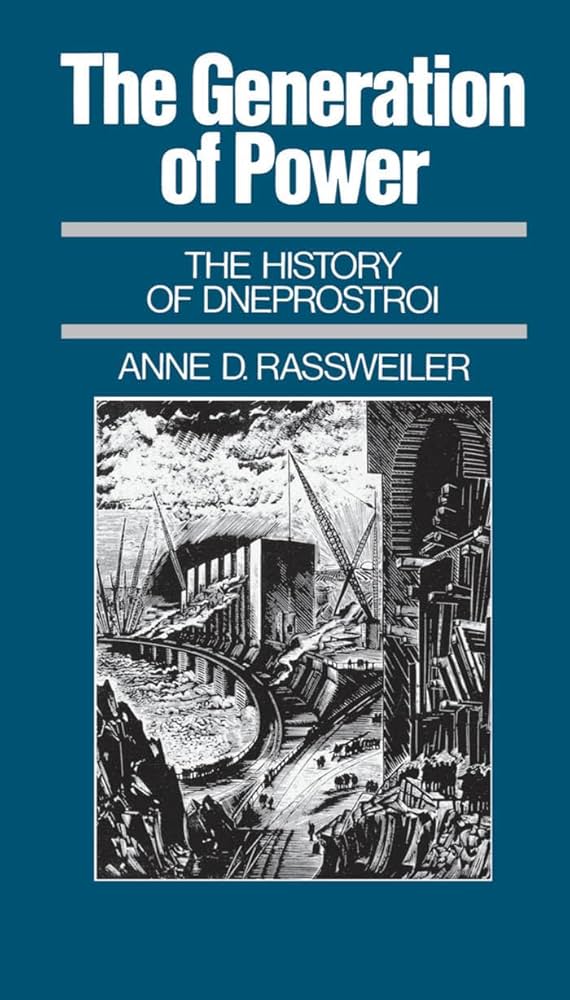
A Phi Beta Kappa graduate of Smith College, Anne D. Rassweiler (1933-2002) was already the mother of four small children when she entered the doctoral program in Russian and Soviet history at Princeton University in 1972. In 1975-76, supported financially by grants from IREX and Fulbright-Hays and morally by her husband John, she and three of their children lived in Moscow while Anne conducted research on her dissertation. She successfully defended that dissertation, supervised by Stephen F. Cohen, and received her PhD from Princeton in 1980. The book that was based on her dissertation, titled The Generation of Power: The History of Dneprostroi (Oxford University Press, 1988), was the first history of the Dneprostroi Dam, one of the showpiece projects of Stalin’s first five-year plan.
Anne’s second book, The Life of a Russian Woman Doctor: A Siberian Memoir (1869-1954), was published posthumously by Indiana University Press in 2004. It originated in a research project she initiated in the early 1990s to study how, in the wake of the Revolution’s promises of female emancipation, Siberian women entered public life in the 1920s and 1930s. An intrepid traveler, she crisscrossed Siberia in 1990, 1991, and 1993, interviewing women who lived through those difficult times and unearthing unpublished memoirs, including the one by the Siberian doctor Anna N. Bek. The Life of a Russian Woman Doctor reflects her indomitable energy and research skills: she located and interviewed Bek’s daughter and other family members, acquaintances, and students, in addition to mining archives in Irkutsk, Chita, and St. Petersburg. Her other publications include journal articles, review essays, and book reviews.
Entering the academic job market at a time of scarcity and committed to her family, Anne never held a permanent university teaching position. She taught as a visiting faculty member at Temple University, as well as at Princeton as a graduate student.