
2024 Recipient
Greta Uehling
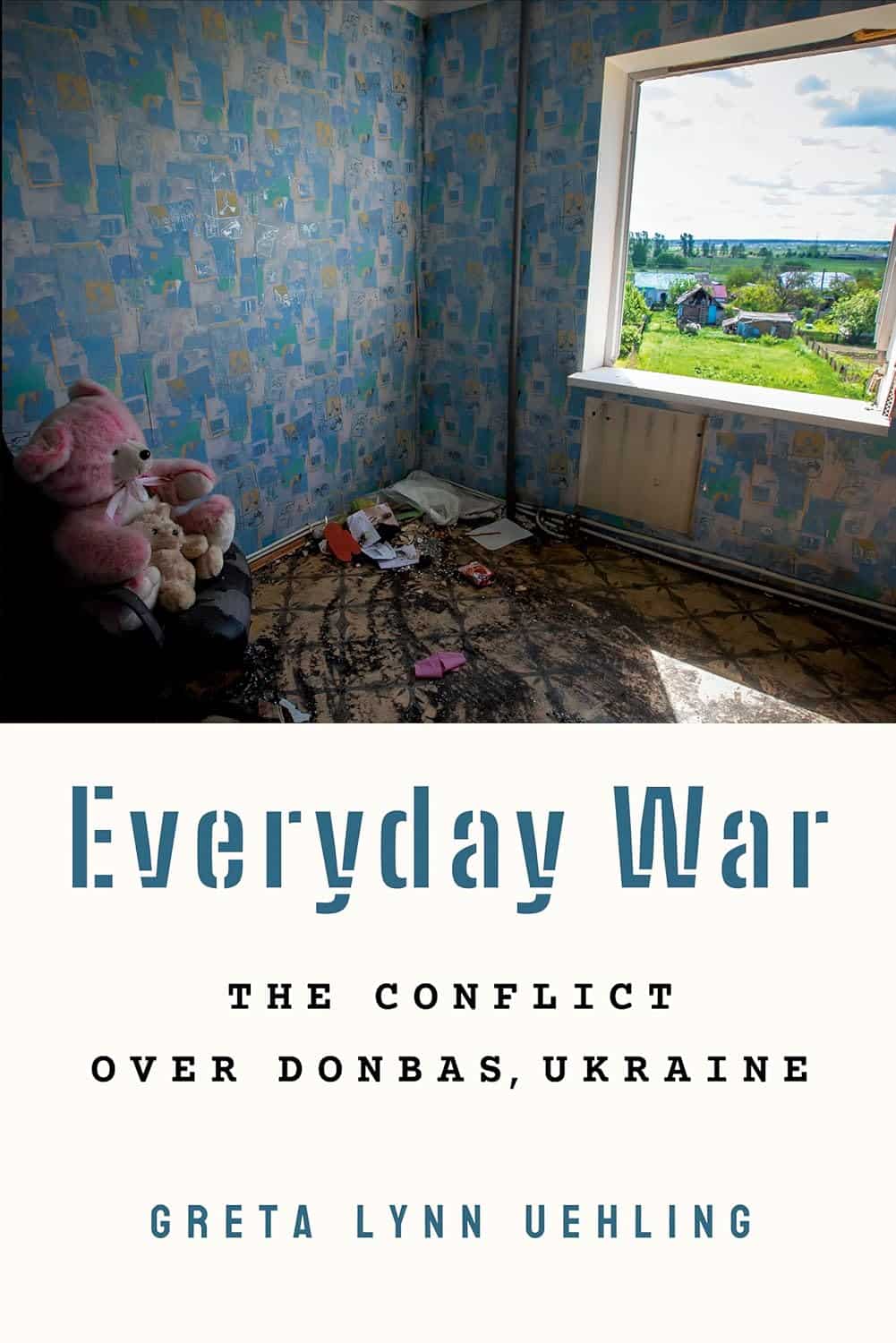
Everyday War: The Conflict over Donbas, Ukraine
The Davis Center Book Prize in Political and Social Studies, established in 2008 and sponsored by the Kathryn W. and Shelby Cullom Davis Center for Russian and Eurasian Studies at Harvard University, is awarded annually for an outstanding monograph published on Russia, Eurasia, or Eastern Europe in anthropology, political science, sociology, or geography in the previous calendar year.
Winner: Greta Uehling, Everyday War: The Conflict over Donbas, Ukraine (Cornell University Press, 2023)
Greta Lynn Uehling’s Everyday War: The Conflict Over Donbas, Ukraine responds to recent calls to “recenter embodied knowledge” in Slavic, East European, and Eurasian studies. Everyday War represents stellar scholarship intertwined with courage, insight, and humanitarian, emancipatory values. The book is based on an ethnographic study of subjective experiences of the military conflict in Donbas that preceded the ongoing Russo-Ukrainian war. The book focuses on the effect of war on interpersonal relationships—relations within families, among spouses, between friends and neighbors, strangers and outsiders. One remarkable finding is how the reassertion of human dignity takes place in wartime through the ethics of care and invention of “micro” practices of peace in a context overwhelmed by violence, death, and destruction. This takes place in various spheres of life: in daily routines of food and coffee delivery to an engagement in body recovery collection. The reader is immersed in a reality more complex and more human than the general understanding of full-scale war, bombing, death, and destruction allows for. Everyday War explores the embodied experiences of war-induced trauma as registered through “somatic language,” i.e. processed through skin, sight, digestion, and diaphragm. The somatic registration of trauma observed in one of the chapters of the book is a rare example of such a discussion in a scholarly work. Uehling’s purposeful and careful attempt to capture this aspect of subjective experiences of war is highly valuable. By exploring the human and interpersonal aspect of the war in Donbas, the book draws attention back to the lived reality and struggles of the ongoing war, but with a more profound understanding of the central role of dignity that conditions survival. Everyday War offers exceptional, path-breaking scholarship to understand the most pressing conflict in contemporary Europe and beyond.
Honorable Mentions: Egor Lazarev and Bogdan Popescu
Prize Committee: Gulnaz Sharafutdinova (chair), Lenka Bustikova-Siroky, and Fabio Mattioli