
Wednesday, July 15, 2026
2026 ASEEES Dissertation Research Grant and Summer Dissertation Writing Grant Recipients
ASEEES congratulates the 2026 Dissertation Research Grant and Summer Dissertation Writing Grant Recipients!
Dissertation Research Grant Recipients
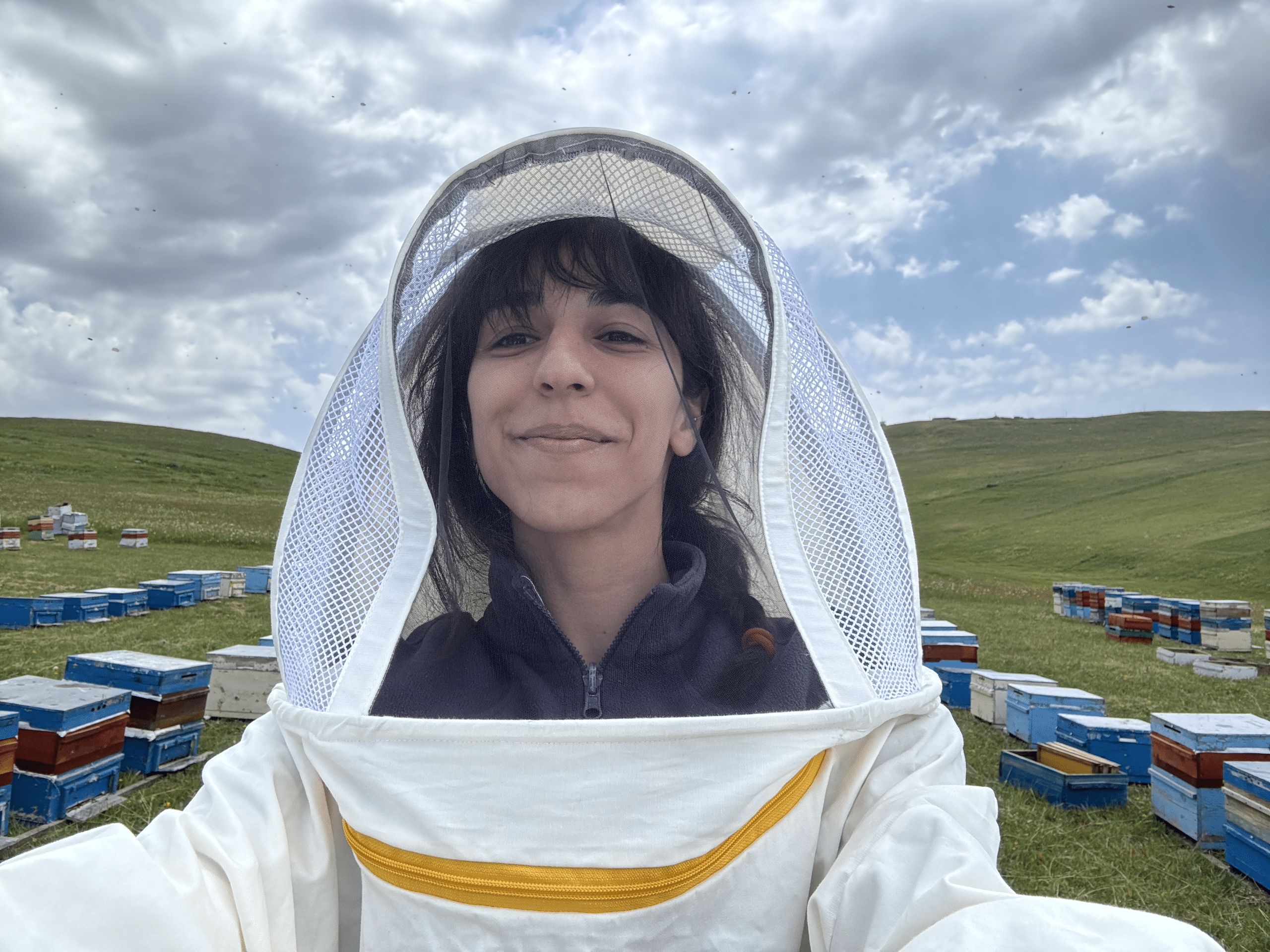
Zeynep Selcen Boztepe (Anthropology, Rice University)
Maya K. Peterson Research Grant in Environmental Studies
“Thinking Through Peace and Honey at the Armenia-Turkey Borderland”
This dissertation focuses on the agricultural bioeconomy of apiculture along the Armenia-Turkey borderland, a historical region in the South Caucasus where honey has been produced and consumed for centuries. However, since 1922, the border has been sealed in its current form, with no passage allowed. Despite occasional diplomatic gestures, the expansive Caucasian steppe plains that straddle this frontier remain sealed due to Turkey’s influence in the Nagorno-Karabakh conflict and its long-standing denial of the Armenian Genocide (1915–1918). This situation has led to restricted mobility and heightened socio-economic marginalization, particularly in border provinces such as Kars and Armavir. Shared pastures are tightly regulated, and Turkey only recently cleared the minefields that once scarred the landscape. In a region where even a cow can be detained and subject to scrutiny, honeybees remain unregulated travelers. Beekeepers care for their bees as they navigate different local realities and the border line itself. Despite the constraints placed on humans, honeybees freely roam the borderland, supporting other pollination economies and producing a uniquely local honey that reflects an unregulated, transboundary ecology. My work asks if caring for bees, and thus caring for the landscape, designs (creates?) infrastructures and methods of promoting post-conflict security through environmental relations.
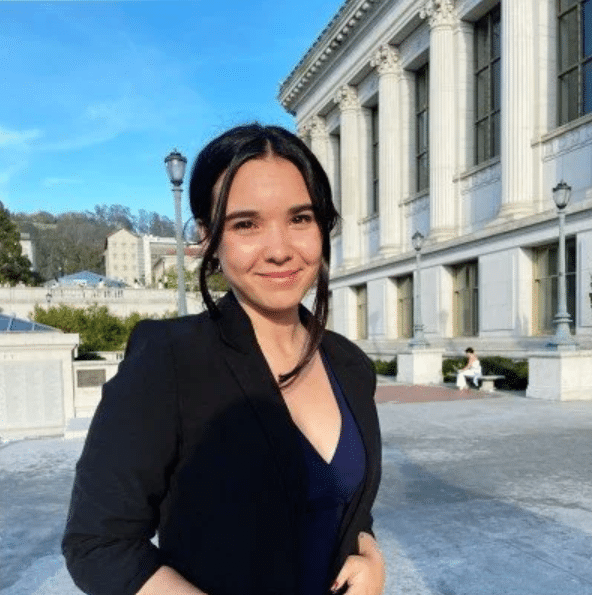
Skylar Clark (Communication Studies, Northwestern University)
“From Rhetoric to Rule: Anti-Gender Politics, Illiberal Governance, and Counterpublic Contestation in Post-1989 Poland”
This dissertation examines how anti-gender politics has emerged as a strategic rhetorical formation in Poland’s post-1989 public sphere, one that organizes political imagination about what democracy ought to look like, and who it is for. Rather than treating anti-gender discourse as a simple backlash or a predictable symptom of democratic erosion, the project argues that it functions as an infrastructural technology of governance that reorganizes democratic life from within, systematically narrowing the imaginative and institutional terrain through which democratic futures are made possible at all. Drawing on a layered feminist rhetorical methodology that combines genealogical, discursive, affective, and counterpublic analysis, the project traces how “gender ideology” accumulates moral urgency within Poland’s historical terrain, shaped by collective memory, Catholic authority, and the unresolved tensions of post-communist transformation. Anti-gender discourse is approached not as a coherent doctrine but as a coalitional formation that condenses disparate grievances into a unified antagonism, whose strategic vagueness makes it especially powerful in populist contexts. The “phantasm of gender,” as Judith Butler theorizes it, does not dissipate but becomes infrastructural, shaping how democratic institutions classify, regulate, and discipline gendered life. Yet the dissertation attends equally to what contests this foreclosure. Polish feminist and queer counterpublic practices, including protest symbolism, music, poetry, zines, and coalition-building, are analyzed not merely as artivism but as rhetorical technologies of imagination that intervene where fact-based persuasion alone no longer penetrates entrenched epistemic and political worldviews. These practices cultivate what Ewa Majewska calls “counterpublics of the common”: spaces sustained through affective labor, creative practice, and relational ethics, oriented not only toward resistance but toward care, survival, and collective possibility. Ultimately, I ask what it means to reclaim democratic imagination under conditions designed to foreclose it, and what forms of solidarity become possible when politics is framed not only as war, but as care.

Stephanie Dvareckas (Art History, Rutgers, The State University of New Jersey)
James Bailey Dissertation Research Grant in Folklore Studies
“The Space Between: Kazakh and Kyrgyz Art from the Late Soviet Period to Independence”
“The Space Between” examines how artists in the Kazakh and Kyrgyz Soviet Socialist Republics navigated Soviet cultural policy while drawing on material and oral traditions to develop distinctive artistic practices. Focusing on the mid-to-late Soviet period (1958–1978) and set against campaigns of sedentarization and Russification, the study shows how artists negotiated pressures to assimilate by drawing on folklore to produce regionally specific artistic forms. It considers how handicrafts were incorporated into modern artistic practices, particularly how artists negotiated tensions between handmade works and mechanized production. Examining the influence of colonial visual tropes and the impact of environmental movements in the late Soviet and post-Soviet periods on representations of landscape, the dissertation argues that artists transformed inherited frameworks into locally grounded modernist forms.
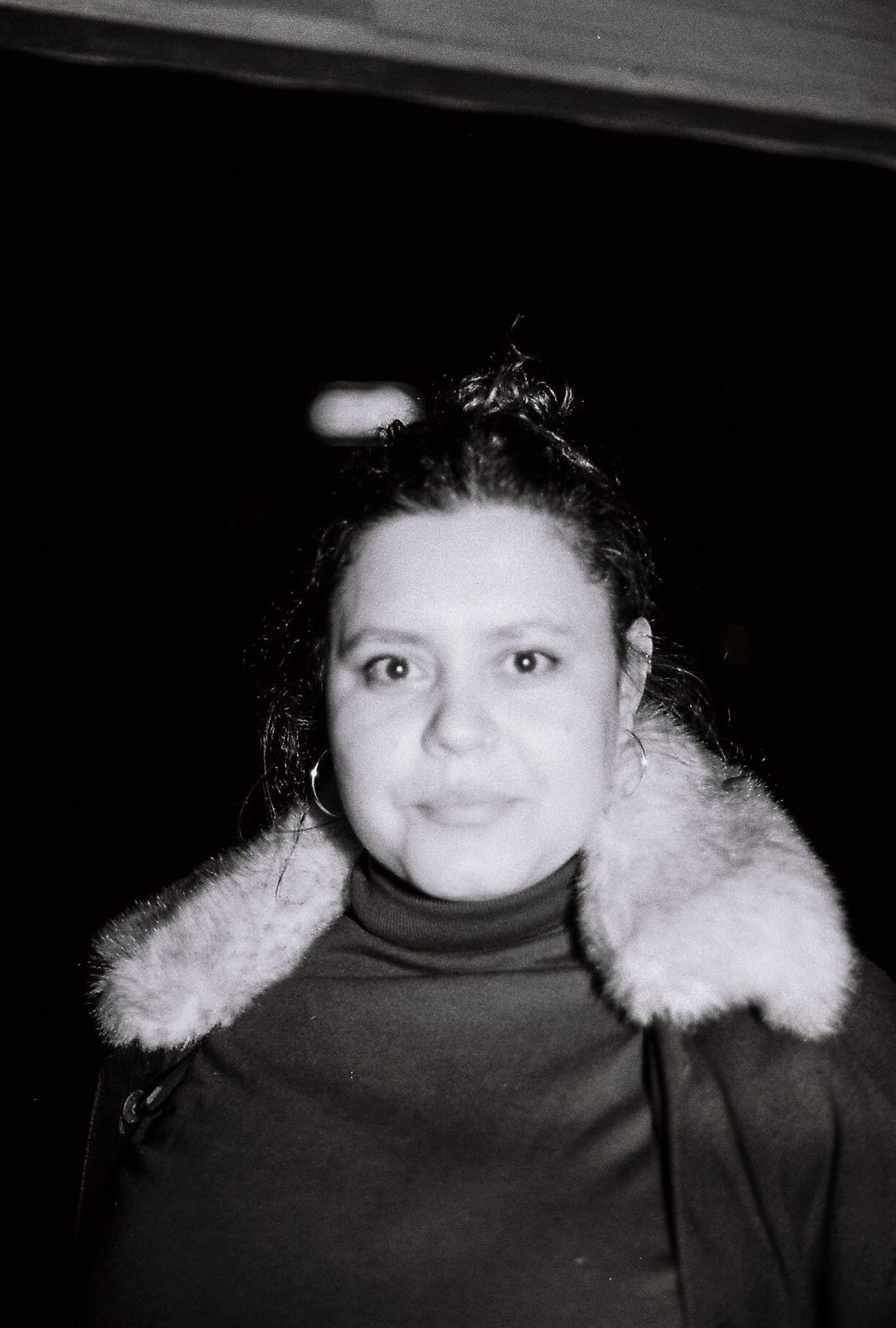
Eliza Frenkel (Anthropology, Indiana University)
Dissertation Research Grant in Women’s, Gender, and Sexuality Studies
“Carrying Worlds: Refugee Women’s Objects and the Politics of Value in Eastern Europe”
This dissertation explores how refugee women from Ukraine and Belarus rebuild everyday life in Poland through the objects they carry, leave behind, digitize, and transform in exile. Situated at the intersection of material culture and visual anthropology, the project examines how value, memory, and survival are organized through ordinary things and language under conditions of war, political repression, and forced displacement. Based on ethnographic fieldwork in Poland, it traces how women assign value to belongings and navigate language as a practical and moral terrain. I conceptualize these object-language assemblages as vernacular archives of order: everyday material and linguistic practices through which continuity is reassembled when institutions, documentation, and futures become unstable. Combining ethnography with feminist sensory visual anthropology, including documentary filmmaking, the dissertation approaches objects not as detached artifacts but as living elements of social worlds, encountered through gesture, narration, and use. In doing so, it shows that forced displacement is lived not only through movement across borders, but through the material and linguistic labor of sustaining life, memory, and future-making in exile.

Larysa Haivoronska (Political Science, Temple University)
“How Does Ongoing Conflict Affect Foreign Direct Investment? A Study of Russian War Against Ukraine (2022–2026)”
This dissertation investigates a striking paradox in international political economy: why foreign companies maintain or even expand investments in a country experiencing active military conflict. Drawing on the unprecedented case of Ukraine, where foreign direct investment rebounded to $4.57 billion in 2023 despite Europe’s largest conventional war since World War II, the project develops a multi-level theoretical framework that examines investment behavior across geopolitical, state, sub-national, sectoral, and firm-level dimensions. Using a mixed-methods design that combines elite interviews with corporate executives in Ukraine, the US, and Europe; analysis of American Chamber of Commerce and National Bank of Ukraine survey data; and quantitative regression analysis of FDI flows as well as investment deals and projects data, the research tests seven hypotheses. They investigate how such factors as military aid signaling, geographic proximity to conflict, asset specificity, and political risk insurance shape wartime investment decisions. Supported by an ASEEES Dissertation Research Grant, this work contributes to international political economy scholarship while offering practical insights for policymakers seeking to sustain economic resilience during armed conflict. These are lessons of growing relevance as geopolitical tensions intensify worldwide.
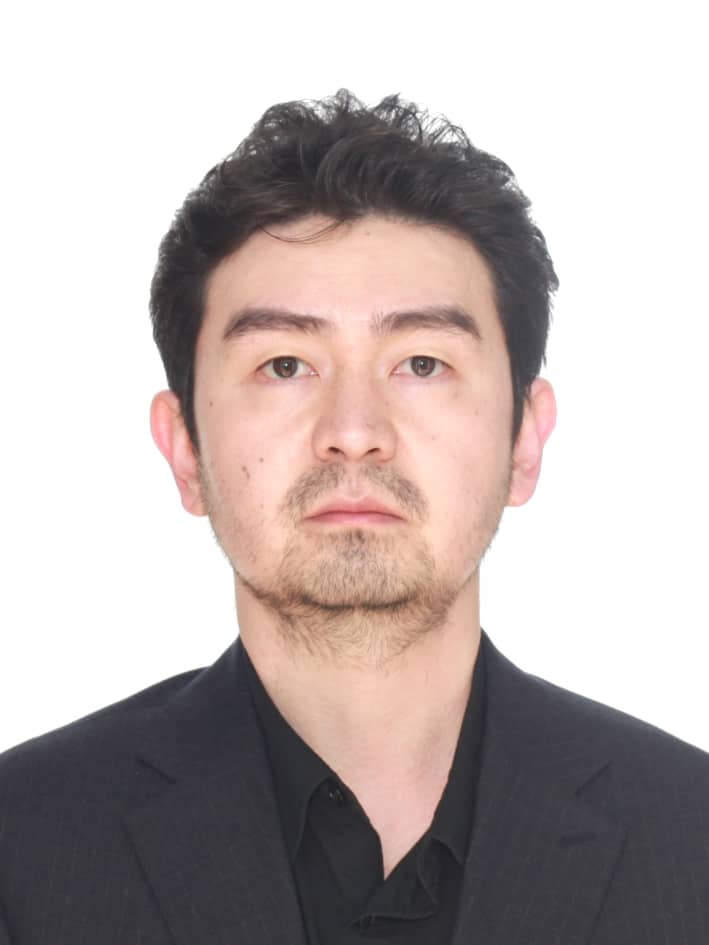
Dulat Ilyassov (Anthropology, Indiana University Bloomington)
“Queers as Producers: Labor, Space, and Comparative Urban Ethnography in Post-Soviet Central Asia”
This project examines the social production of queer spaces in post-socialist Central Asia through a comparative urban ethnography of Almaty (Kazakhstan) and Bishkek (Kyrgyzstan). It investigates how sexuality, labor, and urban space are co-constituted under conditions of post-Soviet capitalist transformation. As Central Asian societies transition from state socialism to uneven forms of neoliberal capitalism, queer life is reshaped by shifting regimes of property, labor, and governance.

Megija Milberga (Fine Arts, New York University)
“Insurgent Landscapes: Architecture and the Environment in the Soviet Baltics”
This dissertation explores for the first time how the natural environment, and specifically the landscape, figured in architecture across the Soviet Baltics to think through a series of questions. What does it mean for an architect to choose to follow the contours of a hill rather than flatten it? What political and cultural significance accrues when a building opens toward the sea on a shoreline previously closed to the public? And how do these gestures reveal alternative ways of inhabiting and understanding space? My dissertation argues that site-conscious architectural practices offer a critical lens for examining human-environment relations in the Soviet-era Baltic States (Estonia, Latvia, Lithuania). Working between four landscape conditions and tropes – the sea, the forest, the hill, and the soil – I set out to probe architecture’s role in mediating the dialectic between imposed system and situated knowledge, and produce the first ecocritical reading of Soviet architectural history, examining how built form both responded to environmental conditions and actively shaped their cultural meanings.
Dafina Nedelcheva (History, Stony Brook University)
“Liberation and Its Discontents: Gender, Monumentality, and the Layered Afterlives of Empire in Post-Socialist Bulgaria”
This dissertation investigates the enduring political power of imperial narratives in Eastern Europe through the contested memory of Russia as Bulgaria’s historical “liberator.” The study focuses on Soviet monuments as infrastructures of layered coloniality through which imperial narratives of liberation have been institutionalized, visually encoded, and repeatedly reactivated in political culture. Its core case study is the Monument to Bulgarian–Soviet Friendship in Varna. Built in 1978, the monument fuses Russia’s nineteenth-century role in the liberation from Ottoman rule with the Soviet narrative of antifascist victory, creating a powerful representation of the trope of the “double liberator.” Since the collapse of socialism, the monument has oscillated between neglect and political reactivation, illustrating how the “liberation” narrative persists in ongoing debates over memory, identity, and geopolitical belonging. This research seeks to illuminate the mechanisms through which historical narratives continue to structure political belonging in post-socialist societies. The Bulgarian case offers a particularly revealing example of how imperial afterlives persist, demonstrating that monuments function not merely as commemorative objects but as enduring infrastructures through which geopolitical identities and historical narratives are reproduced. Methodologically, the project combines archival and historical contextualization with visual and spatial analysis, treating the monument as a material–semiotic text and form of colonial pedagogy. By reframing Soviet monuments as colonial memory infrastructures, the dissertation advances a decolonial historical perspective on post-Soviet spaces and foregrounds gendered affect as a key mechanism through which imperial hierarchies are reproduced in the present.
Bakir Ovcina (History, Vanderbilt University)
Alfred J. Rieber Dissertation Research Grant in History
“The Drink and the Double Eagles: Alcohol Production and Consumption in Bosnia and Herzegovina between the Habsburg Empire and Interwar Yugoslavia (1878-1941)”
This dissertation explores alcohol as a window into political and social change in Bosnia between 1878 and 1941, spanning the transition from Habsburg imperial rule to the interwar Yugoslav ‘nation-state.’ At its core lies ‘rakija,’ a fruit brandy deeply embedded in daily life that remained constant even as empires collapsed, borders shifted, and political identities were remade. The project asks how alcohol production, regulation, and consumption changed during the transition – and what those shifts reveal about the relationship between states and societies. How did governments attempt to regulate a substance so tightly woven into daily life? What happened when imperial and national authorities sought to tax, reform, or restrict locally-embedded social practices? I posit that the social and environmental world surrounding alcohol often proved more durable than the political regimes themselves. Orchards, brandy stills, and drinking customs persisted amid dramatic political upheaval, complicating efforts by both the Habsburg and Yugoslav authorities to influence daily life. Alcohol offers a simple, yet revealing lens through which to examine continuities and ruptures in modern Eastern European history. Drawing on archival sources in German and Bosnian/Croatian/Serbian, the dissertation follows alcohol across its full lifecycle – from cultivation and distillation, through state laws and license systems, temperance activism and public health campaigns. In doing so, it places Bosnia’s diverse communities and overlapping imperial legacies at the center of larger conversations about modernization, governance, ideologies, and social change. Although the Habsburg and Yugoslav states disappeared, alcohol remains central to Bosnian social life. Orchards still dot the countryside, and debates around regulation and public health persist. By tracing the history of an ordinary, yet potent substance, the project demonstrates how everyday practices illuminate the contours and limits of political transformations, while also showing how people navigated those very transformations.

Monika Pendurkova (History, Indiana University Bloomington)
“In the Backyard of Empire: Second World Women’s Activism and Solidarity before the ‘Decade of Women’ (1953-1968)”
This dissertation aims to uncover the connections between Bulgarian and Cuban socialist women’s activists that had been established and cultivated years before the first UN conference on the status of women, which coincided with the 1975 International Women’s Year. These connections predated the official diplomatic visits that bounded countries based on a shared socialist future or revolutionary origin. With a focus on soft power actions rather than high politics alone, I show that smaller “Second World” states like Bulgaria established ties with Cuba that preceded the Cuban Revolution and notions of socialist solidarity, long before the thaw of the 1970s. As Maria Cristina Galmarini’s work on blind activism in the Cold War argues, international blind advocacy engaged with “non-Western ideas and visions” and “decenter[ed] Soviet hegemony” for a set of more “diverse global engagements and priorities.” Socialist activists acted as both ambassadors for the project of socialist internationalism and as activists for their respective constituents, exchanging practical knowledge and technologies. My intervention expands on these contributions by shifting focus to transnational socialist interactions between peer states for the preceding two decades before the global decade of the 1970s by examining soft power actions. I pose the following questions: (1) How did Bulgarian women seek alternative connections with other state socialist women within an inter-imperial framework? (2) What new understandings of Cold War internationalisms emerge when we look at earlier forms of socialist women’s solidarity? (3) How did transnational interactions between peer socialist states circulate in “ways that sometimes-confirmed political hierarchies and at other times challenged them”?

Anna Popovych (Sociology, University of Wisconsin-Madison)
Dissertation Research Grant in Ukrainian Studies
“Making Sense of War: Cultural Dynamics in Wartime Social Space”
This three-paper dissertation examines the war in Ukraine to understand the wartime cognitive and affective trajectories underlying war’s macro-level socio-demographic and political effects. The first chapter develops a framework for integrating cultural schemas into research on wartime fertility. It shows how wartime uncertainty interacts with reproductive schemas entrenched in Ukrainian society, producing forms of fertility reasoning that nuance and extend quantitative scholarship on war’s demographic impacts. The second paper reframes the concept of “deservingness” in migration research, highlighting the overlooked pressures on Ukrainian war migrants arising from perceived attitudes of the sending community, shaped by wartime solidarity discourses. The third project – funded by the ASEEES Dissertation Research Grant – examines how different interactional contexts of prosthetic treatment shape war veterans’ recovery processes and social identities. It involves ethnographic research at prosthetic centers in the U.S. and Ukraine that provide post-amputation care to Ukrainian veterans injured in the war.
Alexandr Shtumpf (History, University of North Carolina at Chapel Hill)
“Managed Exploitation and Cultured Recreation: Hunting and Environmental Imaginaries in the Late Soviet Kazakhstan”
This project examines hunting in late Soviet Kazakhstan as a site where state governance, social practice, and environmental knowledge intersected. By focusing on hunting infrastructure in the Kazakh SSR during the period from the late 1950s through the early 1980s, including hunting collectives, licensing systems, and game management institutions, it investigates how the state and society negotiated formal and informal aspects of the Soviet economy and how this negotiation shaped late Soviet environmental imaginaries. The dissertation analyzes hunting along two axes: the legal – extra-legal axis examining how individuals navigated state-imposed categories of hunter and poacher; and the professional – recreational axis investigating the role of hunting as both a highly regulated professional activity and a cultured recreational activity. Overall, by exploring how hunting fit into the late Soviet informal economy and how it affected human – animal relations, this dissertation seeks to contribute to both the social and environmental histories of Central Asia and the wider Soviet Union.

Adam Willson (Slavic Languages and Literatures, Northwestern University)
Joseph Bradley and Christine Ruane Research Grant in Russian Studies
“At the Margins of Soviet Empire: Epic Performance and Literature in Central Asia and Siberia”
This dissertation examines how late Soviet Central Asian and Siberian Russophone authors—Kyrgyz Chyngyz Aitmatov, Kazakh Olzhas Suleimenov, and Nivkh Vladimir Sangi—preserved and refashioned local epic performance as historiography, identity formation, and political critique within the framework of Soviet socialist realism. I argue that these authors’ distinctive style consisted in a dynamic combination of oral-derived performative techniques—lyrical and proverbial language, “thematic patterning,” dramatized improvisations of epic storytelling—and modernist textual devices drawing from Russian and Soviet literary and cultural paradigms. This hybrid literature connects contemporary Central Asian readers to the continuous, living tradition of their ancestors and unsettles top-down Soviet narratives while instantiating new national identities within the framework of Russian-language culture . Building on oral formulaic theory, performance studies, and decolonial thought, I develop the concept of the epic performative text to describe how these authors’ works outwardly conform to Soviet ideological forms while cultivating alternative histories, social and national affiliations, and sources of authority, rooted in hereditary communal practice. By reading Soviet non Russian literature through the lens of epic performance, my analysis traces an ongoing stewardship of traditional practice that bridges the Soviet period, thus intervening in scholarship that locates agency primarily in Moscow-sanctioned state institutions or dissident art and often treats oral performance and modern literature separately. My research contributes to an ongoing reassessment of Eurasian cultural studies that exposes the complexities of Russian prestige, decentering and actualizing it in its multiform correspondences with a non-Russian Eurasian historical perspective.
Diana Yayloyan (History, Georgetown University)
“Fugitive Ecologies in the Ottoman–Turkish Borderlands, 1870–1940”
This dissertation examines how contests over terrain, mobility, and property regimes across the eastern Anatolia–Transcaucasus borderland between 1870 and 1940 shaped both the everyday lives of local communities and broader processes of imperial and post-imperial transformation. Bringing together social and environmental history with scholarship on borderlands and fugitivity, it treats this region as a connected ecological space, linked by mountains, forests, seasonal labor routes, flight, fugitivity, and transhumant movement, rather than by the administrative boundaries imposed by states. Methodologically, I combine multilingual state and non-state archives with oral testimonies to reconstruct both official classifications of mobility and the lived practices from below that exceeded, evaded, or subverted them.
Summer Dissertation Writing Grant Recipients

Aiduosi Amantai (History, Binghamton University)
“Beyond Imperial Narratives: Kazakh Trade with the Qing and Russia (1730s-1820s)”
This dissertation examines Kazakh trade with the Qing and Russian empires from the 1730s to the 1820s. Drawing on Kazakh, Chinese, Russian, and Manchu sources, this project shows how Kazakh pastoral communities actively shaped trade and diplomatic relations in the region, particularly the terms of exchange with the Qing and Russia, and points to how Kazakhs’ systems of environmental adaptation compelled such commercial initiative. As it explains, exchange with Qing and Russian markets was closely tied to ecological conditions, especially to Kazakh nomads’ need to reduce livestock herd sizes during harsh winters and periods of likely herd loss. Further, by tracing the movement of livestock and other goods, this research demonstrates that the Kazakh steppe functioned as an “inland sea”: a vast and fluid space for commercial exchange whose roads (Kazakh migratory routes) and ports (steppe-based nodes for trade) were largely controlled and fostered by Kazakh tribes, whose nomadic environmental strategies made them active agents of the long-distance movement and exchange of goods across Inner Asia. In this telling, Kazakhs are not at the margins of global economic history, but critical in sustaining, repairing, and fostering the overland movement of commodities, being full participants in the global economic trends of their time.

Gaukhar Baltabayeva (Politics and Global Studies, Arizona State University)
“Exiled but Engaged? Possibilities of Activism among Russian Wartime Migrants”
Russia’s full-scale invasion of Ukraine in 2022 triggered a large wave of migration, producing new forms of political engagement among Russian migrants across diverse host-country contexts, predominantly in the former Soviet region and the EU. This dissertation examines why some Russian wartime migrants engage in activism in exile while others—despite prior experience of political participation—disengage, and how patterns of migrant political participation vary under conditions of mobility, transnational repression, and uncertainty. Drawing on two waves of in-depth semi-structured interviews conducted in 2024 and 2025 with Russian migrants across multiple countries, including Georgia, Armenia, Poland, and the Netherlands, the study offers a comparative account of migrant activism. The first chapter of the dissertation provides an empirical mapping of the post-2022 migration wave, highlighting its internal diversity in terms of timing, individual motivations, and socio-political profiles. It develops a typology of migrant engagement, distinguishing between different types and forms of activism, and traces how these evolve over time and across contexts. The analysis demonstrates that migrants’ engagement is shaped not only by prior activist experience under authoritarian rule in Russia but also by the uneven conditions of reception they encounter in their host countries, including legal precarity, economic constraints, and exposure to transnational repression. Building on these insights, Chapter 2 develops a theoretical framework to explain variation in migrant activism by linking structural conditions to individual-level perceptions. In particular, the framework identifies three key factors—legal security, economic security, and perceived efficacy—that jointly shape migrants’ willingness and capacity to engage politically. It proposes that while some migrants sustain or expand their activism in exile, others strategically withdraw or shift toward less visible forms of engagement in response to changing risks and constraints. Chapter 3 then assesses the explanatory power of this framework through an online survey experiment with Russian migrants, testing how perceived legal security influences willingness to participate in different forms of activism. By bridging insights from the literature on diaspora politics, migration, and authoritarianism, this dissertation contributes to a more nuanced understanding of political behavior in exile as well as Slavic, East European, and Eurasian studies more broadly. It highlights how activism is reconfigured based on migrants’ perceptions of risk and security stemming from Russia’s transnational reach and host countries’ legal regimes. Thus, rather than viewing migration as an enabling or constraining condition, the dissertation underscores the importance of considering both structural environments and subjective perceptions in explaining migrant engagement in activism.

Klaudia Cierluk (Comparative Literary Studies, Northwestern University)
“Somatic Dissidence: Self-Violence in Women’s Writing from the Communist Bloc and Dictatorship-Era Southern Cone of Latin America (1940s-1980s)”
Lena, the protagonist of Elżbieta Łapczyńska’s Bestiariusz Nowohucki (2020), is a Polish-Jewish metallurgist employed in Nowa Huta’s steel mill in the 1950s who ingests arsenic daily to cope with harsh working conditions. By allowing her body to deteriorate, Lena rejects the system that extracts labor and reproductive capacity from the sick and the poor. This project examines how contemporary Central European and Latin American literature represents acts of bodily self-harm (refusing treatment, self-poisoning, sabotage, and self-mutilation) as responses to intersecting forms of state, gendered, and environmental violence. Drawing on biopolitics, environmental humanities, and trauma studies, I argue that these texts imagine the body simultaneously as a site of labor extraction and as a medium of refusal. I term this paradoxical form of agency “somatic dissidence” as embodied practices through which self-directed harm interrupts regimes of productivity, medical control, and communist/neoliberal futurity. During the late twentieth century, the Communist Bloc of Central Europe and the dictatorship-era Southern Cone constituted parallel regimes of authoritarian control over bodies, labor, and everyday life. The central question of this project is why, and in what forms, the motif of self-violence appears across works by women authors from these regions, and in contemporary novels that revisit that period.
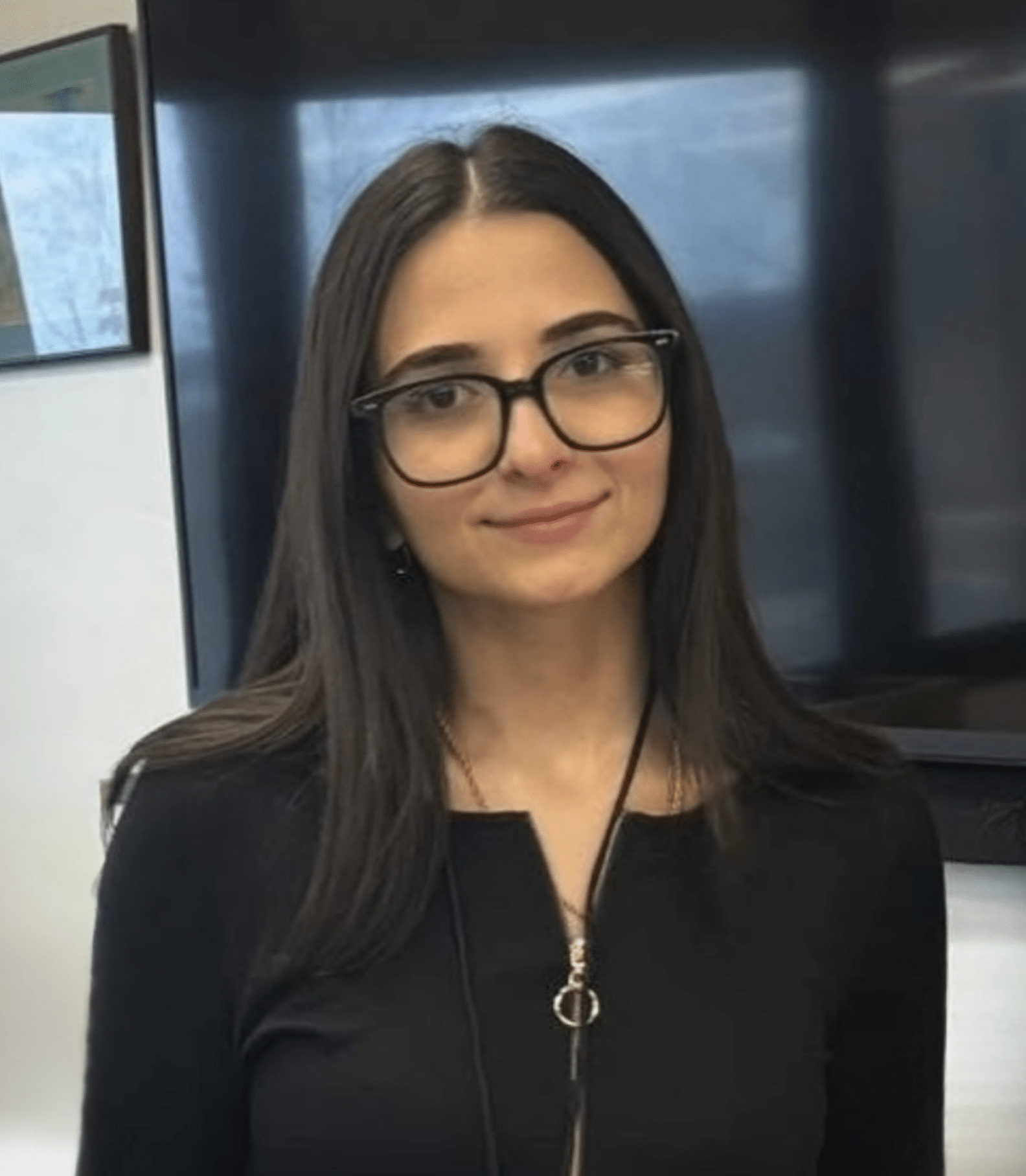
Mariam Donadio (Philosophy, Stony Brook University)
“The Artsakh Question: The Phenomenon of the Genocidal”
The traditional understanding of “genocide,” rooted in the 1948 United Nations Genocide Convention and largely accepted by theorists, analysts, and the international community, frames genocide as a single phenomenon or event with a beginning, middle, and end. It underscores intent (mens rea) as the element that transforms instances of violence into the crime of genocide. “The Artsakh Question: The Phenomenon of the Genocidal” argues that though the traditional understanding of genocide seeks to provide a foundation for international law, it constrains how genocidal violence is recognized, understood, and addressed. This project is twofold. On the one hand, it critiques the insufficiency of existing frameworks; on the other hand, it argues in favor of a framework of structural genocidal violence that offers a more comprehensive approach for identifying and addressing the full range of tactics used to destroy a people. It seeks to shift the focus from the crime of genocide alone toward an understanding of the phenomenon of the genocidal. It further argues that, by attending to the lived experiences of Armenians in Artsakh (Nagorno-Karabakh), we can better understand exactly how genocidal violence permeates every aspect of life.

Elena Hoffenberg (History, University of Chicago)
“Making a Living and Making a Life: Capitalist Crisis and Jewish Futures in Interwar Poland”
“Making a Living and Making a Life” asks how political and economic forms shape intimate life through studying the Jewish middle class in interwar Poland. Across the territories that today exist in Lithuania, Belarus, western Ukraine, and eastern Poland, Jews made up a disproportionate number of the merchants, artisans, and shopkeepers who formed the middle class of the region’s towns and small cities before the Second World War. This economic pattern formed Jewish social habits and cultural expectations. It also provided a powerful impetus to coterritorial nationalist movements to prioritize the creation of their own middle class through removing Jews from these economic positions. Focusing on areas of everyday life and family-making subject to economic pressures, each chapter traces how people respond to the gap between what they expect and what they experience. As a work of social and cultural history, my dissertation examines the actions and writings of a broad swath of individuals to uncover vernacular and historically-specific understandings of abstract concepts like the future, continuity, and investment.
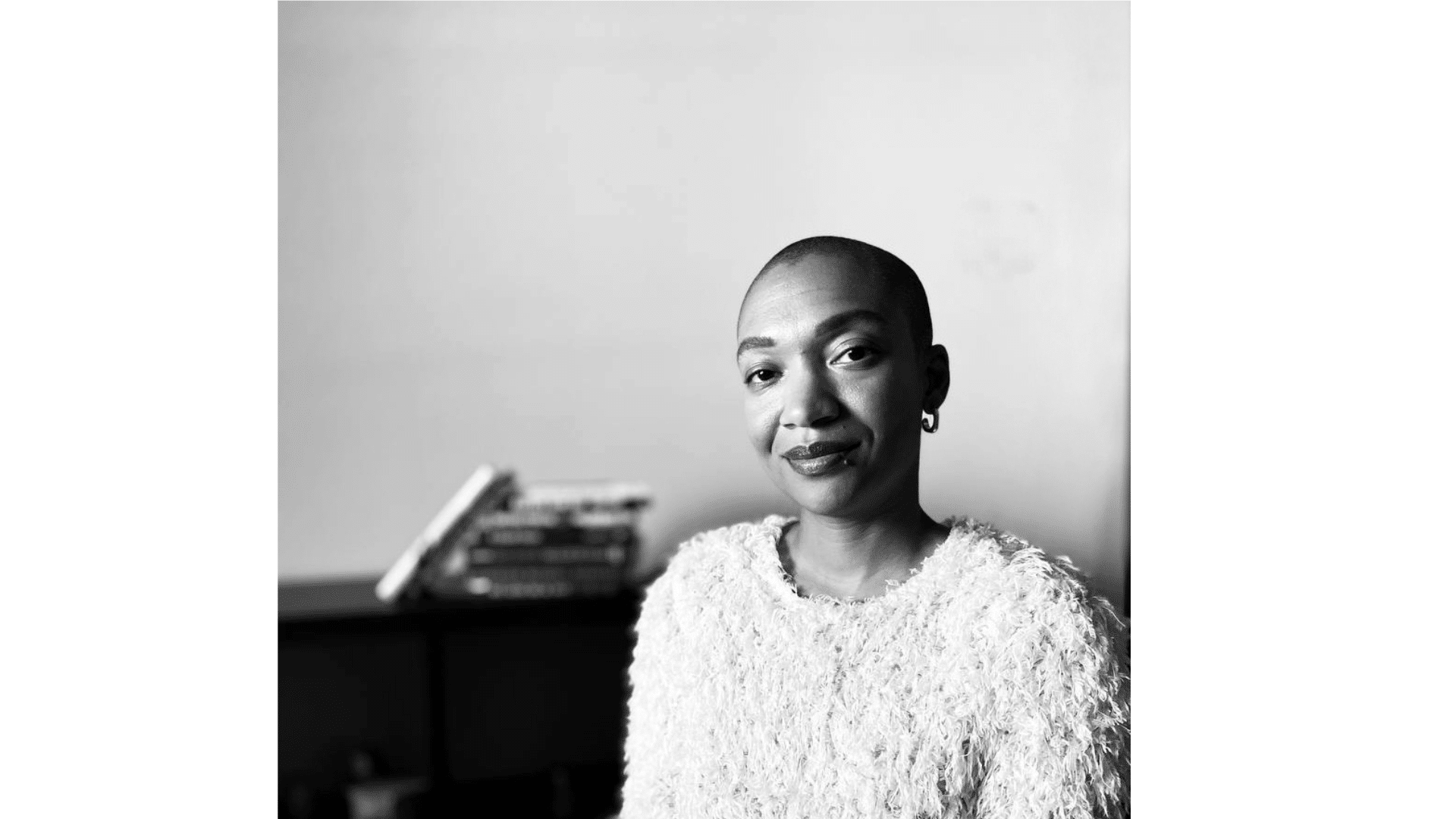
Alexa Kurmanov (Anthropology, University of California, Berkeley)
“Postsocialist Wake: Ethnographies of Trans Life in Kyrgyzstan”
“Postsocialist Wake” is an autoethnographic and interdisciplinary project which integrates Black Studies, Central Asian Studies, and anthropology to examine the lived experiences of the Kyrgyz trans community in present-day Bishkek. The project analyzes Kyrgyz trans life in the wake of Russian Imperialism and Soviet modernization, focusing on palimpsestic material and ideological remains within law, medicine, and regimes of documentation. These institutional structures, alongside national discourses of gender and nationality, often render the intersection of trans and Kyrgyz subjectivity as incompatible. Building on Christina Sharpe’s concept of the wake and Anne Stoler’s notion of duress, this project demonstrates how Kyrgyz trans life is conditioned by local and transnational “partial inscriptions” of empire historically underpinned by anti-Blackness. Analyzing trans Kyrgyz life through the lens of the wake, this project maps how the afterlives of empire and socialism persist within the transition to neoliberalism, ultimately revealing the region’s entanglement with global regimes of anti-Blackness. Overall, this dissertation project opens new ways to situate trans masculine, trans feminine, and nonbinary Kyrgyz experiences beyond national borders, integrating them into broader discourses of racial capitalism, global structures of white supremacy and global anti-Blackness.
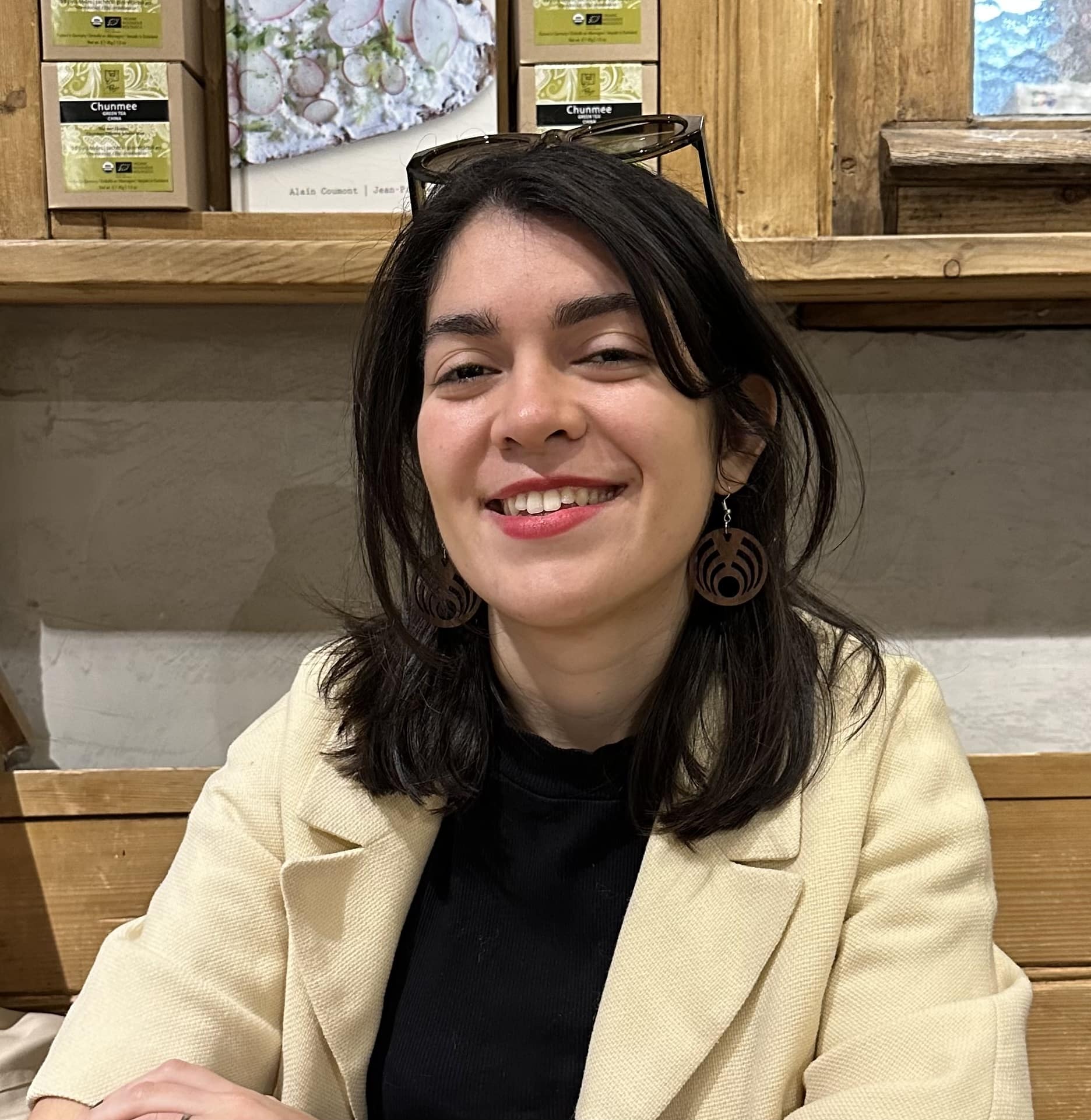
Maria Matilde Morales (Comparative Literature, Harvard University)
“The Facts of the Subject: Early Soviet Technophilia and the Turns to the Self”
This dissertation examines the relationship of artistic subject-formation to technology and information regimes. In the 1920s, Soviet avant-garde artists and intellectuals engaged in a sustained exploration of this question, as part of the project of postrevolutionary life-building (zhiznestroenie), the development of the new Soviet person, and the move away from so-called bourgeois subjectivity. This decade also marked a transition toward valorizing documentary aesthetics, the turn to fact, and the accompanying theorization of montage as a compositional method across media. Walter Benjamin, observing the process of resubjectivization during his stay in Moscow over the winter of 1926–1927, remarked positively on “the withering away of private life” under Bolshevism. My dissertation argues that, far from being abolished, private life was rediscovered as a crucial source of artistic material by artists in the 1920s and 1930s. Through a transmedia analysis of literary sources, visual art, and experimental documentary film, I consider how artists in this period sought to treat subjectivity and emotions as having factual existence. My work considers the Soviet case, with its ideological and historic specificities, in comparative dialogue with avant-garde circles in Poland, Latin America, and the United States.
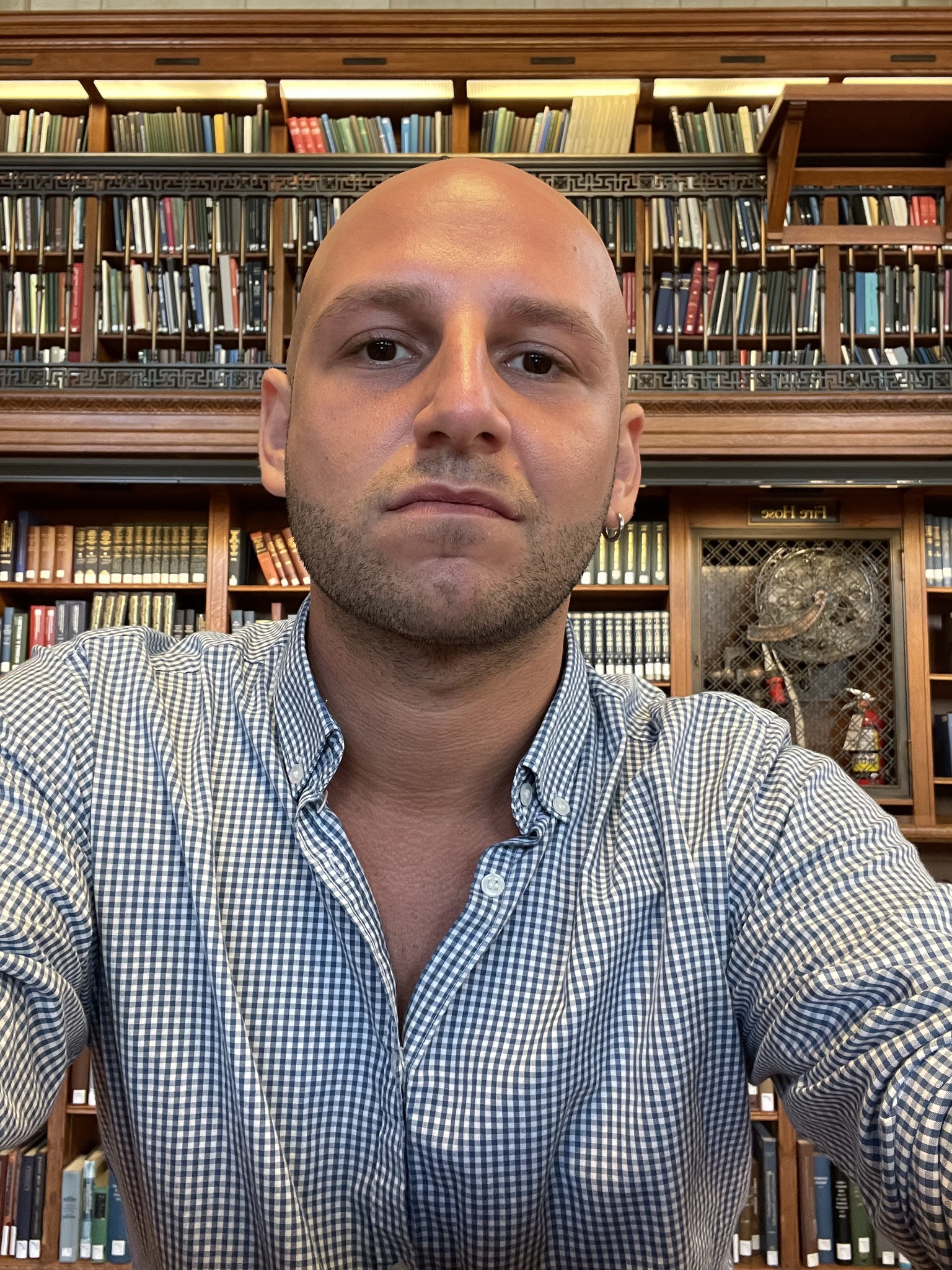
Nikoloz Nadirashvili (Art History, University of Washington)
“The Abuse of Faith: Secularized Christian Imagery and the Politics of Desire”
“The Abuse of Faith,” as the title alludes, navigates the conceptual dimensions of religiosity and sexuality; specifically, I trace how, in authoritarian contexts, the two are juxtaposed, sublimated into one another, and eventually come to substitute for each other. I base my analysis primarily on imagery produced within religious and political propaganda, as well as by those opposing such suppression—artists and activists. My chronology begins with the late years of Portugal’s twentieth-century Catholicism-based dictatorship, Estado Novo, and moves to the other extreme of continental Europe, Georgia, tracing its trajectory from the late Soviet period—when religion gradually regained popularity—to the neo-Soviet present, in which the Georgian Orthodox Church has openly consolidated oligarchic rule and reinforced authoritarianism, primarily by labeling all those committed to gender equality and sexual liberation as threats to Georgian identity. My forthcoming task examines the digital multimodal content produced by Church-allied social networks. Specifically, through series and computational discourse analysis, I aim to test the hypothesis that right-wing religious platforms intensify their propagandistic strategies at moments when the government’s positioning is most fragile, thereby functioning as a surrogate stabilizing force.

Anel Rakhimzhanova (Performance Studies, New York University)
“Moving Matters: Performing Modernity in Central Asia”
“Moving Matters” examines how infrastructures and practices for capturing movement—ranging from railroads and “agit-prop” to cartography and the moving image—have shaped ideas of modernity and their representation. Rather than following a linear chronology, the work is structured as a series of “performances of modernity,” each chapter investigating a specific method of enacting progress through shifting technologies and paradigms of movement in late Tsarist and Soviet railway projects, as well as contemporary commemorative and artistic repertoires. This research sits at the intersection of performance studies and Soviet and Central Asian history, utilizing interdisciplinary approaches to examine the material and embodied aspects of logistics, human mobilities, and environmental transformations.

Bita Takrimi (Slavic Languages and Literature, Northwestern University)
“Memory, Poetics, and Cultural Exchange in Modern Eurasian Literature”
This dissertation examines the relationship between memory, poetic language, and cultural exchange in modern Eurasian literature. Bringing together literary analysis, translation studies, and theories of poetics, the project explores how writers and poets negotiate questions of identity, history, displacement, and artistic form across periods of political and social transformation.