
Wednesday, November 05, 2025
Margaret H. Beissinger Edits The Oxford Handbook of Slavic and East European Folklore
Margaret H. Beissinger edited The Oxford Handbook of Slavic and East European Folklore with Oxford University Press.
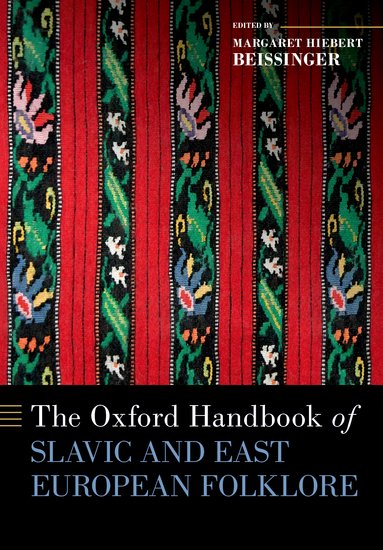
The Oxford Handbook of Slavic and East European Folklore (Oxford University Press) provides a wide-ranging survey of the oral traditions of the Slavic and East European world. It covers national, ethnic, racial, cultural, linguistic, and religious groups extending from the eastern zones of Russia to the western borders of the Czech Republic and from Estonia along the Baltic Sea to Greece at the southern tip of the Balkan Peninsula. The volume presents this broad world area – loosely connected by circumstances of geography, history, and politics – as a large and diverse cultural continuum.
In forty-three chapters written by scholars ranging from folklorists who are natives of the Slavic and East European region to British and North American specialists in the field, Editor-in-Chief Margaret Hiebert Beissinger presents an extensive array of distinctive yet comparable traditions, rituals, and genres. Divided into five sections, the volume includes: the folklore and lyric genres of the life cycle (wedding, birth, and death rites); calendrical-cycle traditions, dance, magic, and folk belief; traditional prose and poetic narrative; oral traditions among minority ethno-religious and racial communities, as well as folk and popular music and song; and the folklore of everyday life, including aphoristic verbal forms and material culture. The volume’s chapters focus on folklore of the nineteenth through the twenty-first centuries, from the very “traditional,” to contemporary issues that influence folklore and expressive culture, such as life-changing pandemics, ethnic conflict, and war, as well as evolving gender roles. The handbook features a wide assortment of materials for an audience of students and specialists alike: folklorists, ethnographers, anthropologists, ethnomusicologists, and literature scholars, as well as others who wish to explore the rich oral traditions of the Slavic and East European world.