

Winter 2024

In This Issue
Table of Contents
Critical Forum: Empire and Decolonization
687
Emptiness against Decolonization: Reflections from the Imperial Fault Line in Eastern Latvia
Dace Dzenovska
Abstract
With the Russo-Ukrainian war, the language of decolonization has become central to scholarship on eastern Europe. Yet, residents of Lielciems in eastern Latvia find it hard to orient in a political field defined by the binary of colonized and the colonizer. They live in a place that is losing its constitutive elements due to a variety of other “de” processes—deindustrialization, depopulation, and devaluation. They live amidst absences rather than unwanted presences. They wish for someone—the Chinese, NATO, or the European Union—to establish some permanent structure that could bring back life to their place of residence. Otherwise, the place is doomed to empty out completely, and their children are destined to permanently settle abroad. Based on an ethnography of an emptying town, this article outlines the limits of the politics of decolonization and argues for the use of the lens of empire for analyzing the intersecting forms of power that shape Lielciems, Latvia and eastern Europe today.
Viewpoints
705
The Empires within Us—Or Can We Really Talk about Postimperial Subjectivity?
Emanuela Grama
Abstract
It was about the dreams that I first thought of when reading Dace Dzenovska’s thought-provoking article. What are the residents of Lielciems dreaming about? Do they dream of empires? I wonder, if we view the former USSR as an empire, can we further disentangle the recent past of people of Lielciems as imperial actors from their overwhelmingly ahistorical present, where they seem to have been forgotten by almost everyone—or, at least, anyone who could offer them a new visibility and dignity.
709
On The Subjects and Objects of Decolonization
Kevin M. F. Platt
Abstract
This response to Dace Dzenovska’s article “Emptiness Against Decolonization” engages with her account of the social and political experience of the residents of “Lielciems” in eastern Latvia as a form of inter-imperiality, which has been defined by Laura Doyle as the “fraught condition” shaped by “multiple vectored relations among empires and among those who endure and maneuver among empires.” In the case of Lielciems, the contradictory implications of life on the “imperial fault line” bring to light pitfalls of discourse concerning decolonization in eastern Europe more broadly. Attention to the voices of Lielciems and other places like it—the voices of people who are the object of the decolonial aspirations of others—may allow us to make necessary corrections in our use of this term and of processes of decolonization in our disciplines. First and foremost, we must remain cognizant of the multiple uses to which the term has been put across the region, not all of which are beneficent, and of the failings of western empire in the past decades, even as we condemn the neoimperial violence of the Russian Federation.
714
On Violence: A Response to Comments
Dace Dzenovska
Abstract
This a reply to Emanuela Grama’s and Kevin Platt’s comments to my article “Emptiness Against Decolonization: Reflections from the Imperial Fault Line in eastern Latvia.”
Articles
718
A Poet Among Languages: The Multilingual Identity of Karolina Pavlova
adrian wanner
Abstract
Karolina Pavlova (1807–1893), Russia’s foremost female poet of the nineteenth century, was a polyglot writing in Russian, German, and French. Her native trilingualism facilitated a fluid and performative ethno-linguistic identity at odds with the tenets of monolingual nationalism that pervaded at the time. While Pavlova has received considerable attention from feminist critics, her multilingualism remains an understudied topic. This article addresses Pavlova’s polyglot upbringing, her multilingual romance with the Polish poet Adam Mickiewicz, the strategic stakes of her career as a trilingual poet and translator, the perception of her as a non-Russian by her Slavophile contemporaries, and her own conflicted attitude toward her Russianness revealed in the 1854 poem “Razgovor v Kremle” and her German adaptation of Mikhail Lermontov’s poem “Rodina,” published 1893 in Germany. In a wider sense, the article argues that the nineteenth century should be put on the map of the emergent field of literary multilingualism studies.
736
Reading Faster: The Emergence of Postsocialist Productivity Practices in Czechoslovakia/Czech Republic, 1970s–2000s
jan arend
Abstract
Recent historical studies on the origins of the postsocialist order in eastern and central Europe have adopted a “long transformation” perspective. They emphasize the importance of state socialist economic and political experts who, as early as the 1970s, began to think in ways that would prove compatible with neoliberal governance after 1989/91. Sharing this interest in longer genealogies of the postsocialist transformation, the present article shifts the focus of attention from the history of expertise to the everyday practices and “work on the self” of members of the urban and educated classes. It presents a microhistorical study of courses for students and white-collar workers that were offered by psychology coach David Gruber from the 1980s in Czechoslovakia and focused on intellectual productivity skills such as speed reading. These courses provide a unique insight into how people worked on themselves to become more effective in order to adapt to the newly emerging postsocialist world. The present article points to hitherto understudied continuities in the understandings and practices of productivity between the socialist and postsocialist periods.
755
The Musical Teahouse: Yalla and the “East” as Performance in Soviet Popular Culture
Claire Roosien
Abstract
This article examines the “East” as a performance practice in late Soviet culture through the case study of Yalla, arguably the most popular Central Asian band of the 1970s and 1980s and a hit performer across the entire socialist bloc and the Global South. It argues, first, that Yalla’s performance of the East changed over time, from the band’s origins in the Beatlemania of the early 1970s to the perestroika moment of nascent marketization; and, second, that the East functioned as an ambiguous category that evoked multiple resonances to multiple audiences and lent itself to a range of different political projects. Roosien concludes that Yalla’s performance of the East cannot be fully understood outside the material circumstances in which the band worked and the political world in which they functioned.
775
Subversive Modernity: Popular Institutions and Peasant Autobiographies in Poland at the Turn of the Twentieth Century
Bartłomiej Błesznowski
Abstract
Over the recent years, Polish historiography has experienced a noteworthy “people’s turn.” Regrettably, these works tend to reinforce stereotypes that portray the peasantry as a politically inert “mass.” The objective of this paper is to challenge this portrayal of the Polish peasantry as a largely passive majority lacking effective means of contestation. To accomplish this, I delve into an analysis of peasant self-organization during the turn of the early twentieth century in Galicia and the Kingdom of Poland. My investigation is based on a micro-historical approach, drawing upon autobiographies authored by activists engaged in rural cooperatives written in the initial decades after World War II. The cited autobiographies provide plenty of specific evidence regarding plebeian collective agency. By juxtaposing the political perspectives of modern institutions with the vernacular categories of actors within specific historical circumstances, I aim to ground theoretical conclusions in an asynchronous and subversive vision of modernity.
794
Soviet Architects and the Zhdanovshchina at Home and Abroad
Katherine Zubovich
Abstract
The zhdanovchshina transformed Soviet culture in the late 1940s. This article examines how the late Stalinist ideological campaign affected Soviet architects whose postwar work spanned domestic projects and international engagements. Opening with an account of the controversy in Moscow in 1948 over a new textbook on the history of urban planning, the article follows architects as they traveled abroad, representing the USSR at the International Union of Architects. The article explores the interplay between these two spheres of domestic and international activity, arguing that the zhdanovshchina caused Soviet architects to alter their global behavior. It reshaped domestic discourses and practices while spilling into the international arena, fueling Cold War tensions, and reconfiguring postwar internationalism. Soviet architects deployed the zhdanovhshcina abroad, using it to forge relations with their counterparts in the communizing world. When taken abroad, the zhdanovshchina facilitated the emergence of a global socialist urbanism just beginning to form in the postwar years.
Review EssayS
812
Does Ukraine Have Histories?
Georgiy Kasianov
819
The Art of Performing Queerness and Gender in Russia: Contemporary Debates
Tatiana Klepikova
824
Old Songs about the Most Important, or the Failure of Political Imagination in Post-Soviet Russia
Pavel Khazanov
Explore More Issues
View All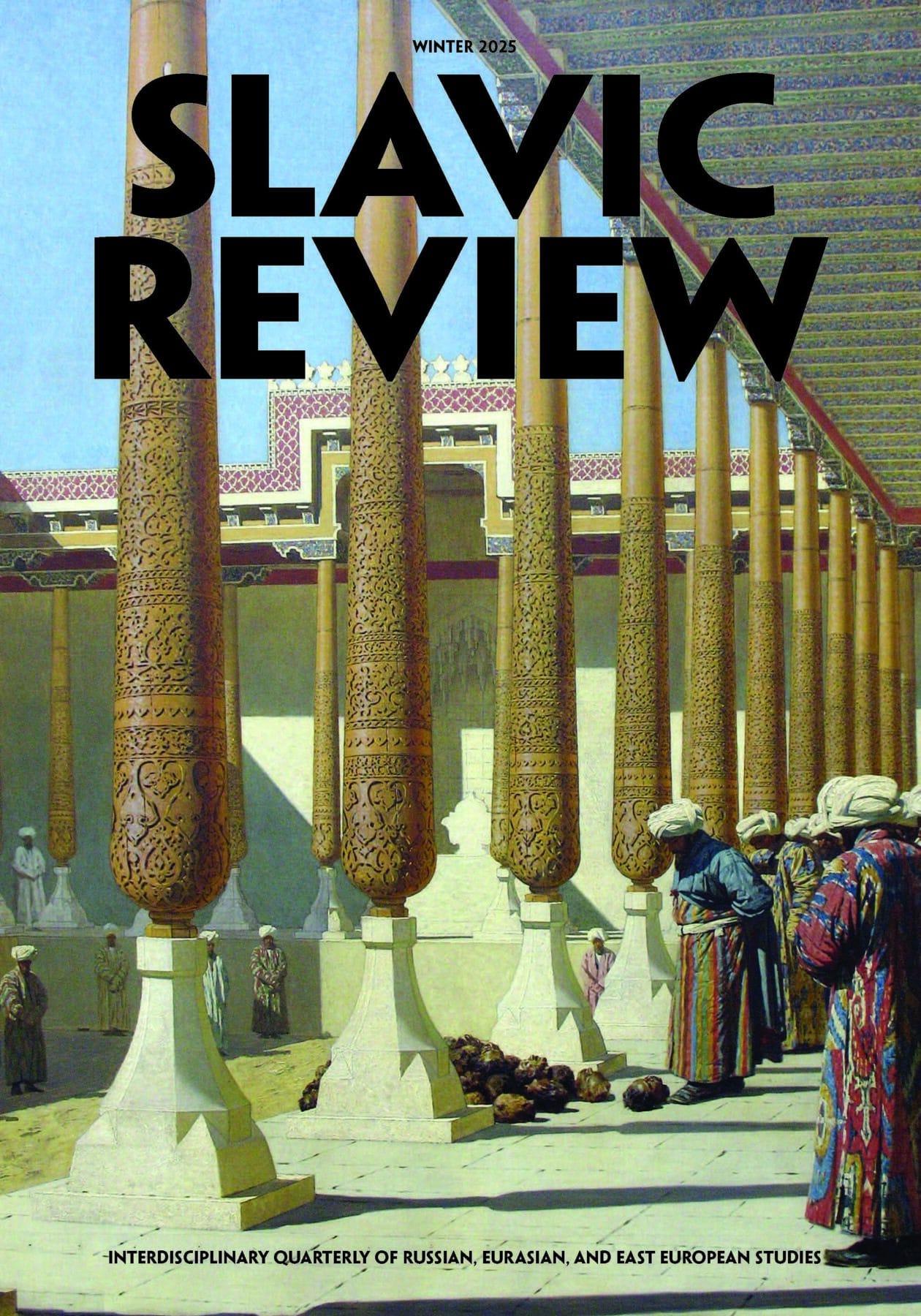
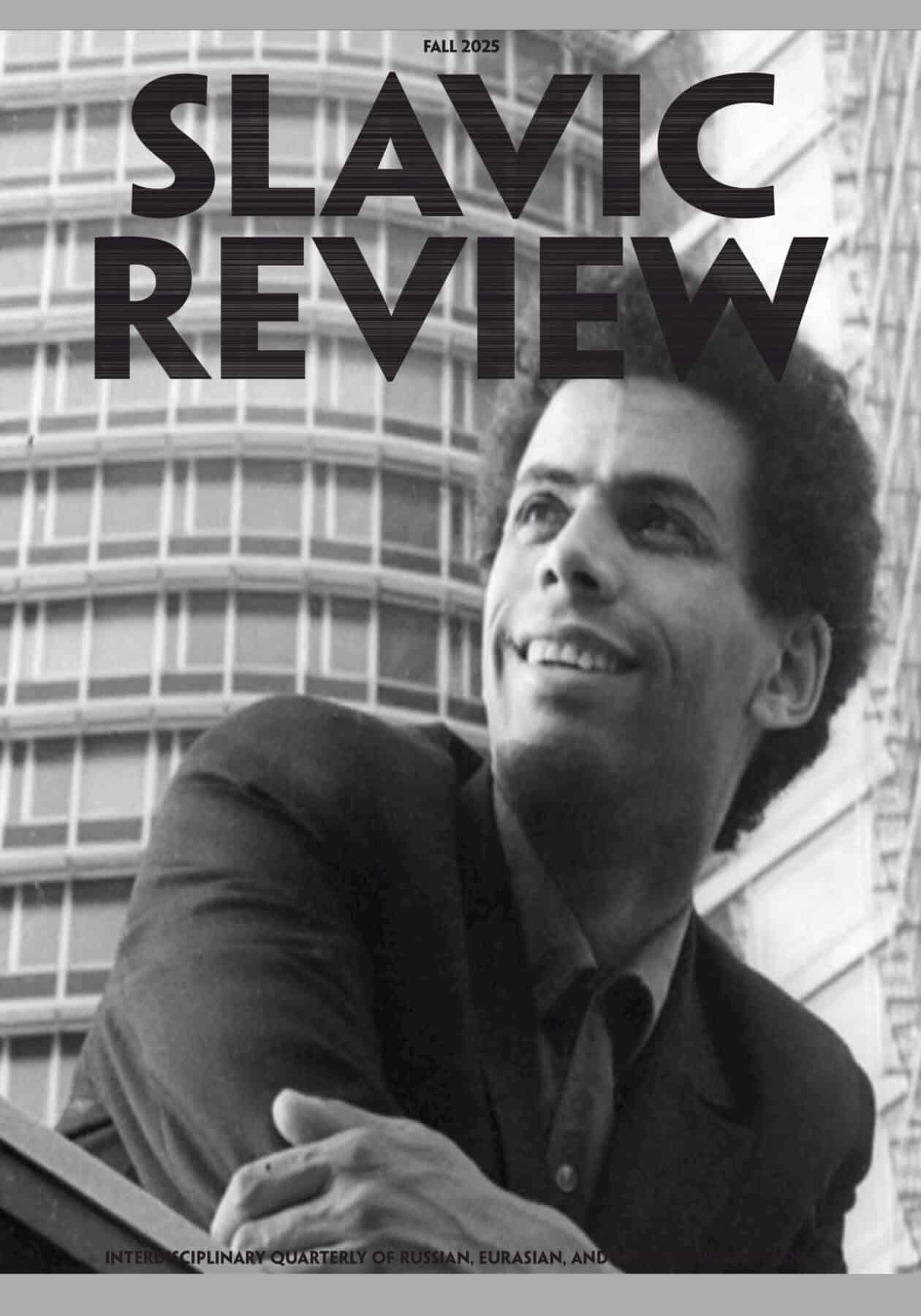

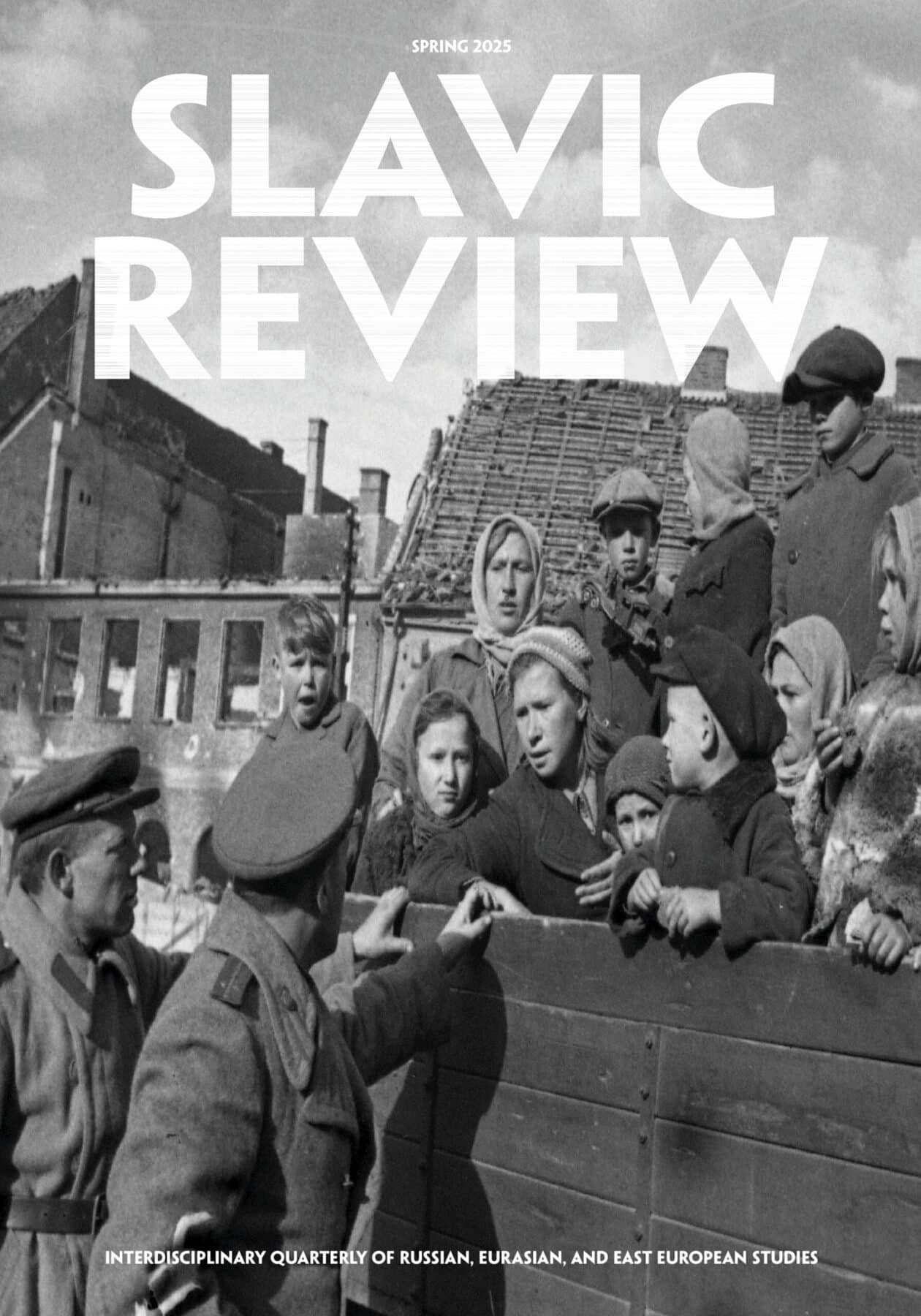

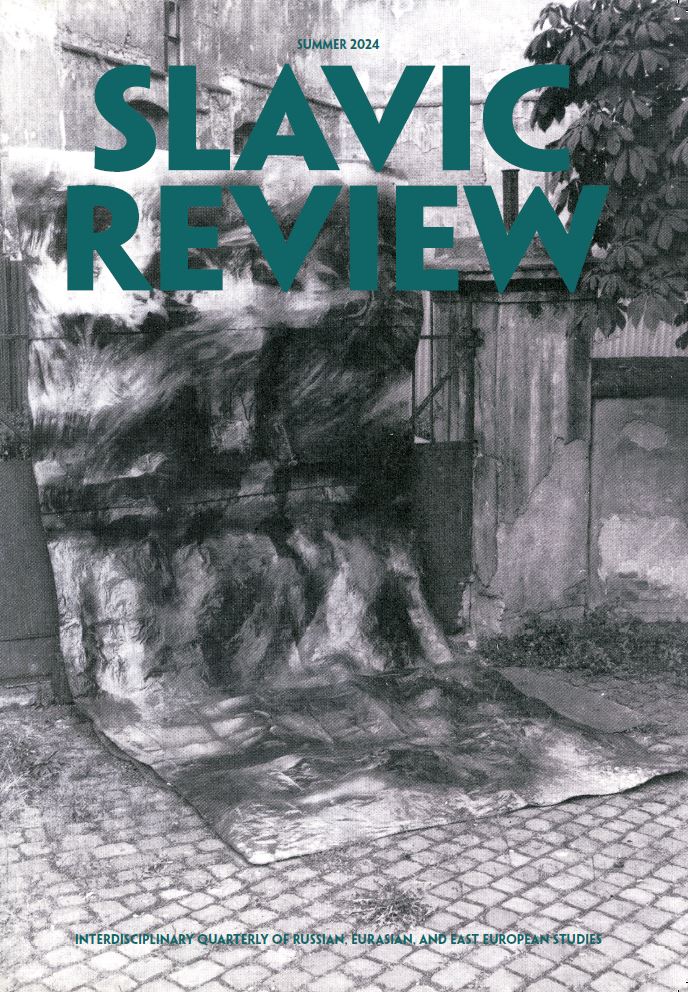

Submission information
Submissions from all disciplines and perspectives are welcomed. A primary purpose of the journal is to encourage dialogue among different scholarly approaches. Articles are peer-reviewed and editorial policy is guided by an international editorial board.
Subscribe to Slavic Review
Subscribe to Slavic Review by becoming a member of ASEEES. Institutional subscriptions are available through Cambridge University Press.