

Fall 2025
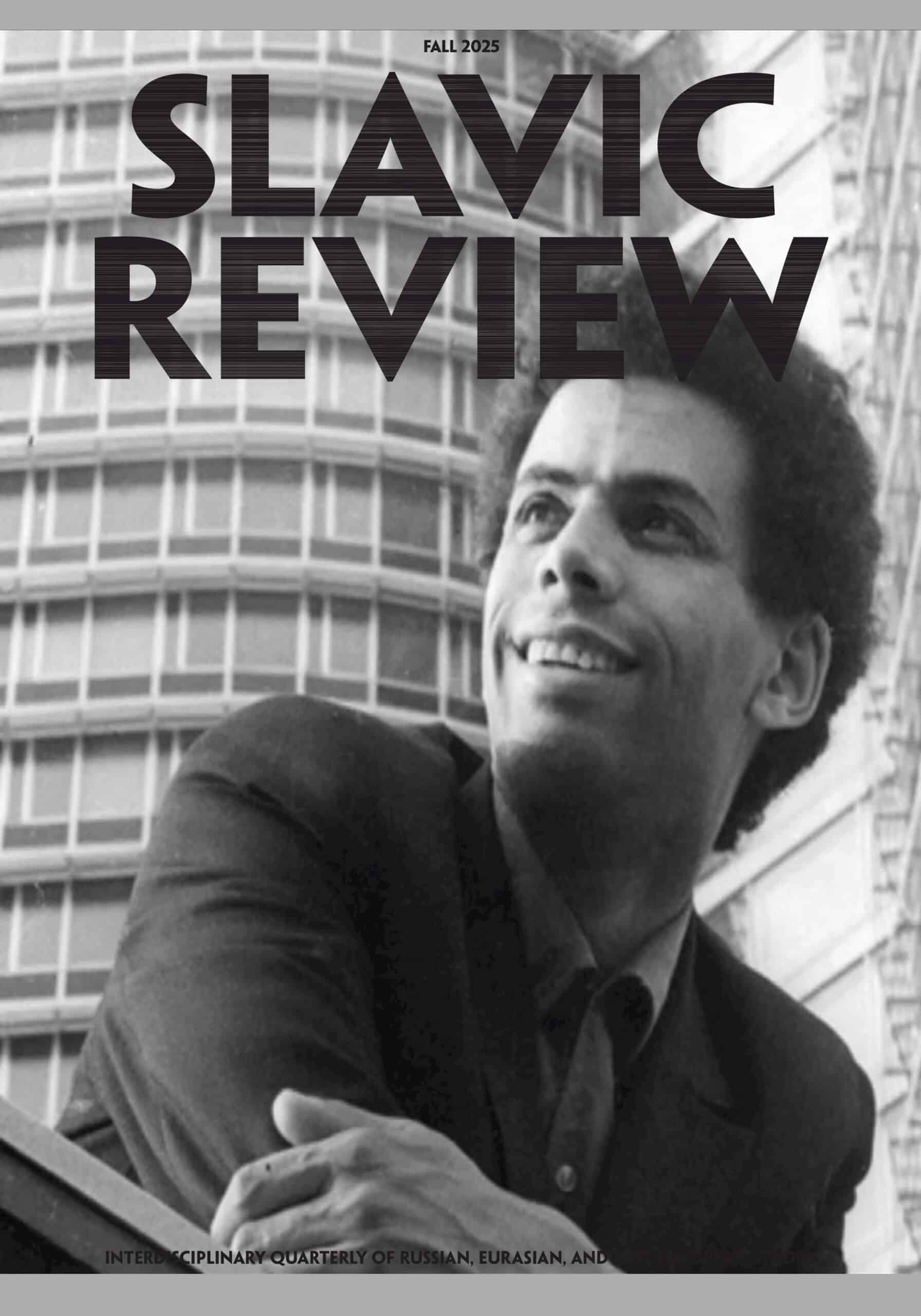
In This Issue
TABLE OF CONTENTS
CRITICAL FORUM ON BLACKNESS IN SLAVIC, EAST EUROPEAN AND EURASIAN STUDIES
467
Introduction: On Black Life and Blackness in Slavic, East European, and Eurasian Societies
Nana Osei-Opare and Sunnie Rucker-Chang
Abstract
This is the Introduction to the Critical Forum on “Blackness in Slavic, East European and Eurasian Studies”
474
Transnational Blackness: Re-reading Louise Thompson Patterson’s Encounter with the Soviet Union in 1932
Tatsiana Shchurko
Abstract
This article examines African American intellectual Louise Thompson Patterson’s 1932 journey to the Soviet Union as a lens through which to explore transnational Black radicalism, intersectional politics, and the complexities of racial identity across ideological borders. It argues that Patterson’s experiences reveal both her political commitments and contradictions of Soviet internationalism for Black women seeking alternatives to racial capitalism and gender oppression. Rather than viewing her engagement as naïve or disillusioned, the article situates it within a historically rooted, politically intentional search for liberation. The paper further contends that Soviet reactions to Patterson’s identity illuminate a rigid understanding of blackness, complicating claims of anti-racism and revealing internal hierarchies. By analyzing Patterson’s unpublished writings alongside broader historical currents, the article contributes to a deeper understanding of Black women’s transnational activism, the racial politics of the Soviet Union, and the ongoing challenges of forging solidarity across different conceptions of race and justice.
487
At the Margins of Blackness: “Coloured” South Africans in the Soviet Union
Hilary Lynd
Abstract
This essay looks at blackness in the USSR from its contested margins. Focusing on South Africans categorized as “Coloured,” I explore dynamics of translation, solidarity, misunderstanding, and invisibility that arose when differing systems of racial classification interacted. In South Africa under segregation and apartheid, an intermediate category emerged between the dominant white minority and the subjugated black majority: Coloured. As the USSR became involved in South African anti-racist struggles, Soviet citizens did not know how to see and understand these lighter-skinned people who did not fit neatly into Soviet preconceptions about darker-skinned people of African descent. A handful of Coloured activists took on particularly prominent roles representing the plight of black South Africans for Soviet audiences, and being lighter skinned shaped their experiences of the USSR in significant ways. Traversing the realms of Soviet policy, scholarship, cultural production, and everyday interactions, we see remarkable inconsistency in how Coloureds were regarded: as invisible and also hypervisible, artificial and also real, black and also not black. This essay traces Soviet trajectories of the liminal category “Coloured” to explore the extraordinary chaos at the edges of blackness in the USSR.
497
On Blackness and Belonging in Kazakhstan
alexa kurmanov
Abstract
This essay examines how blackness is lived, perceived, and negotiated in (post)socialist Kazakhstan by placing the experiences of two “dual heritage” women—Aminata Uė drаogo, a contemporary media personality, and Yelena Khanga, a Soviet and Russian-era journalist—in conversation. Prompted by a visit with Uė drаogo in Almaty, I use autoethnographic and Black feminist methods to explore how blackness functions as both a limit and a possibility within shifting frameworks of race, ethnicity, and national belonging. While scholarship on intermarriage and ethnic mixing in Soviet Central Asia exists, contemporary experiences of people of African descent—particularly women—remain largely absent. Through their narratives and embodied experiences, I argue that blackness in Central Asia complicates the presumed rupture between socialist and post-socialist periods and unsettles dominant Eurocentric paradigms of race. This analysis calls for further inquiry into African diasporic presence and theorizations of blackness in Slavic, East European, and Eurasian contexts.
506
Blackness and Soviet Creative Education: African Writers at the Gorʹkii Literary Institute
Olga Nechaeva
Abstract
This article examines the experiences of African students at the Gorʹkii Literary Institute in the 1960s and 1970s, a period when the Soviet Union positioned itself as a champion of anti-imperialism and racial equality. Through case studies of Gaoussou Diawara and Fikre Tolossa, it explores the contradictions between the public celebration of African writers and the more complex, often racialized, dynamics they encountered. While officially embraced as symbols of socialist internationalism, these students were also subject to exoticization and subtle forms of exclusion. Based on archival materials, memoirs, interviews, and literary texts, the article argues that African writers in the Soviet Union responded to these tensions with ambivalence, expressing admiration for the Soviet project while downplaying or reframing discrimination. Their experiences reveal how the ideals of socialist solidarity retained meaning even when undermined in practice, offering insight into the strategic ways postcolonial intellectuals negotiated belonging, dignity, and ideological commitment.
515
Promises of Blackness in the State Socialist Public Sphere in Poland
Thục Linh Nguyễn Vũ and Margaret Ohia-Nowak
Abstract
This article engages with the construction of blackness in the socialist public sphere in state socialist Poland by analyzing two case studies: the visit of Kwame Nkrumah to Poland and the career of the US basketball player Kent Washington. While these two cases are embedded in different historical and political moments, they reveal how blackness was familiarized in a visually concrete yet abstract way. What were the promises that came with how blackness was constructed in the late socialist public sphere? How did they resonate within diasporic communities? Drawing on various types of sources, we argue that blackness in the public sphere was neither a danger nor the antithesis of whiteness but revered for political purposes. This framing of blackness—as postcolonial political empowerment or successful career in sport—also created unrealistically high bars for the visual incorporation of Black people.
524
Our Blackface Sounds Familiar: Historical Imitations of Blackness in Poland
Łukasz Zaremba and Maciej Duklewski
Abstract
Although blackface minstrelsy is considered to be one of the first American pop culture products, its circulation in central and eastern Europe is relatively unknown. This article engages with the history of blackface performance and imagery in Poland, treating it as a lens granting insight into ways of imagining blackness in the region. It focuses on the interwar period as a time of rapid adaptation of colonial imagination with its global racial hierarchies in the public sphere of the newly independent country. Against the ideology of “colonial exceptionalism” and “white innocence” based on an assumption that Poland—as a state with no history of overseas colonies and Black slavery—is free of anti-black racism, we describe the active involvement of large groups of society in transnational colonial imagination, developed especially in the sphere of entertainment. The article not only demonstrates the existence of the tradition of blackface in Poland and reconstructs its distinct character but also suggests structural determinants that continue to affect ideas about blackness in Poland today.
537
Invisible Men: Blackness and Performance in Interwar Romania
Alexandra Chiriac
Abstract
This essay explores possibilities for theorizing blackness in relation to modern art and performance in Romania by tracing the trajectories of two African American men who spent significant time in the country. Dancer Bob Hopkins performed with Romanian entertainment troupes for a decade before being deported, while entertainer and cabaret manager Peter Johnson settled in Romania and continued to perform for factory workers under state socialism. Drawing on Paul Gilroy’s concept of the Black Atlantic (1993), the essay centers the experiences of Hopkins and Johnson, providing new perspectives on transatlantic cultural exchanges. It further examines the participation of Romania, and eastern Europe more broadly, within global racial hierarchies and formations, drawing on recent scholarship. It concludes by considering the challenges of such research and interrogating the (im)possibility of recovering traces of the Black experience in Romania, while nonetheless advocating for a reckoning with the specters of past histories.
546
The Racialization of Roma as “Black” in Interwar Romania and Beyond
Marius Turda and Bolaji Balogun
Abstract
This article addresses the underrepresentation of “blackness” within Critical Whiteness Studies (CWS), which has historically concentrated on the United States, westernEurope, the Caribbean, and Latin America. Despite calls for global expansion, CWS has so far inadequately engaged with the ways in which individuals perceived as “Black” were excluded from the idealized national community in Central and Eastern Europe (CEE). The marginalization of blackness profoundly
influenced discussions around national belonging throughout the twentieth century and continues to shape debates on race in the region today. We
re-examine the significance of blackness, particularly through the racialization of Roma communities in interwar Romania and the implications of blackness elsewhere in CEE, while challenging the portrayal of this region as homogeneous and exclusively white.
555
Racial Logics of Antiblackness and Anti-Romani Racism: A Relational Analysis
Chelsi West Ohueri
Abstract
Building on my research about racialization and marginalization, this article examines race and the global color line in terms of antiblackness and anti-Romani racism, asking how such inquiries can shed light on the ways that blackness and whiteness are configured across Southeast Europe and Europe as a whole. This paper has three primary goals: the first is to probe the complexities of the meanings of blackness. The second aim is to examine antiblackness and anti-Romani racism as parallel processes configured by European whiteness. The third objective is to explore how this type of critical analysis can expand scholarly inquiry beyond the discourses that move beyond race as individualized and immoral, and towards more comprehensive examinations of regional and global racial logics that structure social relations.
563
Lorde in Serbia: (Re)conceptualizing American and Proposing Mahala-Blackness at the Semi-Periphery
Jelena Savić
Abstract
Audre Lorde (1934–1992), a renowned figure in the American Black feminist canon, shaped feminist and antiracist struggles globally, including those in Europe. Drawing on Piro Rexhepi’s framing of the Balkans as a white enclosure marked by European colorblindness, non-aligned racial innocence, and semi-peripheral “desire for the West,” I use content-based digital ethnography to examine Lorde’s presence in Serbian feminist production since the 2000s. The results show that while Lorde’s figure circulates, the engagement with her work stays mainly quotational, decontextualized, and stripped of racial specificity. Relying on critical theory of blackness, especially the work of Hortense Spillers and Afropessimist thought of Frank B. Wilderson III, I argue that Lorde in Serbia does not escape the American race grammar. The symbolic use of her work signals antiracist virtue, allowing the wounded semi-peripheral white subject proximity to global liberal whiteness. At the same time, Lorde’s blackness anchored in American geopolitical dominance remains canonical, while local Roma mahala-blackness stays unacknowledged, if not impossible.573
The Russian Image of the Black: On Matters of Race and Perspective
mina magda
Abstract
This paper analyzes imperial Russian images of Black captivity from the mid-nineteenth century. I am concerned foremost with Karl Briullov’s formal techniques for picturing the deferential figure of the Moor. A deracinated, mobile signifier of wealth and sovereignty, the Moor depicts captivity through ornamentality: an aesthetic procedure that attests to the figure’s taming, domestication, and attempted assimilation within the narrative of Russian imperial ascendancy. The Moor belongs to everywhere and everyone yet is made to project national fealty whenever it appears. Of course, to designate a single image or figuration of the Black as “captive” is tautological: within theories of the Black’s interfacing with performance, visual, and media technologies, the compulsion to act, show, and be seen restates captivity, spectacularity, and death as preconditions for the representation of embodied Black life. I argue that in its perspectival alienation on the Russian canvas, the Moor—a generic image of the Black—both materializes Russia’s construction of a racial imaginary and alerts us to its place in global regimes of race-making.585
Reflections: The Myriad Shades of Blackness
allison blakely
ARTICLES
589
Modes of Masculinities among the Yugoslav Workforce in Postcolonial Zambia
rory archer
Abstract
This contribution explores the non-aligned era labor migration of Yugoslav men to postcolonial Zambia. Based on oral history and archival research conducted in Lusaka and Belgrade, it seeks to provide a gendered account of Yugoslavs negotiating their role as white Europeans in a postcolonial milieu and the ways in which Zambian colleagues understood Yugoslavs to have positioned themselves. Drawing upon contemporary social anthropological research from post-Yugoslav space, I argue that two modes of masculinities were in simultaneous operation and can help to make sense of the tensions inherent in the role of Yugoslav male workers in Zambia. An adventuring young Yugoslav man (“frajer”) might have driven fast, drunk heavily and boasted about sexual conquests, but according to the motif of the “father” the same person would also understand himself as a provider, whose responsible, serious and protective characteristics would be used in assisting Zambians to develop as industrial workers.
611
The Church, Politics, and Demography in Late Imperial Russia
gregory l. freeze
Abstract
The bishops of the Russian Orthodox Church, like military and civil servants in late Imperial Russia, underwent significant “aging”—with the median age rising substantially, as a result of the greater life expectancy. In contrast to existing scholarship, which advances a political explanation for staffing in the episcopate (above all, the high rate of turnover and transfers), this study seeks to show that demography and the service structure were the key factors. Rather than rely on the politicized memoir literature, this analysis is based on the diary of the presiding member of the Synod—which focuses on the rationale and problems in staffing the episcopate. Significantly, the diocesan bishops were not only overaged but overtasked, finding it ever more difficult to perform traditional, let alone, additional new roles. All this provides a new perspective on the Church’s capacity to address the growing social and confessional challenges in late imperial Russia.
REVIEW ESSAYS
629
Three Challenges to Racial Innocence
louis porter
635
“Empire of the Southeastern Islands”: Asian Pacific Sites of Habsburg Global Engagement
larry wolff
643
Russian Exiles and the International Refugee Regime
Catherine Andreyev
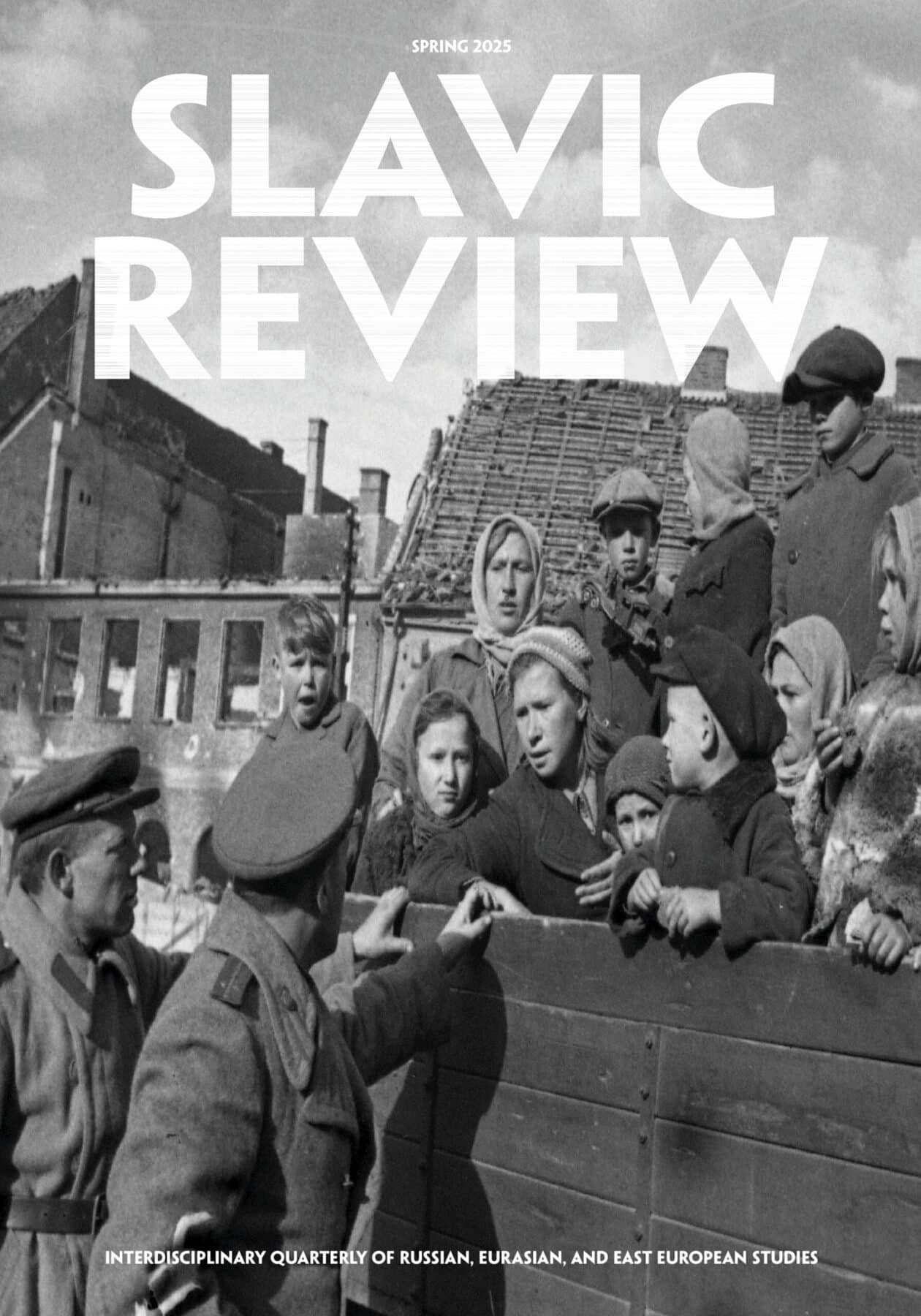
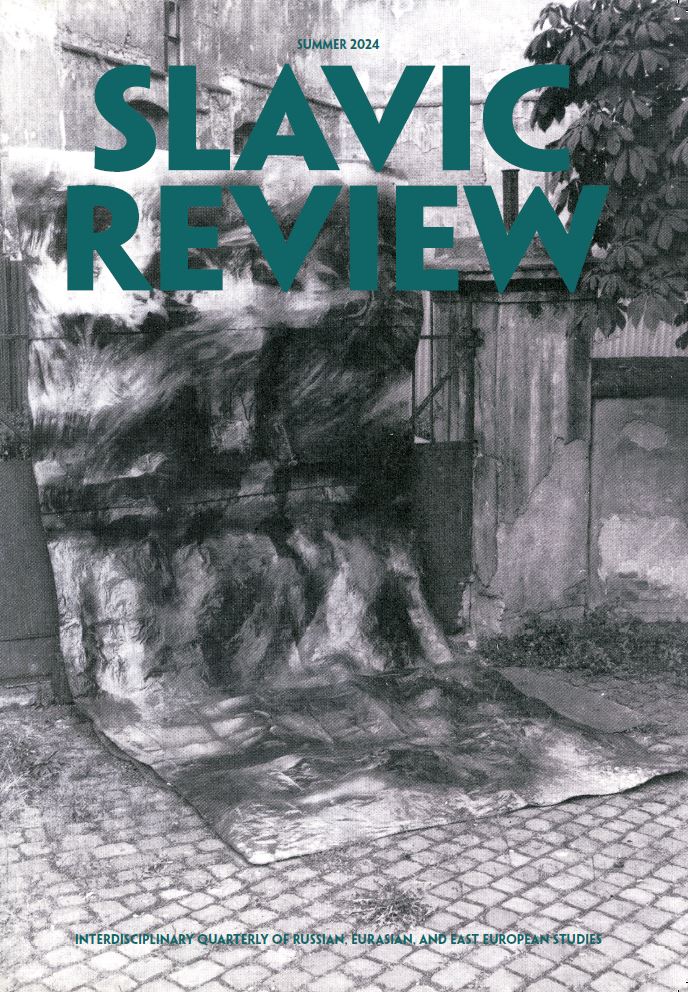
Explore More Issues
View All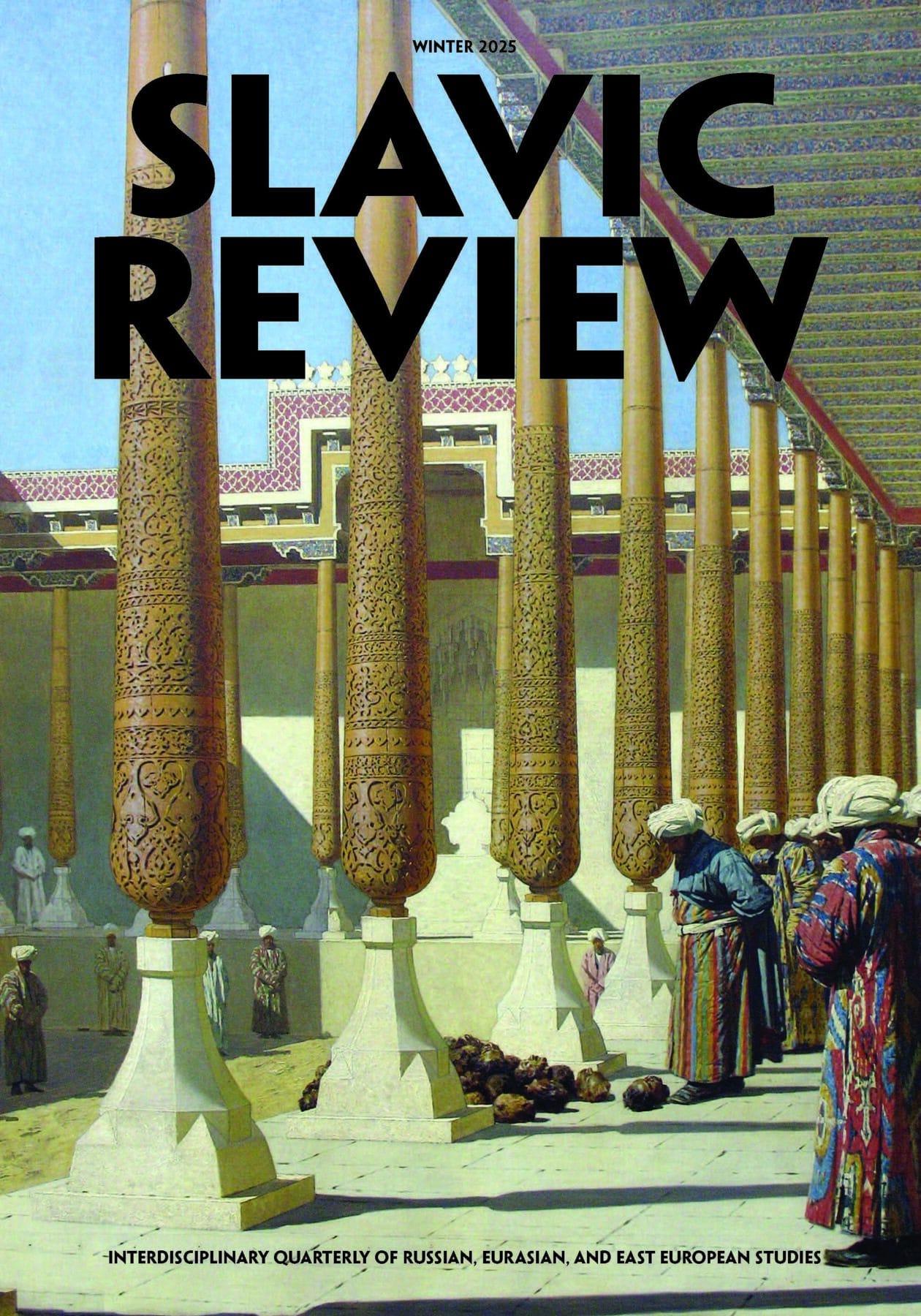




Submission information
Submissions from all disciplines and perspectives are welcomed. A primary purpose of the journal is to encourage dialogue among different scholarly approaches. Articles are peer-reviewed and editorial policy is guided by an international editorial board.
Subscribe to Slavic Review
Subscribe to Slavic Review by becoming a member of ASEEES. Institutional subscriptions are available through Cambridge University Press.